Opinion
When the Customer Becomes a Supplier
How Africa’s rooftops, agricultural residues and recycling networks can supply the wider economy – and what it takes to connect them.


By Raymond Chimhandamba
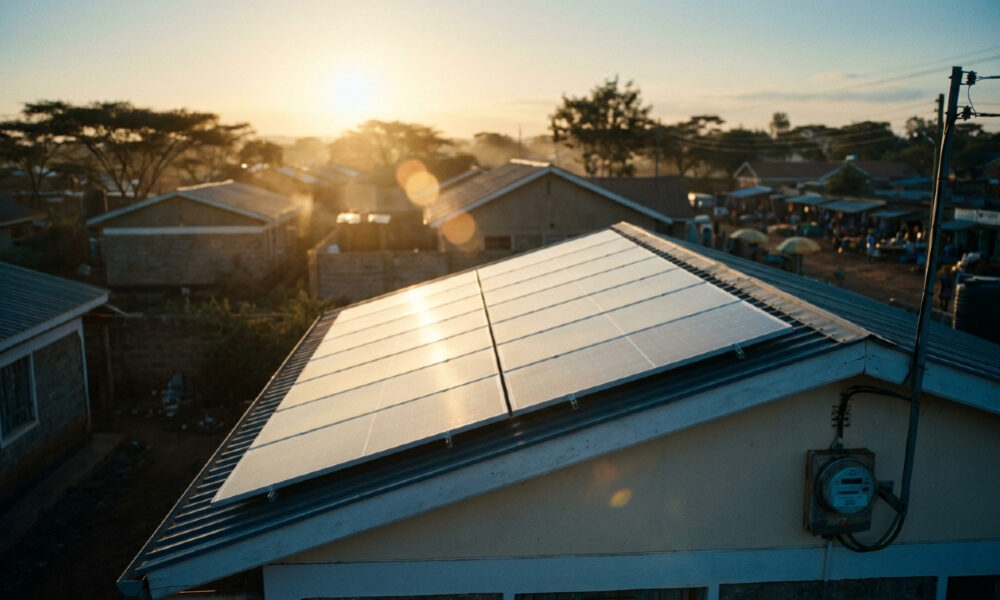
A household installs solar panels to keep the lights on. A business does the same to protect production and tame its power bills. Then, on a sunny afternoon, the panels produce more than the property can use. The battery is full, the demand is met, and a new question arises: can someone else use the surplus, and pay for it?
At that moment the customer becomes a supplier. The shift matters far beyond the energy sector, because it asks how African economies recognize productive capacity, organize markets and reward contributions that no infrastructure plan anticipated.
The Power Station on the Roof
Cape Town offers a working example. By the end of January 2025, the city reported, households and businesses had earned more than 55 million rand (US$3 million) since the 2022/23 financial year, mostly as credits on municipal bills. By February 1, 1,842 sellers were participating: 1,090 residential and 752 commercial or industrial. Once their accounts were fully offset, eligible participants could apply for cash payouts. On top of a feed-in tariff, the city adds a 25-cent-per-kilowatt-hour incentive.
Those numbers describe a functioning market. They also expose its demands. A grid built to deliver power must now absorb it, which requires authorization, protective equipment, proper metering and a network able to accept the load. Installed capacity is not saleable energy; household use, battery charging, weather and timing all intervene. Export income must be weighed against installation, financing and connection costs. And municipalities face a thorny question of their own: how to recover network costs when customers buy less power but still lean on the grid.
A Sugar Mill with a Second Product
Agricultural processing follows the same logic. Crushed sugarcane leaves behind fibrous bagasse, which fuels boilers that make steam and electricity. The steam serves the factory; surplus power, where capacity and a buyer exist, can feed the grid. Uganda’s Kakira Sugar reports generating 51 megawatts and selling up to 32 megawatts to the national grid. The cane that enters the mill now earns money twice.
Mauritius shows the limits. In September 2026, its Government Information Service reported that bagasse produced 208 gigawatt-hours in 2025, well below a historical peak of 381. Production costs, attractive producer prices and sufficient biomass were named as conditions for expansion. Technical potential alone sustains nothing. Nor can every agricultural residue support a profitable project: some have rival uses, and others are scattered, seasonal or costly to collect. The right question is where reliable feedstock, suitable technology and a willing customer can converge. Kakira suggests what happens when they do.
The Supplier Pulling a Trolley
On South African streets, a reclaimer hauls cardboard, plastic and metal to sell. Follow those materials onward and they feed recycling and manufacturing chains while sparing landfill space. The National Institute for Occupational Health cites an estimate that reclaimers saved South Africa between 310 million and 750 million (US$16.9 million and US$41 million) rand in landfill space in 2014. That is a historical figure for avoided costs, not a measure of what reclaimers earn, and the gap between the two is the point. The value a municipality receives is not the income the collector takes home.
Recycling is therefore a fair test of how seriously an economy treats its suppliers. A person needs no factory gate or procurement department to perform a function on which an industrial chain depends. Recognition should bring practical gains: safer conditions, transparent weighing, dependable payment and fair access to trading arrangements.
The Connection is the Investment
These cases differ in scale, ownership and technology, yet they share a lesson. A resource gains wider economic use only through a working connection. For electricity, that means a meter, a network, technical approval and a purchaser. For bagasse, it means equipment, reliable fuel and a power-sales agreement. For recyclables, it means collection, sorting, transport and a buyer with clear specifications.
That is where investors and entrepreneurs come in. A company might aggregate scrap to meet a manufacturer’s volume and quality standards. An energy-services firm might manage panels and handle the paperwork of selling power. A processor might build a plant to turn a by-product into revenue. Each earns its keep by solving a practical problem, because collecting small quantities, testing quality, maintaining equipment and paying suppliers promptly all cost money.
This is where talk of “untapped potential” must grow more precise. Ask who will buy, at what price, how reliably and after which costs. Revenue, avoided spending and productive capacity are different benefits and should not be added together as if they were one stream of cash.
Who Gets to Supply?
This is the “Asymmetric Africa” argument: judge an economy only by big utilities, formal factories and established procurement, and you miss what households, by-products and scattered livelihoods contribute. These sources do not replace major infrastructure. They widen what infrastructure can connect.
They also carry a risk. A household that can finance solar starts from a different place than one struggling to pay its bill, and a well-capitalized processor negotiates differently from a lone reclaimer. Connection charges, payment terms, access to credit and bargaining power will decide who participates and who keeps the returns.
Policymakers should find where useful contributions are already emerging and clear needless obstacles. Investors should study the equipment, services and contracts that make them reliable. Established firms might look again at a customer, a waste stream or a small collector and see a supplier.
The panels on that sunny afternoon were bought to serve one household. With the right arrangements, their output can serve someone beyond the boundary wall. The same is true of a mill’s fiber and a trolley’s load. In every case, someone must build, finance and maintain the connection.
Africa’s next investment opportunity may already be producing something useful. The question is whether the economy is organized to buy it.
Raymond Chimhandamba is a Johannesburg-based consultant, writer, and speaker specializing in African industrial development, manufacturing value chains, and investment opportunities. He is director of Handas Consulting and founder of Kunakisa Recycling, with expertise in market entry, manufacturing localization, due diligence, absorbent hygiene products, nonwovens, recycling, and the commercial use of agricultural waste. He has contributed more than 40 articles to Nonwovens Industry Magazine and writes for International Fiber Journal. He has also spoken at international industry events organized by INDA and EDANA. Raymond is currently writing Asymmetric Africa, a book examining overlooked opportunities in African markets.