Opinion
When Africa Recovers, Who Actually Gets Paid?
Zambia’s $600 million bond buyback is a case study in a question the whole continent needs to ask.


By Farhia Noor
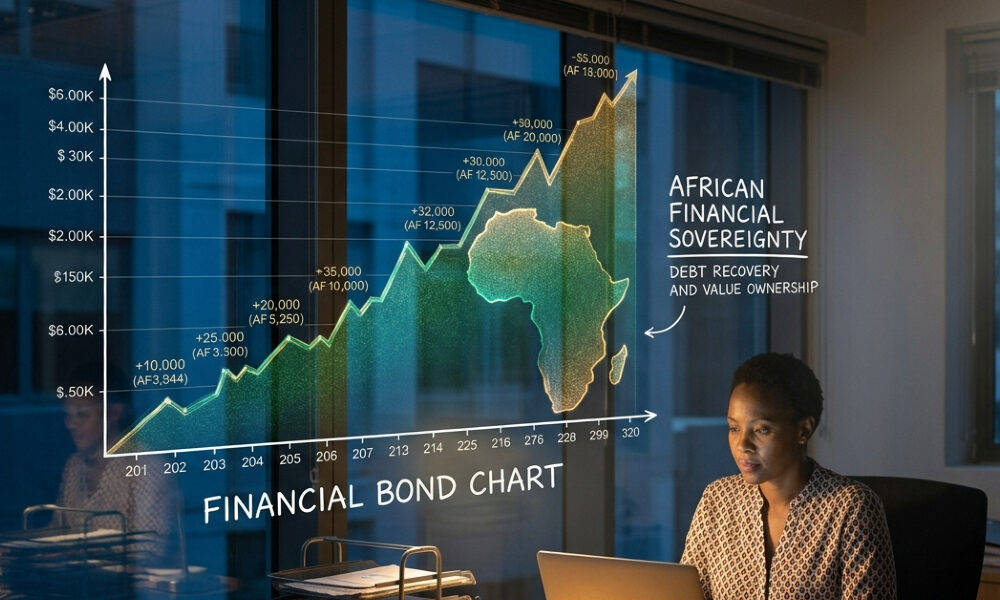
Zambia recently borrowed US$600 million from the African Development Bank to repurchase US$1.36 billion of its own debt. On paper, this looks like good news: a country climbing out of a debt crisis, cleaning up its balance sheet, and moving toward recovery. Look closer, though, and the deal reveals something far more troubling – a financial structure in which the very act of getting better becomes the trigger for paying more.
That paradox deserves more attention than it has received. It is not just a Zambian story. It is a story about how African recovery is financed, who profits from it, and who is left holding the bill.
A Bond That Punishes Success
The mechanics are worth spelling out. Zambia’s bond was structured so that its cost rises as the country’s economic outlook improves. A government in distress pays less; a government that turns itself around pays more. It is, in effect, a penalty for progress – and the people footing that penalty are ordinary Zambians, not the investors who priced in the risk.
Every additional dollar spent servicing that debt is a dollar that does not reach a power grid, a classroom, a hospital ward, or a small business trying to expand. And because most of the bond’s holders are international investors, a large share of those payments does not stay in the economy that generated the recovery in the first place. It leaves the country entirely.
This is not merely a debt problem. It is a value-extraction problem – one baked directly into the architecture of the financing itself.
Whose Interest Comes First?
Bondholders are not doing anything unusual by seeking the best possible return; that is the basic logic of financial markets. But when a nation’s recovery becomes the mechanism by which outside investors capture greater profit, the incentives quietly shift. The country’s success stops being an unambiguous good and starts being a payout event for someone else.
Even the AfDB’s intervention, however well-intentioned, raises an uncomfortable question: why does an African nation need to take out another loan just to escape a bond structure that penalizes its own improvement? Rescuing a country from a bad deal with more borrowing treats the symptom, not the design flaw.
The Real Question: Who Owns the Recovery?
Strip away the technical language, and a simpler question remains: when an African economy improves, who owns that improvement? Who owns the savings it generates, the infrastructure it funds, the decades of growth it should unlock?
Africa is not short of value. Its resources, its markets, and its people generate enormous economic potential every year. What the continent lacks is not value creation — it is the institutional machinery to protect that value once it materializes.
That gap is where a simple diagnostic tool becomes useful. Call it the African Recovery Test: if a nation outperforms expectations, who captures the majority of that upside? If the honest answer is not “the nation and its people, first,” then the underlying agreement was never as sound as it looked at signing.
Judging Deals by What Happens When They Work
Financial agreements are typically judged by how much capital they bring in the door. That is the wrong measurement. The right one is what happens on the other side – what happens when the country actually succeeds. A financing structure that looks generous during a crisis but turns extractive during a recovery has not solved the underlying problem; it has simply postponed it and disguised it as relief.
If a recovery does not first strengthen African institutions, African balance sheets, and African ownership of African assets, the financial architecture behind it deserves scrutiny – no matter how favorable its initial terms appeared.
Beyond Zambia
Zambia’s bond buyback is a useful case study precisely because it is not unique. Versions of this same structure – instruments that reward distress and tax improvement – recur across the continent’s sovereign debt markets. Each one raises the same underlying question, just with different numbers attached.
This, ultimately, is not a Zambian question. It is a question of financial sovereignty for the entire continent: as African economies stabilize and grow in the years ahead, will that growth build African capacity – or will it simply become the next profit trigger for someone else?
Farhia Noor is a seasoned business consultant based in Dar es Salaam, Tanzania. With a proven track record in developing enterprises and executing turnkey projects across both government and private sectors, she brings deep expertise to the table. Farhia is also a committed advocate for community-led development and is passionate about advancing sustainable, intra-African growth.