A Diaspora View of Africa
What to do about Climate Change?


By Gregory Simpkins
The international community has been discussing and debating the issue of climate change for decades. In the United States, the dichotomy was climate change or global warming. The global warming advocates have ignored two issues that undercut their argument.
First, it was only a couple of decades ago that the discussion centered around global cooling. Second, the strategy of immediately shutting down combustion engines is impractical and unpopular. Furthermore, celebrities who promote rapid transition to renewable energy and sound the alarm about the dire consequences of climate change take actions that belie their concern – flying on private aircraft or building and living in homes that use massive amounts of energy or are situated near the coastline they warn soon will be flooded. All of this seems impractical or hypocritical and makes it difficult to take their warnings and suggested solutions seriously.
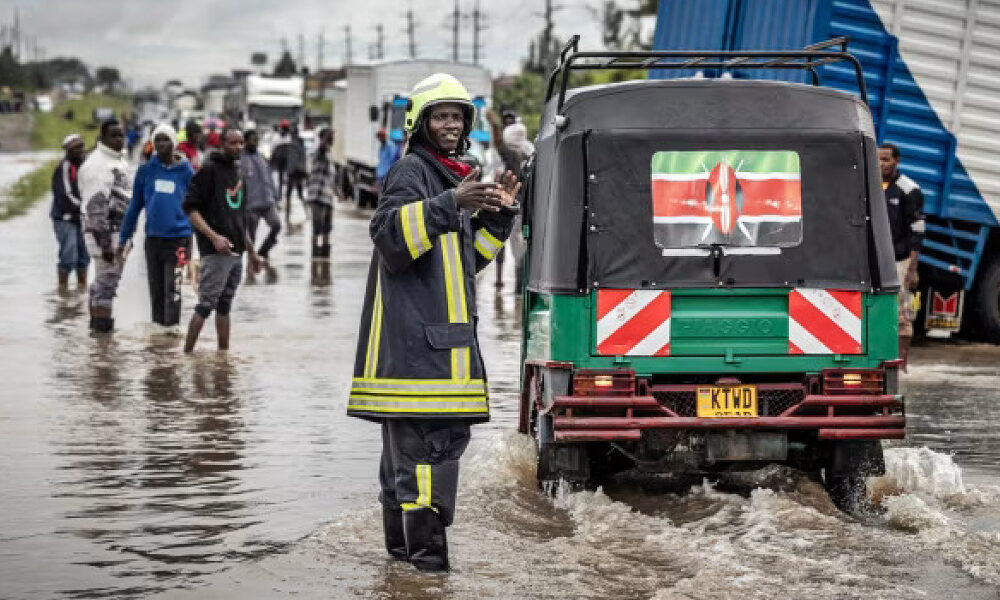
Let us get one thing straight right away, though: climate change is a real phenomenon with a historical basis and current proof if you care to examine melting snow on mountains, such as in Africa, flooding and coastal erosion.
On the path to a clean energy transition, we must not ignore the inconvenient truths that we will face along the way, such as those suggested in a July 7 2019 report by the website Economics 21 including:
- Hydrocarbons supply more than 80 percent of world energy: If all that were in the form of oil, the barrels would line up from Washington, D.C., to Los Angeles, and that entire line would grow by the height of the Washington Monument every week.
- The small two-percentage-point decline in the hydrocarbon share of world energy use required more than US$2 trillion in cumulative global spending on alternatives, and yet solar and wind today supply less than two percent of the global energy.
- When the world’s four billion poor people increase energy use to just one-third of Europe’s per capita level, global demand rises by an amount equal to twice America’s total consumption.
- Renewable energy would have to expand 90-fold to replace global hydrocarbons in two decades. It took a half-century for global petroleum production to expand “only” ten-fold.
- Replacing U.S. hydrocarbon-based electric generation over the next 30 years would require a construction program building out the grid at a rate 14-fold greater than any time in history.
- Eliminating hydrocarbons to make U.S. electricity (impossible soon, infeasible for decades) would leave untouched 70 percent of U.S. hydrocarbons use – America uses 16 percent of world energy.
- A 100x growth in the number of electric vehicles to 400 million on the roads by 2040 would displace five percent of global oil demand.
Transitioning to carbon-neutral, less polluting forms of energy would be a good thing even without the increasing hysteria over the planet burning up soon. Still, the practicality of the pace of transition is problematic. In a March 29 2024 article in the Washington Examiner, it was pointed out that the United States economy is in danger of running out of power.
“After a decade of flat demand, electricity demand is set to grow by 80 percent by 2034. The U.S. energy grid is not prepared to handle prepared to handle this. The sudden increase in demand is being driven by both the market and by politics. The market is responding appropriately to demand signals. But the Biden administration is asleep on how to respond.
“The artificial intelligence, or AI, revolution is a major explanation for why electricity demand is exploding. Accelerated computing powered by semiconductors requires multiples more power than old fashioned data centers. The major U.S. technology companies are investing aggressively in new data centers. AI will dramatically increase the productivity of the U.S. economy and accelerate economic growth, but AI requires a lot of power,” the article stated.
Africa holds 19 percent of the global reserves of metals required to make a standard battery-powered electric vehicle. Unfortunately, as with many natural resources harvested from Africa, Africans have not benefited sufficiently from mining in the past, and mining has led to deforestation and pollution.
Africa’s role in the clean energy transition
In order to accommodate this increase in power production for the growing needs of transitioning economies, the world will have to rely on critical minerals, many of which are found in Africa. The continent holds 19 percent of the global reserves of metals required to make a standard battery-powered electric vehicle, not to mention other electronic equipment. Unfortunately, as with many natural resources harvested from Africa, Africans have not benefited sufficiently from mining in the past, and mining has led to deforestation and pollution.
Moreover, decisionmakers in the developed world have turned a blind eye to the dangers faced by those who dig for these minerals. In a August 4 2023 article in the Washington Post, RCS Global, an auditing firm partly funded by Western multinational companies that monitors six artisanal mining sites, has issued recommendations that have increased safety and decreased the use of child labor, according to data provided by the organization. Nevertheless, these mines still recorded 65 deaths between 2019 and May 2023. RCS Global says the most durable safety measures, such as using machinery to clear away earth that can collapse into tunnels, is expensive so accidents remain common.
Finally, CBC News reported on October 17 2021 a climate study showing that developing countries suffer from a significant gap in terms of scientific research related to climate change, even though they contain the communities and people most vulnerable to extreme weather, rising sea levels and other serious impacts of climate change.
“There is a kind of gap in knowledge, specifically in peer-reviewed papers in the large literature databases about those areas,” said Max Callaghan, lead author of the study and a researcher at the Mercatur Research Institute on Global Commons and Climate Change in Berlin.
“We know that there are kind of inequalities in this global scientific system in terms of resources.”
We believe making the transition to clean energy is a positive benefit we can experience, but how in good conscience can we promote a good for ourselves while ignoring the harm to those who make that good possible for us?
So is there any way to satisfy the growing demand for minerals to enable the energy transition while still safeguarding those who provide such minerals?
In a November 2 2022 report entitled Triple Win: How Mining Can Benefit Africa’s Citizens, Their Environment and the Energy Transition, it was proposed that a mutually beneficial plan could be put into place that would satisfy the needs of developed and developing countries and their populations, creating a better deal for Africans to help reduce risks for investors and support global industry efforts to secure more metals, while protecting the environment and people from mining harm to ensure that efforts to move to a more sustainable way of life are not in vain.
Better deals for Africans will help reduce risks for investors and support global industry efforts to secure more metals. While protecting the environment from mining will ensure efforts to move to a more sustainable way of life are not in vain.
Two years after the release of that report, solutions to the challenges of energy transition elude the international community. Climate ideology, politics and the aims of funding sources all combine to frustrate efforts to collaborate across societies to reach a solution that benefits all.
The Triple Win report states that there are only 28 years remaining until countries representing two-thirds of the global economy aim to have “net zero” carbon emissions, yet it takes on average 17 years for the mining industry to develop a mineral discovery and start production. Consequently, time is running out for a cooperative effort that could benefit all of us.
Gregory Simpkins, a longtime specialist in African policy development, is the Principal of 21st Century Solutions. He consults with organizations on African policy issues generally, especially in relating to the U.S. Government. He further acts as a consultant to the African Merchants Association, where he advises the Association in its efforts to stimulate an increase in trade between several hundred African Diaspora small and medium enterprises and their African partners.