A Diaspora View of Africa
What to do about Africa’s coups?


By Gregory Simpkins
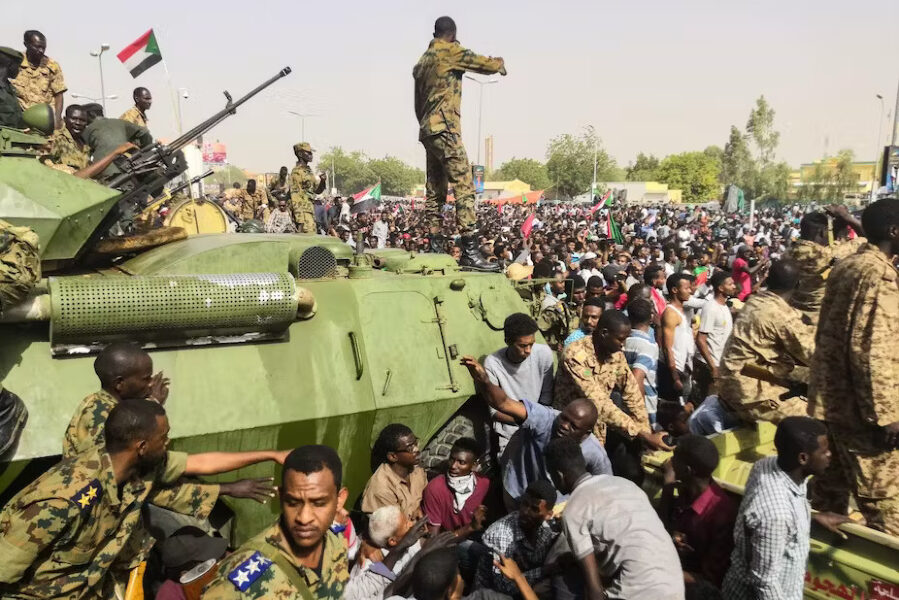
Since African nations began the road to independence in the 1950s, there have been about 100 coups in which militaries overthrew elected governments. Since 2020 alone, we have seen eight coups take place in West and Central Africa. Gabon has now joined the list of governments overthrown by its military, even as a resolution of the recent Niger coup remains out of reach for Africa and the rest of the international community. The justifications for these actions are varied, but seldom have there been peaceful transitions back to civilian rule.
According to the United Nations Human Development Index, at least half of Africa’s countries are among the 30 least developed countries in the world. So, ongoing mismanagement of African economies is certainly one reason given for overthrowing sitting governments. Transparency International, in its 2022 report gives sub-Saharan Africa a regional average score of 32 out of 100, marking another year of stagnation on the Corruption Perceptions Index (CPI) for that region.
Forty-four of the 49 countries assessed still score below 50, and gains made by a few countries are outweighed by significant declines in others. Again, corruption in government is a reason suggested for not wanting such governments to continue.
Repeated questionable elections, as was the case in Gabon, certainly make many in these countries feel democracy offers no protection against predatory governments determined to stay in power. As my colleague Henrietta Uwera, coordinator of Watch Democracy Grow, pointed out recently, former Gabon President Omar Bongo had 70 bank accounts, as well as 39 apartments, a Bugatti, 2 Ferraris, 3 Porches and 6 Mercedes Benz autos in France. If you were a citizen in one of the world’s poorest countries, how would you feel about your leader profiting to such an obscene extent while you suffered just trying to survive with limited social services and infrastructure?
Militaries, as is the case in Niger, accuse governments of mismanaging the war against terrorism. Outside forces such as French troops are blamed for the failure to make headway in the war against violent extremist groups. As the Washington Post reported on 30 August, the coups in Mali and Burkina Faso saw their governments replaced by juntas that are hostile to ex-colonial power France, which had led the fight against extremism in the region for a decade. Mali and Burkina Faso kicked out French troops and hired mercenaries from the Kremlin-linked Wagner Group. Whatever limited military advantage this has provided has come at the high cost of civilian casualties and human rights violations.
Fidel Amakye Owusu, an international relations and security analyst, has said that in the case of the Sahel, the excuse of “insecurity” has been used by the military to takeover power from governments who had not committed many of the “sins” of Bongo and Conde of Gabon and Guinea. “As some of us have always mentioned that, people are never ‘free’ under military rule,” he wrote in a piece on LinkedIn. “The opposition sees a delay in the transition as promised by the junta immediately after it took power. With no capacity to use coercive force, protests have been its weapon – the military will have none of that.
How to stem the coup tide
The question is, what should Africa and the international community do to stem the tide of extra-constitutional replacements of elected governments with no guarantee of a timely return to civilian rule? There are several alternative remedies, but none have proven lasting or effective.
The African Union (AU) has suspended governments brought to power by coups, but as was the case with Congo-Brazzaville in 1997, this doesn’t last. Angola helped install the government of Denis Sassou-Nguesso, and he won election in 2002, albeit under questionable circumstances. AU suspensions sound serious, but what tangible benefits does membership in the continental organization provide that cannot be lived without for a while?
The intervention of the Economic Community of West African States in The Gambia to remove Yahyah Jammeh in 2016 was an action against a widely unpopular leader who was resisting a political loss. No one stepped up from outside to help him stay in power.
Military intervention has been threatened for Niger, but fellow coup-led governments in Guinea, Mali and Burkina Faso have pledged to join in Niger’s resistance to any invasion – by other African governments or not. The intervention of the Economic Community of West African States (ECOWAS) in The Gambia to remove Yahyah Jammeh in 2016 was an action against a widely unpopular leader who was resisting a political loss. No one stepped up from outside to help him stay in power.
Sanctions have been used to punish militaries or civilian leaders who violate not only international law but also their own national constitutions, yet such actions come at a price for those who utilize them. According to the Congressional Research Service, policymakers have expressed longer-term concerns that extensive use of US sanctions that restrict access to the U.S. financial system would erode the status of the US dollar in the global economy. Since World War II, the US dollar has been widely used in international economic transactions, and the United States incurs economic benefits from its widespread use (including lower borrowing rates).
The United States has increasingly leveraged the role of the U.S. dollar for foreign policy goals, including restricting access to the US dollar and financial markets for Iran, Russia, and Venezuela. The widespread use of the dollar as part of international sanctions had spurred the current de-dollarization campaign led by the BRICS coalition. There are those who downplay the negative impact of this effort, but if countries pivot from the dollar to alternative currencies, the United States could face higher borrowing costs, among other economic effects.
Moreover, international natural resource needs also restrain sanctions against coup-led governments. In the Washington Post article, Gabon, which rejoined OPEC in 2016 after a 21-year hiatus, was reported to pump about 200,000 barrels of crude a day. Global oil markets are unlikely to be substantively affected if its production is interrupted because it is a relatively small producer, but more important is its role in the production of manganese, used to produce some of the hardest forms of steel. Niger is Africa’s second-biggest uranium producer, and exports most of its output to France, according to the World Nuclear Association. It produced 2,020 tons of this metal last year. Most countries that have suffered military coups in the region in recent years haven’t seen major disruption to mining operations despite the changes in power.
There have been more positive effort to institute the kind of changes in government to forestall extra-constitutions actions to remove government. The African Peer Review Mechanism (APRM), a specialized agency of the AU, was established in 2003 by the AU in the framework of the implementation of the New Partnership for Africa’s Development (NEPAD). It was designed as a tool for sharing experiences, reinforcing best practices, identifying deficiencies, and assessing capacity-building needs to foster policies, standards and practices that lead to political stability, high economic growth, sustainable development and accelerated sub-regional and continental economic integration.
The impact of APRM is somewhat restrained by two factors: 1) it is voluntary both to join and to accept ongoing monitoring of compliance and 2) the resources are limited despite assistance from the Economic Commission for Africa and the UN Development Programme.
The overall lack of progress in improving governance in Africa is illustrated by the response to the efforts of the Mo Ibrahim Foundation, established in 2006 to “bring about meaningful change on the continent, by providing tools to support progress in leadership and governance”. The Ibrahim Prize for Achievement in African Leadership is an annual prize since 2007 awarded to a former African executive head of state or government based on a criterion of good governance, democratic election and respect of terms limits. With a US$5 million payment, the prize is larger than the US$1.3 million Nobel Peace Prize.
The Ibrahim Index of African Governance, a major program of the foundation, examines the record of potential recipients of the award in four categories: safety and rule of law, participation and human rights, sustainable economic opportunity and human development. These four categories are then divided into 14 sub-categories, consisting of more than 100 indicators. Unfortunately, in eight of the first fourteen years it had been offered, no leader was found worthy of the award.
Enhancement of anti-coup options
So, there are strategies that could be enhanced to respond to coups more effectively if adjusted to make their impact more effective:
- Sanctions could be more targeted, such as provided in the U.S. Global Magnitsky Act process that punishes individuals rather than entire countries. Actions such as suspending countries from the African Growth and Opportunity Act, for example, tend to hurt innocent businesses more than guilty individuals who often know how to hide their ill-gotten gains from the reach of sanctions.
- The APRM can be taken more seriously by the international community and be provided with the necessary support to make this process as credible as possible. It was hailed when it was instituted, but then little has been said about it since because many African governments choose not to actively participate in the process. Getting China, Russia and other international powers to also support its aims would give it the gravitas it needs, although that would be difficult to accomplish because such governments use Western sanctions as an example of restrictions that they wouldn’t impose on countries with whom they do business.
- The Mo Ibrahim Foundation, in conjunction with the AU, the United Nations, donor nations and the international private sector should create a system of training for government officials to enable them to be more effective in their duties and to provide them with the necessary understanding of why rule of law, due process, transparency and other good governance virtues are linked to success for governments, their citizens and the local and international businesses operating in their countries.
- Military training to adhere to constitutional government has not worked as hoped, as officers leading coups often received such training in advance of overthrowing their governments, but this training must be continued to inculcate support for constitutional governance among African militaries.
- Finally, election support must not only continue but be expanded since elections are part of an ongoing process and not just an event in time. Better elections would minimize the resentments that lead to civilian support of coups.
The current wave of coups in Africa is gaining momentum and could spread unless some actions – either punitive or restorative – are taken to prevent this contagion from spreading.
Gregory Simpkins, a longtime specialist in African policy development, is the Principal of 21st Century Solutions. He consults with organizations on African policy issues generally, especially in relating to the U.S. Government. He also serves as Managing Director for the Morganthau Stirling consulting firm, where he oversees program development and implementation. He further acts as a consultant to the African Merchants Association, where he advises the Association in its efforts to stimulate an increase in trade between several hundred African Diaspora small and medium enterprises and their African partners.