Opinion
What is wrong with monetary unions in Africa?
By Danilo Desiderio
A recent article from Burundi Eco outlines the status of creating a common currency in the East African Community (EAC). While regional central banks have made efforts to harmonize policies and achieve macroeconomic convergence, the path toward a unified currency remains challenging.
This issue extends beyond the EAC, as other African regions encounter similar obstacles in forming common monetary systems.
The EAC is among Africa’s most ambitious Regional Economic Communities (RECs), unique for its integration roadmap that ultimately aims for a complete political union, including the establishment of a monetary union. On November 30, 2013, the EAC Partner States signed a Protocol to establish the EAC Monetary Union, targeting a common currency within a 10-year timeframe, by 2024.
However, in December 2022, an EAC Secretariat-appointed task force recommended delaying the deadline. The task force highlighted that the Partner States had not met key convergence criteria, including an 8 percent inflation rate cap, a fiscal deficit ceiling of 3 percent of gross domestic product (GDP), and public debt levels below 50 percent of GDP.
Africa’s disparate economic performances present significant challenges to achieving monetary unions. Historical examples show that some unions were successful without explicit macroeconomic convergence by pegging their currency to a stable external currency.
Additionally, EAC member states must maintain foreign exchange reserves sufficient to cover at least 4.5 months of imports.
In March 2023, a follow-up assessment by the EAC Secretariat supported the postponement to 2031 for introducing a common currency. The addition of new member states, such as Somalia, Burundi, and South Sudan – nations grappling with inflation and budget deficit issues – may further delay progress.
The creation of a monetary union offers numerous advantages, including reduced transaction costs, savings on international reserves, elimination of exchange rate risks, and regional price convergence. However, achieving this advanced level of integration has proven complex across Africa.
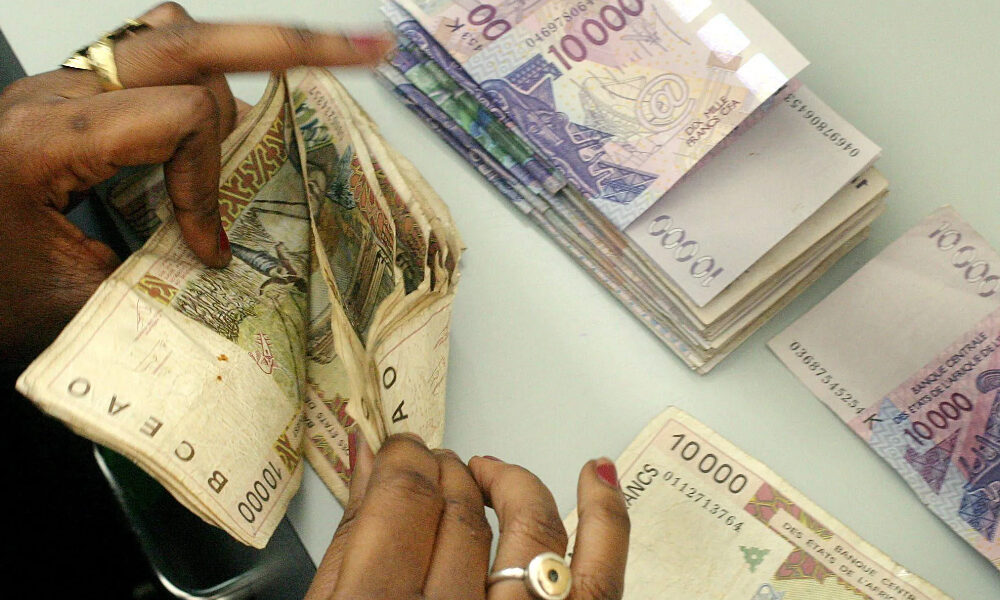
Currently, Africa’s only successful monetary unions are the Economic and Monetary Community of Central Africa (CEMAC) and the West African Economic and Monetary Union (WAEMU/UEMOA). These unions established common currencies linked to the French franc, and later the euro, providing stability and credibility.
Despite criticisms regarding their colonial origins, this external linkage has contributed to stable and functional monetary systems.
Significant challenges
Conversely, efforts to form a monetary union in West Africa have faced difficulties. In 2000, non-UEMOA Economic Community of West African States (ECOWAS) member states (excluding Cabo Verde) signed the Accra Declaration, aiming to create the West African Monetary Zone (WAMZ) and eventually merge with UEMOA by 2020.
However, the ECO currency’s launch has been repeatedly postponed due to member states’ struggles to meet convergence criteria, exacerbated by inflation differentials and exchange rate volatility. The current plan targets a 2027 launch, though many experts predict further delays.
Economic literature generally asserts that macroeconomic convergence is essential for monetary unions. Without harmonized economic fundamentals like inflation rates, fiscal deficits, and debt levels, member states risk asymmetric shocks requiring divergent monetary responses.
This can lead to instability and potentially undermine the union. Conversely, similar economic conditions enhance confidence in a common currency, attracting investment and facilitating trade.
Africa’s disparate economic performances present significant challenges to achieving monetary unions. Historical examples show that some unions were successful without explicit macroeconomic convergence by pegging their currency to a stable external currency.
However, modern Africa seeks independence in shaping its economic and monetary policies, making external linkages less desirable.
In the interim, developing frameworks for monetary coordination may offer a practical alternative, such as pegging regional currencies to a strong, stable regional economy’s currency. For example, the Southern African Customs Union (SACU) members align their currencies with the South African rand, entrusting monetary policy to South Africa.
Though the rand has become more volatile, this approach demonstrates potential for regional stability pending broader convergence.
Can this model work for other African regions? While the answer remains complex, given the challenges and current economic unpredictability, it represents a feasible interim strategy to foster stability and collaboration while member states work toward achieving the necessary macroeconomic conditions for a successful monetary union.
Danilo Desiderio serves as the CEO of Desiderio Consultants Ltd in Nairobi, Kenya, specializing in African customs, trade, and transport policies. He is a customs and trade expert at the World Bank and a senior associate to the Horn Economic and Social Policy Institute (HESPI).