Opinion
What Does It Mean to Be African Today?


By Dishant Shah
From the bustling streets of Nairobi to the electrifying beats of Lagos’s music festivals, and the vibrant marketplaces of Accra, Africa pulses with a dynamic fusion of tradition and modernity. This interplay is redefining what it means to be “African” in the 21st century – a rich tapestry woven from centuries-old customs and cutting-edge innovations.
Enduring Power of Tradition
Tradition remains deeply rooted across the continent. With over 2,000 distinct languages spoken, Africa’s linguistic diversity is a testament to its cultural richness.
Family ties are sacred, community bonds unshakable, and respect for elders non-negotiable. Rites of passage, ancestral beliefs, and oral storytelling continue to shape daily life, particularly in rural areas where traditional healers, indigenous foods, and age-old customs thrive – not merely as relics but as living practices.
Yet, alongside these enduring traditions, something new and transformative is taking shape.
The Rise of Modern Africa
Step into urban centers, and you’ll find a different story unfolding. TikTok dances dominate social media feeds, Afrobeat tracks top global charts, and fashion weeks in Dakar and Johannesburg showcase designs that rival Paris and Milan.
In Ghana, young entrepreneurs are revolutionizing fintech with groundbreaking apps, while Nairobi has earned the nickname “Silicon Savannah” for its thriving startup ecosystem.
Numbers tell part of this story: Sub-Saharan Africa boasts 218 million registered mobile money accounts, more than half of the world’s total, according to GSMA (2022). This digital revolution isn’t just about adoption – it’s about leadership.
Africans aren’t passive consumers of global culture; they are actively reshaping it.
Take Burna Boy and Tems, for instance. These artists aren’t just local sensations they are global icons whose sounds echo across continents.
Nollywood, Nigeria’s film industry, produces more movies annually than Hollywood, second only to Bollywood. Meanwhile, African designers are gracing international runways and landing covers of Vogue, proving that creativity knows no boundaries.
A New Identity: Tradition Meets Innovation
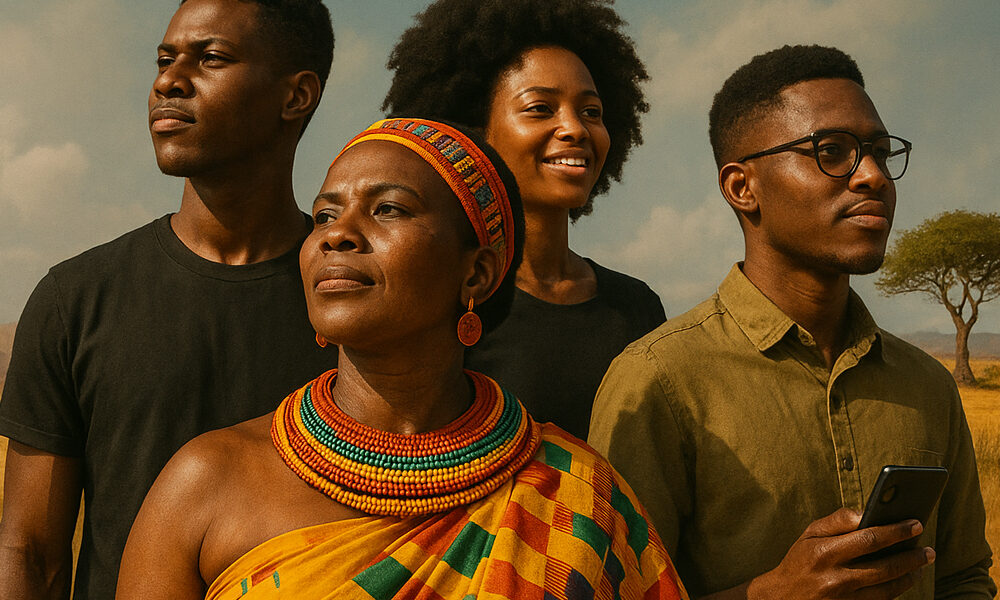
This blending of old and new creates a unique identity – one that defies rigid definitions. For many young Africans today, life is a seamless navigation between multiple worlds.
They might speak English or French at work, their native tongue at home, and code in JavaScript or Python online. A single day could involve celebrating a traditional wedding ceremony followed by a Western-style party.
Kente cloth pairs effortlessly with sneakers, and hijabs are styled with denim jackets.
It’s not a clash of cultures – it’s a remix. Tradition and modernity coexist in harmony, creating something entirely fresh yet unmistakably African.
Challenges Amid Change
But this evolution isn’t without tension. Some fear that rapid modernization risks eroding cherished traditions.
Urban youth may embrace global fashion trends, but traditional crafts like weaving and pottery are fading in certain regions. While tech hubs flourish, millions in rural communities still lack access to basic infrastructure like electricity and reliable internet.
And there’s an ongoing debate: Does modernization always equate to progress, or does it sometimes lead to inequality, cultural homogenization, and over-reliance on Western ideals?
These challenges highlight the complexities of navigating change. But they also underscore the resilience and adaptability of African societies.
Redefining African Identity
The emerging African identity doesn’t demand a choice between preserving the past and embracing the future. Instead, it invites a bold reimagination of both.
Being modern doesn’t mean abandoning roots – it means honoring them while forging ahead. The essence of being African lies in fluidity, multiplicity, and constant evolution.
It’s not one fixed identity but countless identities, all interconnected, all evolving.
So here’s the question worth pondering: Can tradition and innovation do more than coexist? Can they fuel each other?
Imagine a world where ancestral wisdom informs technological breakthroughs, where oral histories inspire digital storytelling, and where time-honored craftsmanship merges with contemporary design. This synergy holds immense potential – not just for Africa but for humanity as a whole.
Looking Ahead
The future of African identity isn’t about resisting change or clinging to nostalgia. It’s about finding strength in duality, celebrating heritage while embracing possibility.
As Africa continues to rise on the global stage, its people are crafting a narrative that’s uniquely theirs – one that honors the past, engages fully with the present, and dares to dream of a brighter future.
In this ever-evolving dance between tradition and innovation, one thing is clear: The African identity is not static. It’s alive, adaptive, and endlessly powerful.
And in that dynamism lies its greatest promise.
Can tradition and innovation fuel each other? The answer, undoubtedly, is yes – and Africa is leading the way.
Dishant Shah is a partner at Legion Exim, a company specializing in facilitating the export of high-quality engineering products directly sourced from manufacturers in India to Africa. His areas of expertise include new business development and business management.