Opinion
What Africa Can Learn from China’s Rail Revolution


By Gregory September
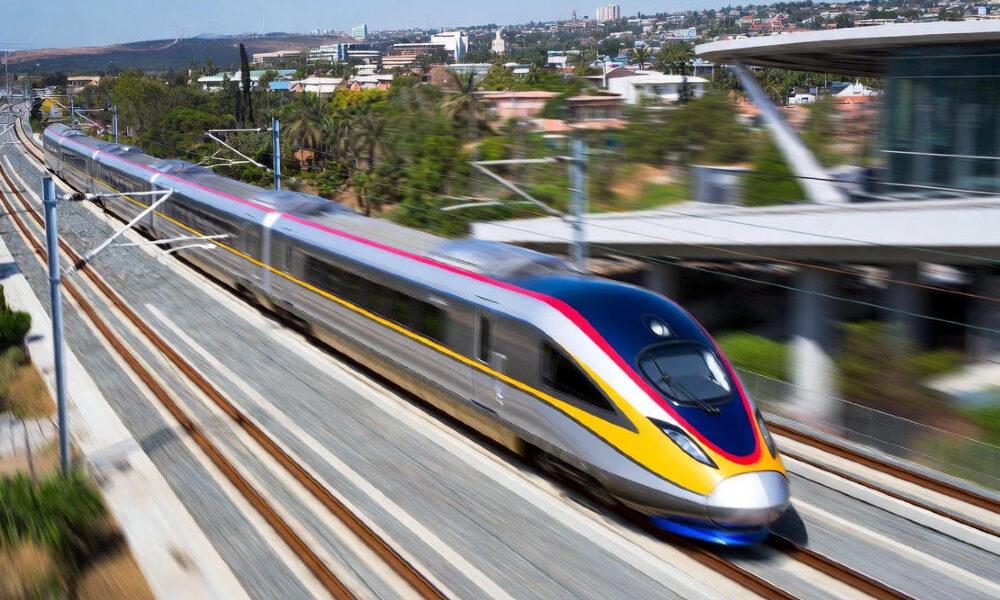
In two decades, China constructed more than 50,000 kilometers (31,069 miles) of high-speed rail – a network that now dwarfs the combined systems of Japan, France, and Germany.
This was not merely an engineering feat. It represented a calculated bet that mobility infrastructure could serve as the backbone of economic transformation, climate mitigation, and regional integration simultaneously.
The results speak for themselves. China’s high-speed rail network has slashed travel times between major cities, reduced carbon intensity per passenger-kilometer traveled, reshaped labor markets by expanding commutable distances, and unlocked productivity gains across previously isolated regions.
Most importantly, it demonstrated that infrastructure, when executed with scale and coordination, can tie national growth trajectories to long-term strategic planning rather than short-term political cycles.
Africa’s Persistent Mobility Crisis
Contrast this with the transportation reality across much of Africa, where the 1980s never quite ended. Millions still depend on congested roads, aging colonial-era rail lines, and expensive short-haul flights for basic mobility.
This is not merely an inconvenience – it is an economic anchor. Lost time compounds into lost productivity. Higher emissions undermine climate commitments. Fragmented markets prevent the economies of scale that drive industrial development.
The cost of moving goods and people across African borders often exceeds the cost of shipping them to Europe or Asia.
Infrastructure is never neutral. It determines who gains access to opportunity, which regions integrate into national economies, and ultimately how fast an entire economic system can evolve.
Poor connectivity doesn’t just slow growth – it fundamentally limits what kind of growth is even possible.
The Lesson Is Not Imitation
To be clear, Africa should not attempt to replicate China’s model wholesale. The continent’s geographic diversity, political fragmentation, financing constraints, and development priorities differ fundamentally from China’s centralized planning structure.
Direct imitation would be both impractical and unwise.
But there are lessons embedded in China’s approach that transcend political systems.
- The first is scale: piecemeal projects that connect isolated city pairs deliver marginal benefits compared to integrated networks that reshape entire regional economies.
- The second is coordination: infrastructure that aligns across sectors – linking rail to urban planning, energy grids, and industrial policy – multiplies its impact.
- The third is political will: treating infrastructure as a climate and development strategy rather than a vanity project requires sustained commitment across election cycles.
China’s high-speed rail succeeded not because of authoritarian efficiency alone, but because infrastructure was positioned as the connective tissue of a comprehensive development vision. It was designed to serve economic integration, environmental goals, and social mobility simultaneously – not as competing priorities, but as reinforcing objectives.
From Feasibility Debates to System Design
Africa faces a choice. It can continue debating the feasibility of large-scale infrastructure projects – cycling through endless consultancy reports, pilot programs, and incremental improvements – or it can shift toward designing systems that match the scale of its stated ambitions.
The continent’s population will double by 2050. Its urban centers are expanding faster than almost anywhere else on Earth.
Climate adaptation and mitigation are not optional considerations but existential necessities. Yet transportation infrastructure remains fragmented, under-financed, and treated as an afterthought in development planning.
What would it look like to treat infrastructure as a sustainability strategy?
It would mean prioritizing connectivity projects that simultaneously address carbon reduction, economic integration, and access to opportunity. It would require financing mechanisms that capture long-term value creation rather than demanding immediate commercial returns.
It would demand political leadership willing to commit resources to projects whose full benefits may not materialize for a decade or more.
China’s high-speed rail network did not emerge from technocratic planning alone. It required political leaders willing to stake their credibility on an infrastructure vision, financial institutions able to mobilize capital at scale, and a public willing to endure short-term disruption for long-term gains.
Africa possesses all of these elements in various forms – what it has lacked is the integration and sustained commitment required to deploy them effectively.
The Cost of Inaction
The gap between China’s transportation infrastructure and Africa’s is not an accident of history or an inevitable feature of development. It reflects deliberate choices – about resource allocation, political priorities, and the value placed on long-term planning.
China chose to build infrastructure at a scale that seemed reckless to many observers. Two decades later, that “recklessness” appears to have been strategic foresight.
Africa now faces its own infrastructure crossroads. The question is not whether large-scale connectivity projects are feasible – China, and before it Europe and Japan, have already demonstrated feasibility.
The question is whether African governments, regional bodies, and international partners will muster the political will, financing creativity, and coordination necessary to execute them.
The alternative is already visible: continued fragmentation, rising emissions from road transport, constrained economic growth, and missed opportunities for regional integration.
These are not abstract policy failures. They represent real costs measured in lost time, diminished productivity, and foregone development.
Infrastructure determines destiny more than we often acknowledge. The connectivity choices made today will shape Africa’s economic trajectory for the next half-century.
The only question remaining is whether those choices will reflect the future the continent claims to want – or merely extend the constraints of its past.
Gregory September is a South African academic, author, and geopolitical analyst with extensive experience in government and Parliament. He is the founder and CEO of SAUP (Sustainability Awareness and Upliftment Projects NPC), which focuses on sustainability education and community development. He previously served as Head of Research and Development for the Parliament of South Africa. His work centers on sustainability, African geopolitics, and economic development, and he regularly contributes to analysis of global political and economic affairs.