Opinion
Western Banks Turned Away From Africa’s Energy Needs. China Did Not.
Western banks shied away from long-term infrastructure risk. Beijing stepped in. The result is not a debt trap, but a structural realignment of continental influence.


By Gregory September
For decades, Western financial institutions looked at Africa’s infrastructure deficit and saw risk too great to bear. China looked at the same map and saw opportunity. The result is one of the most consequential – and least honestly analyzed – geopolitical stories of the 21st century.
Across approximately 35 African nations, Chinese capital now occupies a structural position inside the continent’s energy chain. From Nigeria and Angola in the west to Ethiopia and Zambia in the east and south, the footprint spans every major energy category: oil, gas, coal, solar, hydroelectric, and, crucially, transmission infrastructure.
This is not a scattered collection of bilateral deals. It is a pattern – and patterns, in geopolitics, are never accidental.
The logic behind China’s advance was neither mysterious nor nefarious. It was, at its core, a function of three variables: scale, speed, and incentives.
Africa needed power infrastructure urgently, and Western multilateral institutions – shackled by long approval timelines, risk-averse mandates, and political friction – consistently failed to meet that need at the pace African governments required. China moved faster, offered more, and asked fewer procedural questions.
African governments, facing genuine energy deficits and restless populations, made pragmatic choices. The lights needed to come on.
The “Debt Trap” Narrative Gets Africa Wrong
What is intellectually lazy – and analytically dishonest – is to reduce this story to the “debt trap” framework that has become a default shorthand in Western commentary. That narrative, while containing grains of truth, misrepresents the agency of African states and flattens a far more complex set of national strategies into a single story of victimhood.
Consider Ethiopia. The Grand Ethiopian Renaissance Dam – the largest hydroelectric project in Africa – was largely self-financed through domestic bonds and public mobilization.
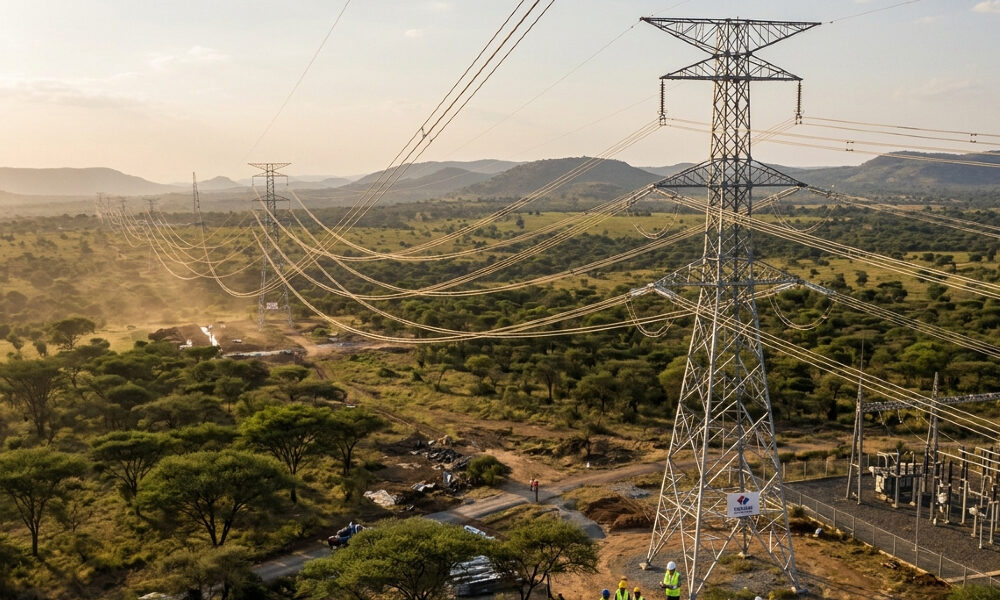
Chinese finance entered primarily at the transmission layer, to move generated power to population centers. That is not a nation sleepwalking into dependency; it is a government making a deliberate, tiered decision about where to accept foreign capital and where to preserve strategic autonomy.
Selective engagement is a strategy, not a surrender.
And yet the risks are real, even if they are more nuanced than the debt-trap framing suggests. Leverage compounds over time in ways that are not always visible at the moment a contract is signed.
When infrastructure is financed externally, when contractors retain operational ties to the assets they built, and when repayment structures begin to shape sovereign budget decisions, the downstream consequences for policy independence can be significant. No individual deal needs to be predatory for the cumulative architecture to constrain future choices.
Energy Infrastructure Is Foreign Policy by Another Name
This is the core issue – and it is structural, not merely financial. Energy infrastructure is not simply about electricity generation. It is about who controls the arteries of economic growth for decades to come.
A transmission line is not politically neutral. A power-purchase agreement is not merely a commercial transaction. Every megawatt of generation capacity financed from Beijing reinforces a web of operational relationships, maintenance dependencies, and diplomatic alignments that outlast the original loan terms by a generation.
The West, having ceded this ground through a combination of risk aversion and institutional inertia, is now attempting to compete through initiatives like the U.S. Lobito Corridor and the EU’s Global Gateway. Whether these programs can close a gap that has been widening for twenty years remains genuinely uncertain.
The ambition is visible; the execution, less so.
What is certain is that the map of African energy infrastructure is also a map of future geopolitical influence. China grasped that truth early, acted on it systematically, and is now embedded inside the systems that will power the continent’s growth for the next fifty years.
Western policymakers who are only now reading that map carefully should understand one thing above all else: in infrastructure geopolitics, the advantage of incumbency is enormous, and the cost of arriving late is measured not in dollars, but in decades.
Gregory September is a South African academic, author, and geopolitical analyst with extensive experience in government and Parliament. He is the founder and CEO of SAUP (Sustainability Awareness and Upliftment Projects NPC), which focuses on sustainability education and community development. He previously served as Head of Research and Development for the Parliament of South Africa. His work centers on sustainability, African geopolitics, and economic development, and he regularly contributes to analysis of global political and economic affairs.