Opinion
West Africa’s Trade Crisis: Five Practical Steps to End Border Paralysis


By Ziad Hamoui
When more than 60 percent of cross-border trade deliberately avoids official channels, something has gone profoundly wrong with our customs systems. Ghana’s first-ever Informal Cross-Border Trade Survey, published in late 2024, exposes an uncomfortable truth: traders aren’t avoiding formal procedures out of ignorance or criminality.
They are making economically rational decisions. Informal routes simply cost less than compliance.
The numbers tell a damning story. Between Ghana and Togo, 61.2 percent of commerce flows through unofficial channels.
With Côte d’Ivoire (Ivory Coast), the figure reaches 55.7 percent. Even with landlocked Burkina Faso, more than a third of trade circumvents formal customs.
These aren’t marginal players gaming the system. These are mainstream businesses and small-scale traders responding to a regulatory environment that punishes formal participation.
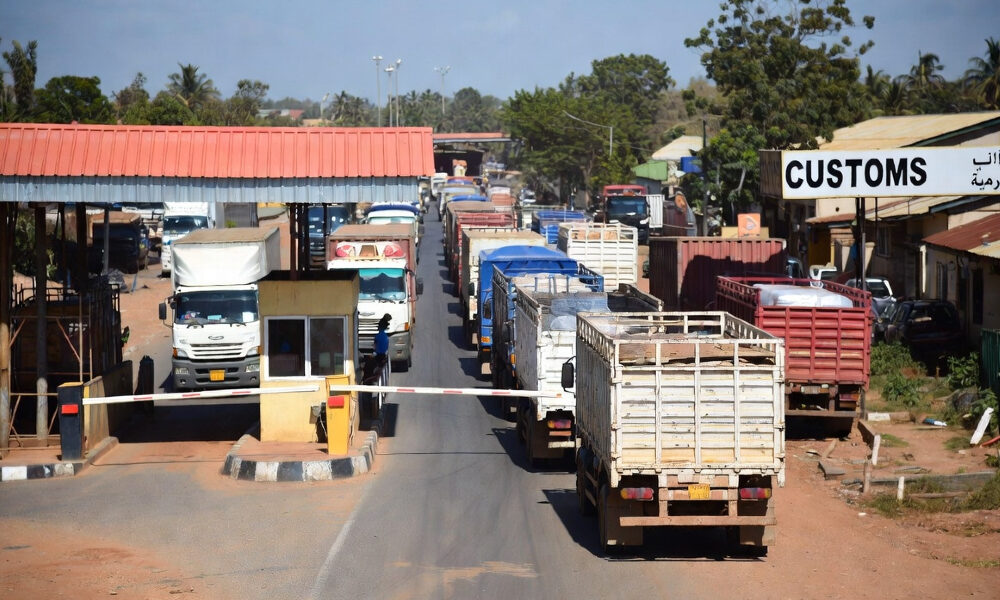
Consider the arithmetic from a trader’s perspective. Border delays routinely stretch to 72 hours. Regulatory requirements shift without warning. Checkpoint payments accumulate unpredictably along every corridor.
Against this backdrop, the informal route becomes not just attractive but necessary for commercial survival.
The distortion runs deeper than lost tariff revenue. Research presented to the United Nations Economic Commission for Africa in 2023 revealed that actual intra-regional food trade in West Africa operates at roughly six times the volume captured in official statistics.
We are designing trade policy for an economy that exists primarily on paper, while the real economy has built its own parallel infrastructure to work around us.
This isn’t a technical problem. It’s an institutional failure with measurable costs: delayed medicines, spoiled agricultural goods, truncated supply chains, and businesses that never scale beyond informal networks because formal expansion triggers prohibitive compliance burdens.
Why Reform Has Stalled
The African Continental Free Trade Area (AfCFTA) promised to change this calculus. On paper, West Africa embraced continental integration.
In practice, non-tariff barriers have proliferated faster than tariffs have fallen. The obstacles are prosaic but potent: discretionary customs procedures that invite corruption, fragmented regulations that create conflicting requirements across borders, infrastructure bottlenecks that no one agency owns, and accountability mechanisms too weak to compel改improvement.
Previous reform initiatives have faltered on familiar ground. Grand infrastructure projects launch with fanfare but fail to address the procedural dysfunction that creates delays.
Regional protocols get signed but not implemented. Automation systems are purchased but never fully deployed because the underlying business processes remain manual and discretionary.
A Practical Reform Agenda
The AfCFTA’s US$450 billion market potential will remain theoretical until West Africa tackles systematic non-tariff barrier reduction. What’s needed isn’t another aspirational framework.
It’s a concrete action plan that National Trade Facilitation Committees and corridor authorities can execute starting in 2026.
First: Deploy Single Window Digital Customs Platforms
Automation eliminates the discretionary delays that feed informal trade. Tanzania’s digital customs system cut processing times by 40 percent not through magic but through removing opportunities for human interference in routine clearances.
The technology is proven and available. What’s missing is political commitment to budget allocation and the change management required to overcome bureaucratic resistance.
Ministries of Trade should designate the first quarter of 2026 as the procurement window. Technical assistance is available from organizations like UNCTAD and TradeMark Africa.
The key is starting with one major border crossing as proof of concept rather than attempting simultaneous region-wide implementation that never materializes.
Second: Implement Risk-Based Cargo Inspection
The practice of inspecting 100 percent of cargo physically is security theater that creates massive economic costs. Risk-based inspection, as mandated by the World Trade Organization’s Trade Facilitation Agreement, concentrates enforcement resources on genuinely suspicious consignments while giving compliant traders green-lane clearance.
This requires customs authorities to publish transparent risk criteria by March 2026, train officers on profiling protocols rather than physical inspection quotas, and establish formal mechanisms for private sector feedback on the system’s performance. The goal isn’t eliminating enforcement but making it intelligent and targeted.
Third: Harmonize Regulatory Requirements Across Corridors
When a phytosanitary certificate issued in Senegal requires complete re-inspection for entry to Mali, we are imposing artificial costs that serve no legitimate regulatory purpose. The goods haven’t changed. The standards haven’t changed. Only bureaucratic territorialism explains the duplication.
Mutual recognition agreements for standards, certificates, and documentation would eliminate this waste. The ECOWAS Commission should convene a technical working group in early 2026 to map existing regulatory divergences and publish a harmonization roadmap with a 12-month implementation timeline.
This isn’t technically complex. It requires political will to subordinate agency prerogatives to regional efficiency.
Fourth: Establish Trader Identification Systems
Formalization need not mean punishment. Digital registration platforms can bring informal traders into official systems while offering tangible benefits: streamlined procedures, access to formal financial services, and legal protections currently unavailable to undocumented operators.
The Cross-Border Women Traders Association has proposed a trader ID card model that offers a template. Verified traders receive preferential treatment at borders while authorities gain visibility into trade flows currently invisible to policy.
Pilot programs should launch in three corridor countries by mid-2026, integrated with customs databases and linked to mobile money platforms for transparent fee payment.
Fifth: Create Public-Private Border Performance Dashboards
Transparency creates accountability. Publishing real-time data on average clearance times, rejection rates, and processing costs puts performance pressure on border agencies while identifying specific bottlenecks requiring intervention.
National Trade Facilitation Committees should mandate monthly performance reporting starting in April 2026. Dashboards should be public, published on government websites, with quarterly stakeholder review sessions to discuss trends and problems. What gets measured and published tends to improve.
Expected Returns on Reform
These aren’t aspirational interventions. They are operational steps targeting measurable improvements within 18 months: reducing average border crossing times from 72 hours to 24 hours, decreasing informal trade from 60 percent to 35 percent through formalization incentives, cutting logistics costs by 20 to 30 percent through procedural efficiency, increasing documented cross-border traders by 40 percent through ID programs, and generating revenue recovery through expanded formal trade volumes.
The technical solutions exist. Development partners stand ready to provide support.
What determines implementation speed is political will at the national level and coordination capacity at the regional level.
The Path Forward
West Africa’s trade paralysis isn’t the result of inadequate infrastructure or insufficient regional agreements. It’s the predictable outcome of checkpoint culture and regulatory fragmentation that make formal compliance economically irrational for most traders.
These barriers are solvable through systematic institutional reform, not additional infrastructure spending.
The question facing West African policymakers in 2026 is straightforward: Will we continue designing policies for an imaginary formal economy while the real economy routes around us? Or will we reform our institutions to serve the traders who actually exist, conducting the commerce that actually happens, across borders that currently function as barriers rather than gateways?
The US$450 billion AfCFTA market waits on the answer.
Ziad Hamoui is the Co-Founder and Past President of the Borderless Alliance, a leading private-sector advocacy group promoting economic integration and removing trade and transport barriers in West Africa. With extensive experience in Ghana’s road transport, logistics, and shipping sectors, he currently serves as Executive Director of Tarzan Enterprise Ltd., a long-established family business. He is a former Co-Chair of the Africa Food Trade Coalition, Co-Founder of the Trade Facilitation Coalition for Ghana, and serves on multiple high-level advisory committees on trade, transport, agriculture, and security. A Chartered Fellow of the Chartered Institute of Logistics and Transport (CILT) Ghana, he is also a former member of its Governing Council.