Opinion
West Africa Is Trading Inward – And That’s a Sign of Strength, Not Retreat


By Michele Moscaritoli
West Africa is recalibrating its economic compass – not outward toward traditional global markets, but inward, across its own borders. The shift is measurable, significant, and largely misunderstood.
Intra-regional trade has surpassed approximately US$59 billion, with goods flowing increasingly between Ghana, Nigeria, Ivory Coast, and Senegal rather than following the well-worn paths to Europe and beyond. But before we celebrate seamless regional integration, we need clarity about what’s actually occurring on the ground.
The Mechanics of Necessity
This isn’t a grand ideological pivot toward pan-African unity. It’s pragmatism disguised as strategy – a series of workarounds that have calcified into commercial habits.
Local producers are pivoting regionally for three concrete reasons: foreign exchange access for global trade has tightened considerably, regional demand offers proximity and speed advantages, and routing goods through European intermediaries frequently adds cost without corresponding value. The math has changed, and businesses are responding accordingly.
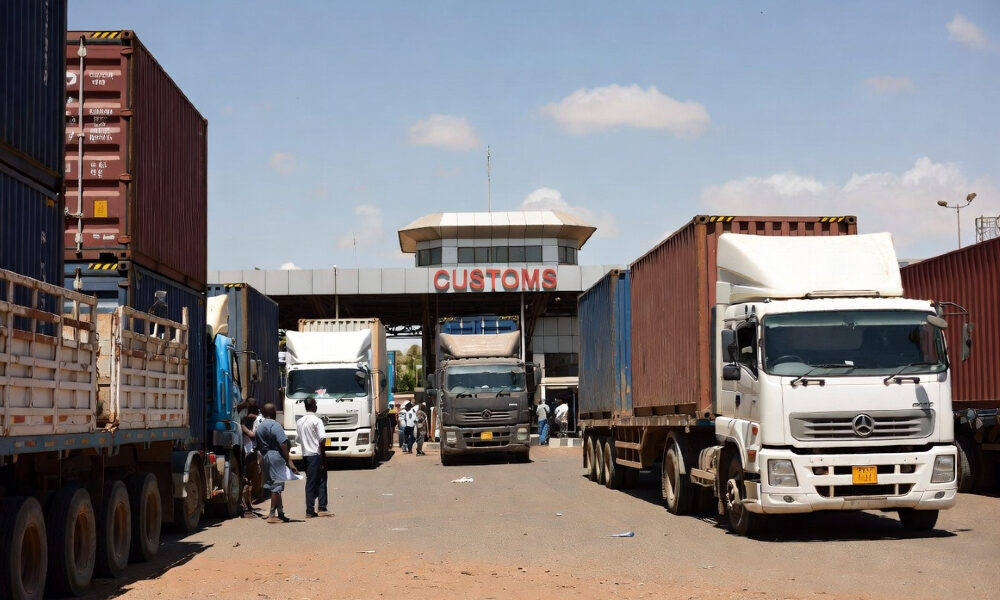
Yet the romantic narrative of African integration obscures persistent structural failures. Borders remain chokepoints that slow everything down.
Standards lack uniform enforcement across jurisdictions. While digital payment systems have modernized rapidly, physical logistics infrastructure remains stubbornly analog. The friction is real and costly.
Survival Strategy, Not Ideology
No, West Africa hasn’t “figured it out.” What has occurred is more nuanced: a fundamental shift in commercial incentives.
Companies now design primarily for regional survival, with global expansion relegated to secondary consideration. This represents a rational response to risk concentration, not protectionist ideology or anti-globalization sentiment.
The distinction matters. West Africa isn’t erecting barriers against international commerce – it’s discovering proximity as a competitive advantage.
Regional trade isn’t replacing global integration; it’s reducing dangerous dependence on it. When supply chains prove unreliable and currency volatility makes international transactions treacherous, nearby markets become valuable hedges.
What Markets Do Under Pressure
This pattern reflects how markets behave under sustained pressure. When traditional channels become costlier or less reliable, economic actors seek alternatives.
West African businesses are simply responding to their operating environment with the tools available: closer customers, shared challenges, and increasingly compatible commercial infrastructure.
The implications extend beyond trade volumes. This gradual reorientation could reshape manufacturing decisions, investment patterns, and ultimately political relationships across the region.
Companies building for regional markets develop different capabilities than those optimizing for export to developed economies. The former requires adaptation to local conditions, price sensitivity, and distribution challenges that global-first strategies often overlook.
The Road Ahead
The critical question isn’t whether West Africa will achieve perfect regional integration – it won’t, at least not soon. Border inefficiencies, regulatory fragmentation, and infrastructure gaps won’t disappear through market forces alone.
Political will remains inconsistent, and vested interests profit from the status quo.
Rather, the question is whether this partial, imperfect regionalization proves durable enough to alter the continent’s economic trajectory. If businesses continue finding regional strategies more viable than global dependence, investment will follow.
Capital flows toward reliability, and increasingly, West African firms are discovering that reliability lives closer to home.
This matters globally because it challenges assumptions about development pathways. The conventional wisdom suggested emerging economies should integrate rapidly into global value chains, serving as manufacturing nodes for multinational corporations.
West Africa is testing an alternative hypothesis: that regional markets can anchor growth when global integration proves unstable or extractive.
The experiment is underway. West Africa is trading itself forward, building commercial relationships across borders that share languages, challenges, and increasingly, economic logic.
It’s messy, incomplete, and entirely rational. That’s precisely why it might succeed.
Michele Moscaritoli is the Founder of Callaborade, a platform connecting high-potential talent from underserved regions with European entrepreneurs while enabling companies to expand into new markets through structured, data-driven sales operations. A tech and services sales professional specializing in market entry strategy, he is driven by a belief in collaboration and building bridges where barriers exist.