News
Voters in Antigua & Barbuda, Grenada reject Caribbean Court of Justice
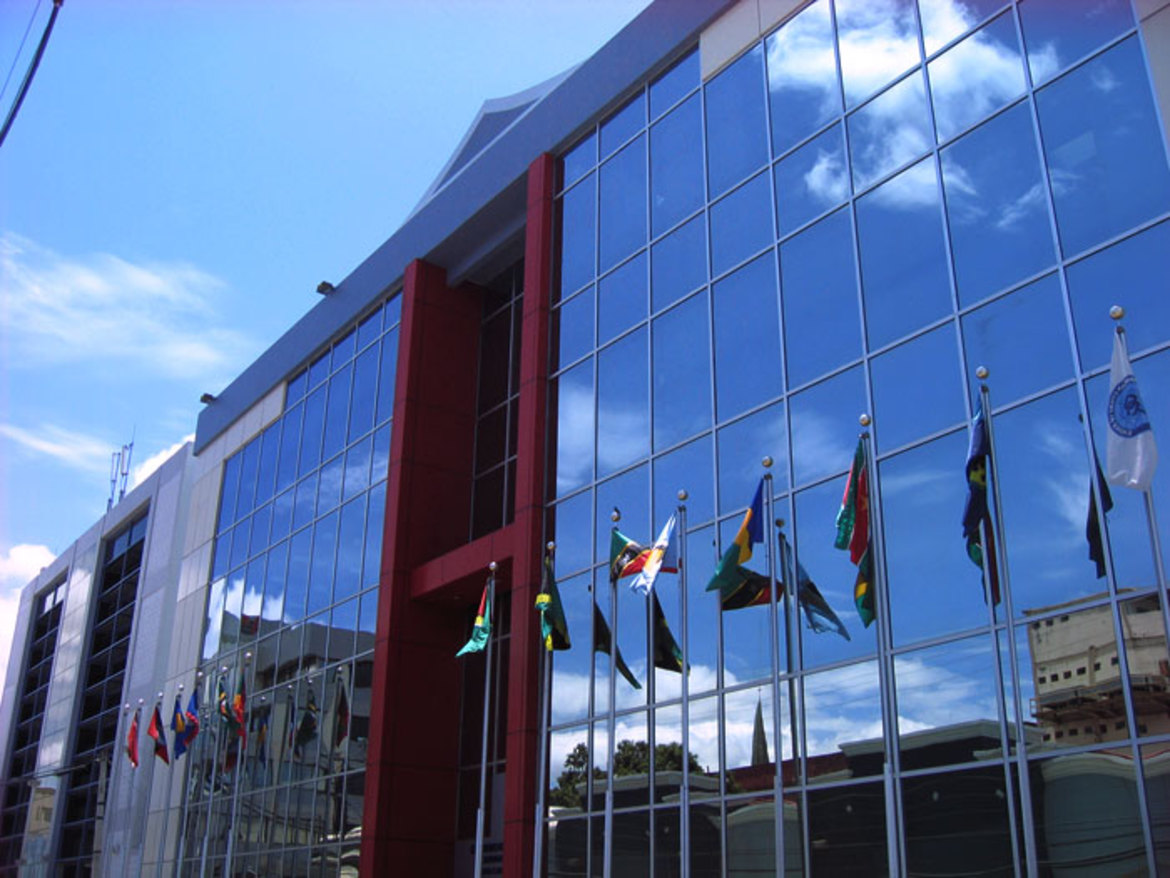
Caribbean Court of Justice head respects outcome of referenda
The president of the Trinidad & Tobago-based Caribbean Court of Justice (CCJ) Adrian Saunders said that the court would continue “ongoing initiatives with justice sector bodies” in Antigua & Barbuda and Grenada, despite the population in both Caribbean Community (CARICOM) countries voting in favor of retaining the London-based Privy Council as their final court.
“While the news is not what we hoped for, we respect the people of both nations and their decision,” Saunders said in a statement following Tuesday’s referenda in the 2 countries.
“One of the positives that came out of this exercise is that there was sustained public education in both nations and the conversation about the CCJ intensified. We can see the fact that there was more interest in our website, and on our social media platforms, on LinkedIn and Twitter. As we begin to implement our strategic plan for the 2019-2023, which includes a renewed focus on public education, we will certainly be taking advantage of the increased audience, and the interest that has been piqued, to provide more information about the work of the Court,” Saunders said.
The governments in Antigua & Barbuda and Grenada had hoped to join Belize, Barbados, Dominica and Guyana as the Caricom countries that are full members of the CCJ, which was established in 2001 to replace the Privy Council as the region’s final court. The CCJ, which has both an original and appellate Jurisdiction, also functions as an international tribunal interpreting the Revised Treaty of Chaguaramas that governs the 15-member regional integration movement.
Saunders said despite the defeat, the CCJ “will naturally continue ongoing initiatives with justice sector bodies in each of these countries, and the wider Caribbean, through the JURIST project and otherwise”.
Low voter turn-out
The turnout in the referendum in both countries were low.
In Grenada, of 21,979 votes cast, some 9,846 people voted to adopt the CCJ as the final Court of Appeal, while in Antigua & Barbuda, there were 9,234 votes against and 8,509 votes in favor of the adoption of the CCJ.
“These results will not, of course, deter us from serving with distinction those nations that currently send their final appeals to us. As well, the court will also continue to process and hear applications from all Caricom states, and from CARICOM itself, in our original jurisdiction, and our justice reform work in the region will also continue,” Saunders said.
The CCJ noted that Grenada has an original jurisdiction case currently before the Court and that the JURIST Project, which is a multi-year justice reform project being implemented by the CCJ on behalf of the Conference of Heads of Judiciary of Caricom States, is working on a Sexual Offences Model Court to be housed at the High Court of Antigua & Barbuda in 2019.
The CCJ Academy of Law is also hosting a legal conference in Jamaica in December 2018 at which jurists from both countries, as well as the wider Caribbean, are participating, the CCJ added. -(CMC)