News
University of Ghana to remove Gandhi statue – because of his racism
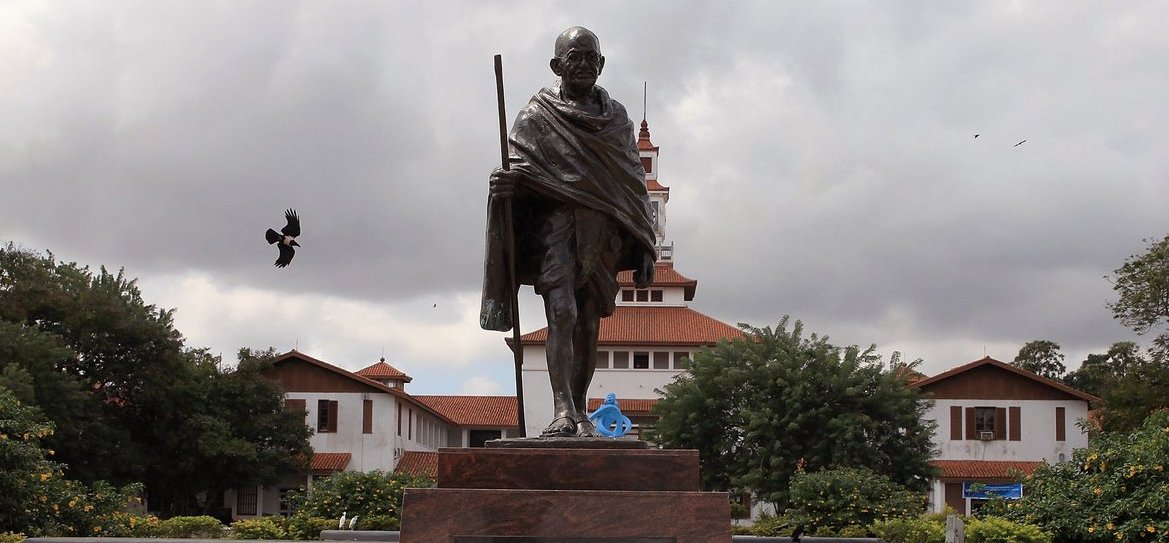
The University of Ghana will remove a statue of Mahatma Gandhi from its main campus because of his past racist comments.
A group of faculty and students began campaigning for the Indian nationalist leader’s statue to be removed shortly after it was installed at the university in June as a symbol of friendship between Ghana and India. They argue that Gandhi made comments that were racist about Africans and that statues on the Accra campus should be of African heroes.
Over 1,000 people signed the petition to remove the statue, which claimed that not only was Gandhi racist towards black South Africans when he lived in South Africa as a young man, but that he campaigned for the maintenance of India’s caste system, an ancient social hierarchy that still defines the status in that country of hundreds of millions of people.
Gandhi lived in South Africa at the turn of the 20th century, where he campaigned for rights for the descendants of Indian indentured laborers brought there to work sugar plantations in its northeast Natal province, now KwaZulu-Natal.
Although his philosophy of peaceful protest would later inspire the African National Congress (ANC) in its resistance to the racist and brutal white Apartheid rule, historians say Gandhi himself was no believer in equality between races – at least not earlier in his career.
In his book, Gandhi: the True Man Behind Modern India, broadcaster Jad Adams quotes him as referring to black people as “kaffirs” – a deeply offensive racist term – in a speech in 1896:
“Ours is one continual struggle against a degradation sought to be inflicted upon us by the Europeans, who desire to degrade us to the level of the raw kaffir,” he quotes him as saying.
“And whose sole ambition is to collect a certain number of cattle to buy his wife with and then pass his life in indolence and nakedness.”
In 2015, students in South Africa successfully campaigned for the removal, from the University of Cape Town campus, of a statue of Cecil Rhodes, a notoriously racist mining magnate who died in 1902.
Source: Reuters