News
UN admits causing cholera epidemic in Haiti
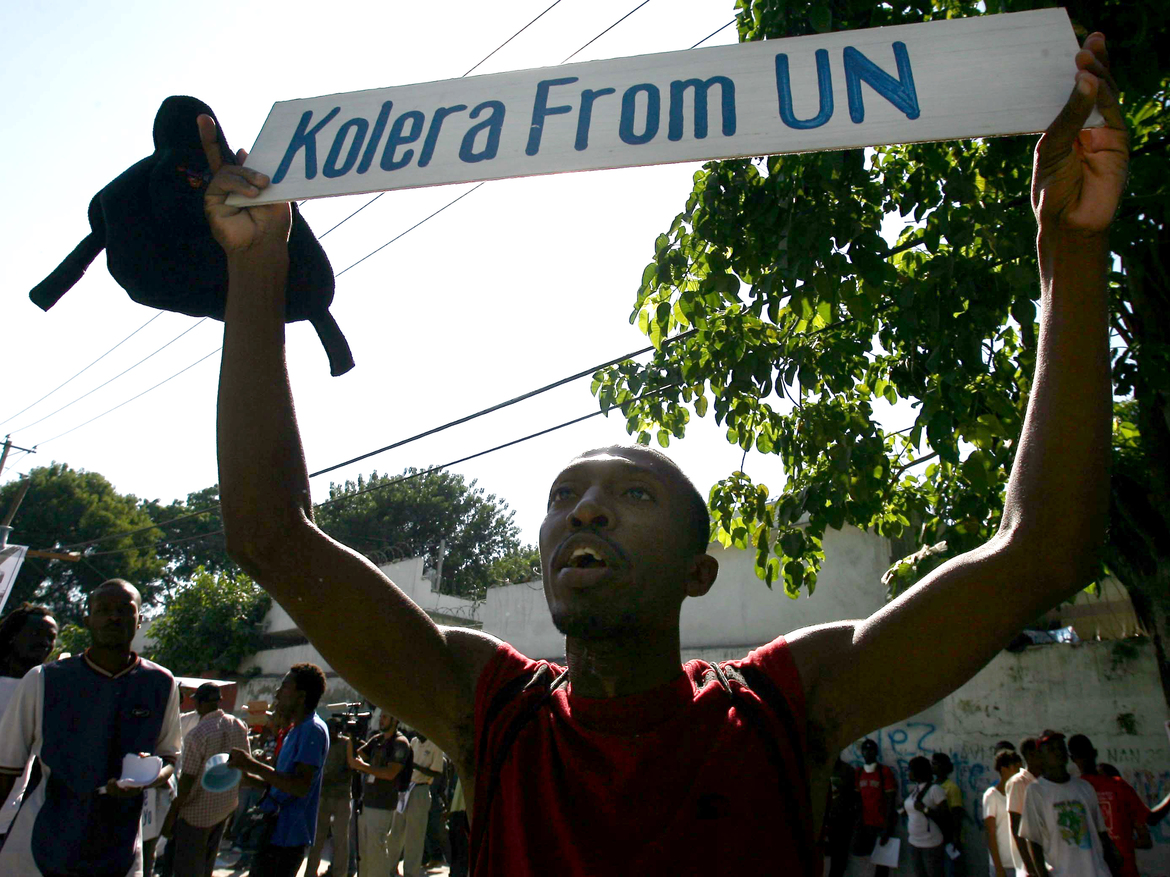
The U.N. continues to claim diplomatic immunity – but admits role in introducing cholera to Haiti.
The United Nations (U.N.) has admitted – for the first time – that it was involved in the introduction of cholera to Haiti and needs to do “much more” to end the suffering of those affected, estimated at more than 770,000 people.
Researchers say there is ample evidence that cholera was introduced to Haiti’s biggest river in October 2010 by inadequately treated sewage from a U.N. peacekeeping base. The United Nations has never accepted responsibility, and has answered lawsuits on behalf of victims in U.S. courts by claiming diplomatic immunity.
U.N. deputy spokesman Farhan Haq’s statement referring to the United Nations’ “own involvement,” which was sent to the press late last week, came a step closer to an admission of at least some responsibility and was welcomed by lawyers for the victims.
“This is a major victory for the thousands of Haitians who have been marching for justice, writing to the U.N. and bringing the U.N. to court,” said Mario Joseph, a Haitian human rights attorney whose law firm is leading a high-profile claim on behalf of 5,000 cholera victims who blame the United Nations for introducing the disease.
“It is high time for the U.N. to make this right and prove to the world that ‘human rights for all’ means for Haitians too,” he said.
Haq said in the statement that the United Nations has been considering a series of options, and “a significantly new set of U.N. actions” will be presented publicly within the next two months.
He told reporters later that a U.N.-appointed panel already looked into the U.N.’s involvement and found that a local contractor failed to properly sanitize the waste at the U.N. base.
“We have been trying to see exactly what we can do about our own particular role as this has been going on” and how “to bring this outbreak to a close,” he said.
Haq would not say whether reparations were under consideration.
Five U.N. human rights experts criticized the United Nations in a letter to top U.N. officials late last year for its “effective denial of the fundamental right of the victims of cholera to justice.”
At least one lawsuit was dismissed because of the United Nations’ diplomatic immunity claim. But a federal appeals panel in New York is weighing whether the lawsuit that Haitian lawyer Joseph is involved in can proceed, or if the United Nations is entitled to immunity.
Haq reiterated that the United Nations’ legal position in claiming diplomatic immunity “has not changed.”
According to government figures, cholera has sickened more than 770,000 people, or about 7 percent of Haiti’s population, and killed more than 9,200.
Copyright 2016 The Associated Press