Zina’s Youth View on Africa
Uganda’s 2026 Election: A Crossroads Between Stability and Transformation


By Godfred Zina
When Ugandans cast their ballots on January 15, 2026, they will confront a defining choice: entrench a system that has governed for four decades, or embrace generational transformation.
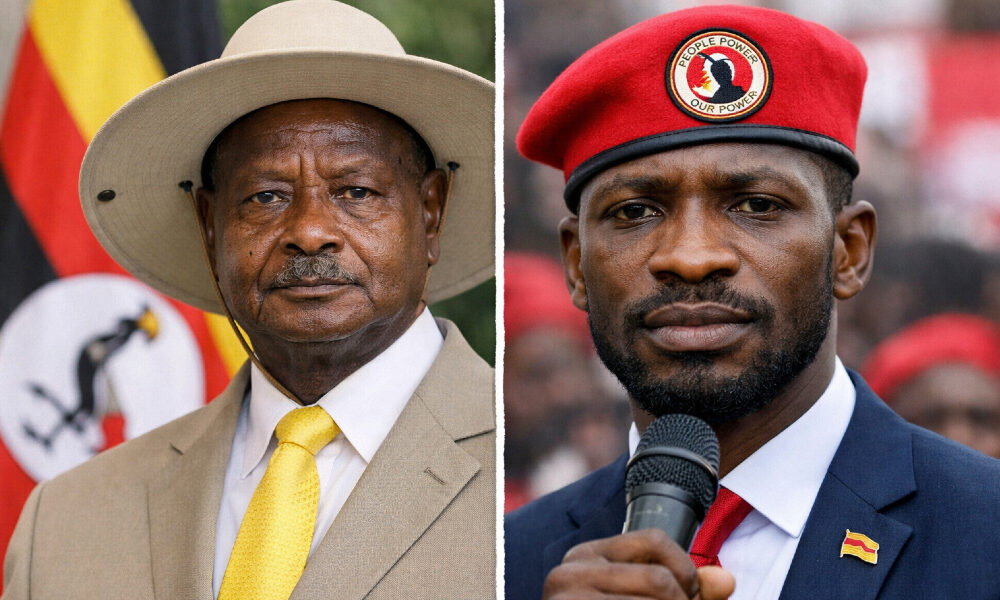
President Yoweri Museveni, who seized power in 1986, is seeking to extend his tenure into a fifth decade. Facing him is Robert Kyagulanyi Ssentamu – better known as Bobi Wine – a musician-turned-politician who has become the voice of a restless, disenfranchised youth demanding economic opportunity and political renewal.
Yet beneath the surface of this electoral contest lies a more troubling question: Can Uganda’s fraying institutions withstand the pressures of a disputed outcome?
The Paradox of Longevity
What once positioned Museveni as a guarantor of stability now threatens to become his greatest liability. Decades of centralized power have hollowed out Uganda’s institutions, eroding the legitimacy of the state itself.
When authority concentrates in the hands of one leader for so long, the mechanisms of accountability atrophy. The very longevity that supporters tout as evidence of steady governance has bred institutional fatigue and cultivated a dangerous dependence on the executive.
This deterioration matters profoundly in 2026 because the demographics have shifted dramatically. Uganda’s population is among the youngest in the world, with the median age hovering around 16 years.
For the majority of voters, Museveni is not a liberator who brought stability after chaos – he is simply the only leader they have ever known. And for too many of these young Ugandans, that leadership has delivered chronic unemployment, limited opportunities, and a political system that feels impenetrable.
This combustible mix – youthful frustration paired with weakened institutions – creates precisely the conditions that turn electoral disputes into sustained unrest.
The Machinery of Control
The campaign period has already revealed concerning patterns. Security forces have been deeply embedded in the electoral process, selectively disrupting opposition rallies while permitting government events to proceed unimpeded.
This heavy-handed approach signals a troubling reliance on coercion rather than consensus, and it amplifies the risk of election-related violence.
Opposition supporters, particularly those aligned with Bobi Wine, have faced systematic harassment. Such tactics do not merely suppress dissent – they fuel it, transforming political disappointment into active grievance.
When citizens perceive that peaceful participation is futile, they become more likely to embrace confrontational tactics.
The specter of digital communication disruptions looms large as well. Should the government throttle internet access or shut down social media platforms during the vote count, it would simultaneously reduce transparency and inflame suspicions.
In an era where information flows instantly, darkness breeds distrust.
The Urban Powder Keg
Kampala and other urban centers represent the most volatile flashpoints. These cities house concentrations of educated, underemployed young people who are both digitally connected and politically engaged.
They have watched opposition leaders energize crowds, only to see rallies dispersed and candidates detained. They understand the arithmetic of Uganda’s political economy: opportunities remain scarce while the benefits of incumbency accrue to an entrenched elite.
If the election results appear manipulated – whether through ballot stuffing, voter intimidation, or opaque counting procedures – urban youth are poised to respond. Unlike rural communities with stronger traditional authority structures and patronage networks, city dwellers have fewer buffers against political disillusionment.
Spontaneous protests could erupt swiftly, disrupting commerce, straining security resources, and potentially spiraling beyond the control of organizers or authorities alike.
Pathways to Stability
The good news is that these risks are neither inevitable nor unmanageable. Concrete steps can reduce the likelihood of post-election violence and begin rebuilding institutional credibility.
Transparency must be the watchword for the electoral commission. Public, verifiable vote counting with robust oversight from neutral international observers would go far toward establishing legitimacy.
Real-time reporting of results from individual polling stations, published online and communicated clearly to the media, can preempt conspiracy theories before they take root.
Security forces must recalibrate their role. Rather than functioning as political instruments, they should enforce laws impartially and protect the rights of all candidates to campaign safely.
Professionalism and restraint during this period would preserve institutional credibility and reduce the grievances that drive civil disorder. Prolonged political deployment of military and police units risks not only public trust but also internal morale and cohesion.
Engaging youth cannot wait until after the ballots are counted. Civil society organizations, community leaders, and forward-thinking government officials should create forums for dialogue that address economic anxieties and political frustrations.
Community-based conflict monitoring systems can identify tension points early and enable rapid, localized responses before disagreements escalate into violence.
The Strategic Calculus
Uganda’s geopolitical position complicates external pressure. As a contributor to regional peacekeeping missions and a partner in counterterrorism efforts, Museveni’s government enjoys diplomatic latitude that insulates it from the full weight of international criticism.
Western capitals and regional bodies may express concerns, but meaningful sanctions or interventions remain unlikely.
This reality suggests that in the short term, absent genuine governance reforms or economic restructuring, Uganda’s leadership may default to security-first responses. Coercion can suppress immediate unrest, but it cannot resolve the underlying drivers of instability.
The Medium-Term Horizon
Here lies the central challenge: Even if the government successfully manages the immediate post-election period through a combination of concessions and control, the structural problems will persist. Youth unemployment will not magically resolve.
Institutional weakness will not spontaneously regenerate into robust governance. Political exclusion will continue to alienate a generation that sees itself shut out from meaningful participation.
Without substantive reforms – economic policies that create jobs, political openings that channel ambition into constructive participation, and institutional strengthening that distributes power more broadly – Uganda faces a cycle of recurring instability.
Each election will ratchet up tensions. Each crackdown will deepen resentment. The security apparatus will become further politicized and overstretched.
The 2026 election is not merely a contest between candidates. It is a stress test of Uganda’s capacity to evolve peacefully.
The question is not whether Museveni or Bobi Wine will prevail, but whether Uganda’s institutions can accommodate political change without fracturing. On that answer hinges not just the outcome of one election, but the trajectory of the nation for years to come.
The choice before Uganda’s leaders is stark: invest in inclusive governance now, or manage escalating instability indefinitely. One path offers the possibility of renewed legitimacy and sustainable stability. The other promises only the illusion of control, purchased at an ever-increasing cost.
Godfred Zina is a freelance journalist and an associate at DefSEC Analytics Africa, a consultancy specializing in data and risk assessments on security, politics, investment, and trade across Africa. He also serves as a contributing analyst for Riley Risk, which supports international commercial and humanitarian operations in high-risk environments. He is based in Accra, Ghana.