Alorh’s eye on the Motherland
UAE and Africa’s sea ports


By Mary Alorh
Growth in Sub-Saharan Africa is projected to accelerate to 4 percent by 2025-26. As the fastest-growing and youngest continent, Africa’s relatively stable economic trajectory is attracting investors and opening new market opportunities.
Should GDP growth return to levels seen from 2000 to 2010, the continent’s economy could expand to US$4.6 trillion by 2030 – an increase of US$1.7 trillion.
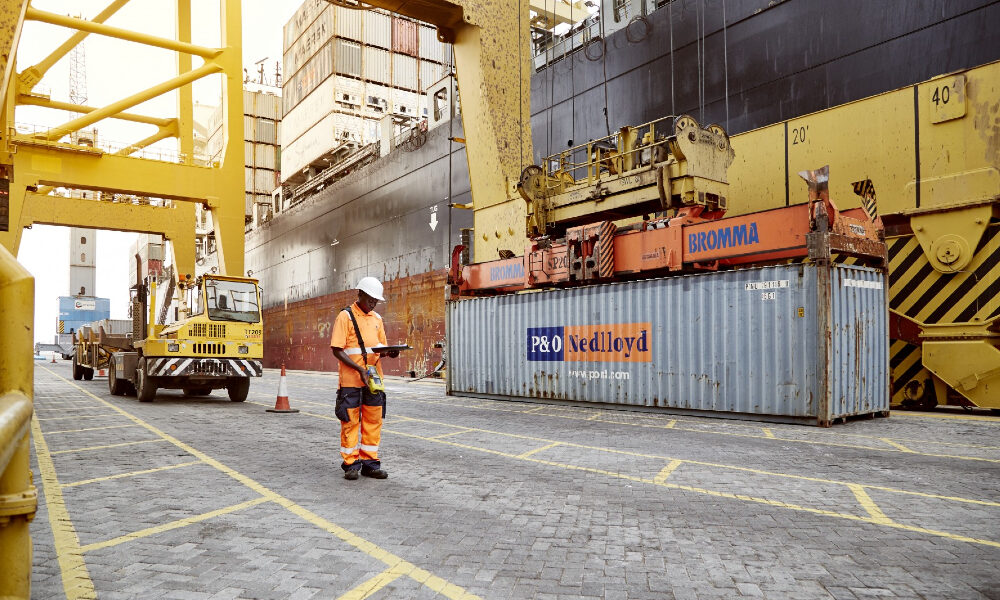
A key driver of this growth is the development of port and harbor infrastructure. Countries like China and Türkiye have already invested heavily in this sector, and the United Arab Emirates (UAE) is ramping up its involvement as well.
With a foreign policy focused on reducing oil dependency, the UAE views Africa’s emerging markets as strategic investment opportunities. Altogether, African companies could see revenue growth exceeding US$550 billion by 2030.
DP World, a Dubai government-owned company, is spearheading the UAE’s investment across the African coastline, with a commitment of US$3 billion over the next five years.
In the Horn of Africa, DP World has developed the Berbera port, officially located in Somalia. In East Africa, the company won a 2023 bid to upgrade and manage part of Tanzania’s Dar es Salaam port, though some initiatives have encountered legal disputes.
In 2009, DP World inaugurated the Djibouti Container Terminal, which initially was welcomed by the Djiboutian government as it opened doors to international trade. However, in 2018, the Djiboutian government took control of the port, arguing that the original deal disproportionately favored DP World.
Legal disputes over this control shift continue in the UK and USA, with rulings largely supporting DP World, though the Djiboutian government persists in contesting these outcomes, arguing the deal does not adequately serve its interests.
Critics view the Chinese-built Doraleh Multipurpose Port, operational in Djibouti since 2017, as part of a broader strategic context related to the Djibouti Container Terminal case.
DP World has also extended its Sustainable Development Impact Disclosure (SDID) initiatives to Senegal and South Africa. In Senegal, it has committed US$300 million to enhance operations, boosting terminal capacity from 265,000 TEUs in 2008 to 800,000 TEUs in 2023 – an upgrade poised to improve regional trade connectivity.
In South Africa, DP World’s activities amounted to US$6.24 billion between 2022 and 2023.
Despite competition and challenges, the UAE is positioned to further expand its footprint across Africa.
Mary Alorh is Director of Administration at DefSEC Analytics Africa Ltd., and is an expert in Gender, Youth, and Peace & Security initiatives in West Africa.