Zina’s Youth View on Africa
U.S. Military Presence in Africa Holds Firm Despite Evolving Security Landscape


By Godfred Zina
Despite perceptions of declining U.S. strategic interest in Africa, American security cooperation with the continent continues to hold firm, underscored by a series of recent military engagements.
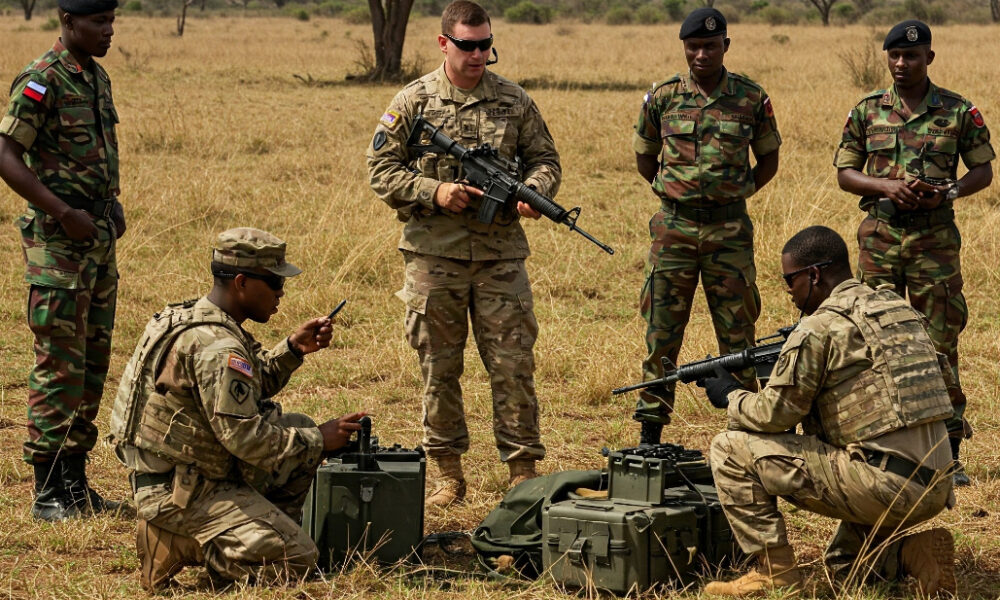
In Ghana, approximately 40 personnel from the 15th Armored Brigade Combat Team and the Engineer Maintenance Element (EME) Corps recently completed a four-week U.S.-led training program focused on the maintenance and operation of the PUMA M36 MRAP armored personnel carrier. This initiative highlights ongoing efforts to bolster local defense capabilities through technical expertise and joint collaboration.
At the continental level, Africa Lion 2025 , the largest annual multinational military exercise hosted by U.S. Africa Command (AFRICOM), commenced in April 2025 in Tunisia. Follow-on activities are scheduled for May in Ghana, Senegal, and Morocco. With participation from over 15 nations, the exercise spans land, air, sea, space, and cyber domains, aiming to enhance readiness, interoperability, and strategic partnerships across the region.
Another key operation, Flintlock 2025 , kicked off in Ghana and Côte d’Ivoire (Ivory Coast), drawing some 1,300 troops from 29 countries. The mission focuses on countering the rising jihadist threat in the Sahel – an instability that has increasingly spilled over into coastal West African states, including Ghana.
Notably, this year’s Flintlock exercises occur against a shifting geopolitical backdrop: Mali and Burkina Faso have recently cut military ties with France, citing ineffective counterterrorism support, and have instead turned to Russia and the Wagner Group for security assistance. This pivot reflects a broader realignment of alliances across the region.
Implications and Concerns
While external military partnerships offer immediate tactical advantages, overreliance on foreign powers – whether the United States or Russia – could discourage African governments from investing in their own long-term defense infrastructure. Should these external actors scale back their involvement – particularly if their primary interests lie in resource extraction or geopolitical influence – local forces may find themselves unprepared and vulnerable.
Moreover, the growing presence of global powers like the U.S. and Russia in countries such as Ghana and Mali raises concerns about the potential for proxy dynamics. Such rivalries risk deepening regional divisions, undermining unity, and complicating coordinated security responses.
These fears were amplified when former Ghanaian President Nana Akufo-Addo raised alarms over Wagner Group operatives operating in neighboring Burkina Faso.
Accountability and Trust at Stake
Collaborations involving non-state actors like the Wagner Group – or even private contractors linked to Western militaries – also pose significant challenges. These arrangements often lack transparency and independent oversight, heightening the risk of human rights abuses and eroding public trust among African populations.
If left unchecked, such incidents could damage the legitimacy of both national militaries and their international partners.
As Africa navigates an increasingly complex security landscape, the challenge lies not only in managing immediate threats but also in ensuring that external engagements contribute meaningfully – and sustainably – to regional peace and sovereignty.
Godfred Zina is a freelance journalist and an associate with DefSEC Analytics Africa – a consulting agency specializing in the provision of accurate data and assessments on security, politics, investment, trade, and other risks within Africa. He is based in Accra, Ghana.