Business
The U.S. and Africa Must Be Equal Partners
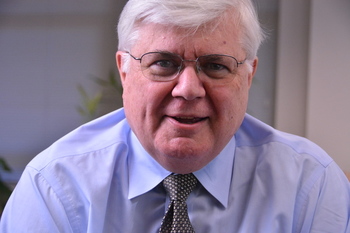
THN: Thank you for taking the time to discuss the ideal trade and investment partnership between the U.S. and Africa. So, what would Stephen
Hayes call an ideal partnership?
SH: It is going to be very hard to even talk about an ideal partnership between the U.S. and Africa simply because you are not dealing with one African entity. What you have is a diversity of countries at different stages of economic development. But, if we want to make progress, we must look into far greater access for African agricultural products in the U.S. market.
If you have a significant percentage of a population engaged in agriculture, then AGOA or any other trade policy is not going to work or impact much
unless it is addressing the immense potential and population. Also, we all must realize that we are not working at the same level. There’s always going to be the need for capacity building. There must also be some infrastructure development. From the U.S. side, you cannot complain about Africa not using AGOA if they do not have adequate power supply or the infrastructure in place, or even a fully trained workforce. So, if these considerations are not integrated into any trade policy, they must, at the very least, be parallel to any effort with Africa because, ultimately, the Africans themselves must benefit from AGOA.
THN: Let’s discuss, if you may, the outlines of an ideal partnership. You mentioned agriculture and so, let us break it down.
SH: For the record, I am not necessarily talking about Tariff Rate Quota (TRQ) products. I mean the whole gamut! TRQs are still limited, as I understand it. But we must talk about the stuff that Africa produces in terms of agriculture – sugar, cotton, groundnuts, tobacco, rice and other things.
THN: But how does one deal with the agricultural lobbies, for instance? They are so powerful.
SH: I guess that’s the point. I agree that dealing with lobby groups is going to be especially difficult. But this relationship with Africa is something that must be improved even if we are going against a large group of lobbyists for farmers and corporations. There’s another side to the argument, and Congress is going to have to deal with it because on the other side is the opportunity to open up a far stronger relationship with 54 different nations. This very relationship could even go a long way in solving domestic problems like the shrinking middle class in America. The more access we have to Africa’s agricultural products, the better it will be for consumers through lower prices. If we have a lobby that keeps out the competition, then they also keep prices up. This is in the interest of the American people, although not necessarily in the interest of the individual companies.
THN: Can you tell me, in your words, why Africa is of importance to the United States?
SH: Africa is important to the U.S. for several reasons. First, it is one of the continents still sympathetic to the United States. There is also a large market that remains untapped, and culturally, there are ties that would make Americans natural partners to Africans everywhere.
THN: So, let’s pivot to South Africa: What is going on in the minds of those working to get that country graduated from AGOA?
SH: I think there are two things – one negative and the other positive. On the positive side, some see AGOA not so much as a trade tool but as one for development. And there’s some truth to that. Therefore, those calling for its graduation see it as a developing country that is benefiting more than other African countries and this is an issue. On the negative side is the punitive issue; punitive because the political relationship between the U.S.
and South Africa has, sometimes had its share of tension. For instance, South Africa was the primary reason that the Southern Africa Customs Union free trade agreement did not go through. But this sort of punitive measure may be a little unwise and even a little unfair. It is unfair to punish
those who have succeeded under AGOA if we are also criticizing those countries that are not fully utilizing its development facets. An argument that
could, ostensibly, hold water is that South Africa needs to open up more of its market to U.S. companies. Of course, the fact that this market is closed to us could be the result of us asking for something equitable from the South Africans. Conversely, we are the ones who put AGOA in place. So, at this stage, we do not have a great bargaining tool to give the other side everything they want and then turn around and so that we need them to give us something as well. We have no major leverage.
THN: With South Africa’s ‘problems’ probably emanating from their Trade, Development and Cooperation Agreement (TDCA) with the EU, what’s your take on Economic Partnership Agreements (EPAs)?
SH: My understanding is that EPAs are unfair to the U.S. I think these give special preference to countries bilaterally, and in having a privileged agreement between the EU and an African country, it means that we are not part of that arrangement, and so, at a disadvantage. Importantly, EPAs are neither in our interest, nor are they in Africa’s interest. When you rule out factors of competition – where you can have more competitors coming in to give you better leverage (and more variety of products) – the EPAs do not help you very much.
THN: Onto regional integration, where do you see the trigger – for dominoes to fall to a potential African Economic Community?
SH: Obviously, the U.S. is betting on the East African Community, and I think the Obama Administration is wise in taking a smaller group, making it work, and then expanding it to the diversity of COMESA – a regional economic community (REC) that has countries spanning from (Egypt in) North Africa to (Lesotho in) Southern Africa – and then from the east (with Uganda and Kenya plus Djibouti), to the west (with the Democratic Republic of Congo). But if you are talking about creating a customs union, COMESA’s diversity is what you need as you do not want to have too many regimes all over the continent, negatively affecting regional integration. So, practically, while SADC and EAC present immediate opportunities, COMESA has the understanding and leadership to get things to the next level.
THN: If you had to advise African leaders on how to get the best out of their summit with President Obama, what would you say to them?
SH: First, if the Africans are going to get some traction, the issue (to be addressed) must be the state of mind in the U.S. I think too many still – regardless of the virtues and the values of the individuals of this administration – too many still see Africa as a development case as opposed to a partnership. If I were to advise the Africans, I’d urge that they ask for an equal partnership, and that they must expect to be treated as such. Of course, I hope that they will also say that they need less development aid, more trade and more working partnerships so that they can be equal decision makers.
Stephen Hayes is president and CEO of The Corporate Council on Africa. In his 13-year tenure as president, he has led CCA to become fully engaged in the most political and economic issues affecting commerce between the U.S. and Africa. These complex issues range from intricate trade legislation and small business development to workplace AIDS concerns. For his work at CCA, Hayes was awarded by the U.S. Department of Commerce
its highest award in 2008, The Ron Brown Award for International Leadership. Before coming to CCA, he was engaged in the international non-profit sector, including key positions in some of the world’s largest international non-profit organizations, including the
World Alliance of YMCAs in Geneva, Switzerland, and the world’s largest student exchange organization, AFS International.
Hayes founded in 1985 the American Center for International Leadership, which was funded by the Rockefeller Brothers Foundation, Ford Foundation and others. In 2008, the Africa Chamber of Commerce of the U.S. honored Hayes with its award for outstanding contribution to U.S.-Africa relations, following then U.S. Sen. Barack Obama as the previous recipient. Hayes was a principal founder of the Infant Formula Campaign, often popularly known as the Nestlé’s Boycott, the only successful global citizens’ campaign.