News
Tunisia: Presidential Election heading for run-off vote
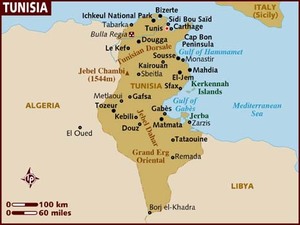
Tunisians voted on Sunday to pick their first directly elected president, with the two major parties expecting a run-off as the final step in the North African state’s transition to full democracy following a 2011 revolution that ousted long-time ruler Zine el-Abidine Ben Ali.
Official results were yet to be announced, but shortly after polls closed, the parties of 2 front-runners said initial tallies showed they had passed to a second round run-off next month.
Beji Caid Essebsi’s secularist Nidaa Tounes party said he was ahead in Sunday’s election by at least 10 percentage points. Essebsi, a former Ben Ali official, and rival Moncef Marzouki, the incumbent president, were expected to be front-runners, but analysts had said neither was likely to avoid a run-off in December.
“Essebsi is ahead according to initial results, with a big difference to the next candidate,” Essebsi’s campaign manager Mohsen Marzouk told reporters. “There is a strong possibility of a second round.”
The campaign manager for Marzouki said their candidate would get through to the second round with Essebsi, but gave no polling figures. Political parties have observers at polling stations who act as witnesses to oversee preliminary counts, which allows them to tally results unofficially for their party.
More than 3 years since overthrowing Ben Ali’s one-party rule, Tunisia adopted a new constitution, and rival secularists and Islamist parties have largely avoided the turmoil that has plagued other North African and Arab states swept by popular revolts.
Sunday’s vote follows the general election in October when the Nidaa Tounes party won the most seats in the parliament, beating the Islamist party Ennahda that had won the first free poll in 2011.
Tunisia’s new government is already facing tough choices, with lenders demanding difficult reforms in public spending to boost growth and create jobs. At the same time, it has launched a crackdown on Islamist militants linked to al-Qaeda who have attacked the armed forces and killed two secularist opposition leaders last year.
Tunisia was the first to topple its long-standing ruler, giving birth to the “Arab Spring” revolts that followed in Libya, Egypt and Yemen and the war in Syria.
Deal-making between secular and Islamist rivals has been a feature of the political stability Tunisia has enjoyed compared to its chaotic neighbor Libya. Tunisia’s Islamists have taken a more flexible approach to allowing officials in the Ben Ali era to return to politics, and avoided the turmoil that has gripped Libya since long-time ruler Muammar Gaddafi was deposed in 2011.
Source: Reuters