News
Trinidad & Tobago reaffirms commitment to Caribbean integration
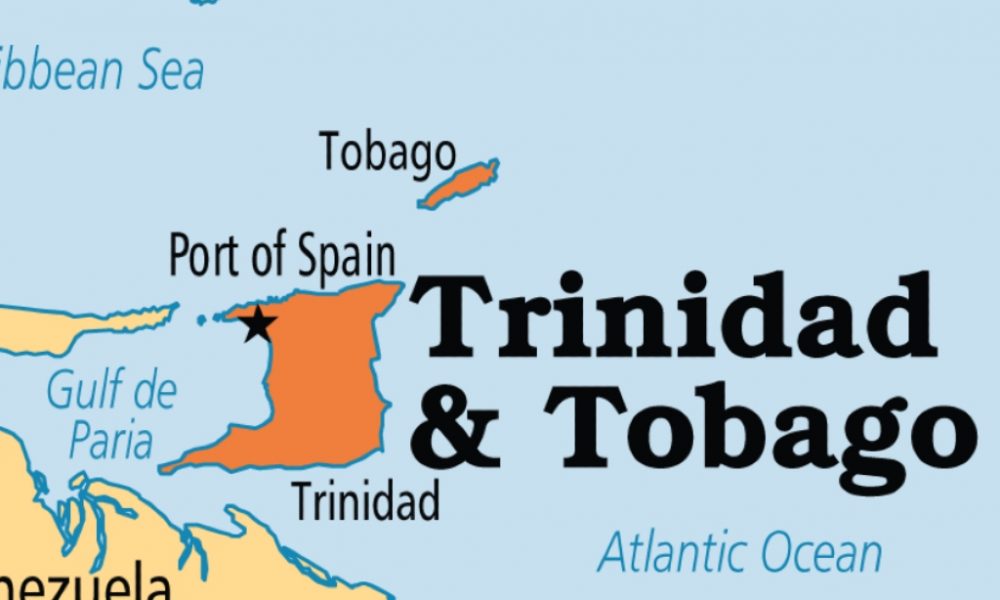
The Rowley administration in Trinidad & Tobago has dismissed the tactics of the main opposition United National Congress (UNC) party as “scaremongering” and re-affirmed its commitment to the regional integration movement – Caribbean Community (CARICOM).
“CARICOM is not the problem, it is the solution to the problem,” Foreign Affairs Minister, Amery Browne told a news conference as he responded to UNC criticism over the government’s move to table the Caribbean Community Skilled Nationals Amendment Bill, 2022, which is now before the Senate.
Opposition Senator Wade Mark, a former speaker of the Trinidad & Tobago Parliament has likened the amendment to efforts by the government to engage in voter padding ahead of the next general election, constitutionally due by 2025.
Further, Mark claimed in the Senate that while the UNC has no objection in principle to the free movement of skilled labor throughout the Caribbean, Trinidad & Tobago is experiencing high levels of unemployment with as many as 170,000 people on the unemployment line.
“We must put the national interest first. We must see about our people who are unemployed first,” asking whether there had been any consultation with the labor movement or civil society about the bill.
“Our very survival and future of CARICOM is in our hands. Our survival, our future is in CARICOM,” Browne said.
The CARICOM Single Market and Economy (CSME) is an arrangement among the 15-member CARICOM member states for the creation of a single enlarged economic space through the removal of restrictions resulting in the free movement of goods, services, persons, capital, and technology.
The decision, in 1989, to establish the CSME was regarded as a move to deepen the integration movement to better respond to the challenges and opportunities presented by globalization.
Browne told reporters that the amendment before the Parliament is intended to achieve a number of things ensuring that Trinidad & Tobago meets its obligations under the revised Treaty of Charguaramas that governs the regional integration movement.
“Also, we must expand opportunities for our people, Trinidad & Tobago nationals to seek employment and to live in participating CARICOM member states. We, our people will now have access to a larger market for employment, investment, and business opportunities.
“More skilled people will now have larger doors to move through and to take full advantage of a regional single economy and market. Also, we will be rectifying an asymmetry whereby Trinidad & Tobago nationals have been at a disadvantage, as our country has been unable to accept applications for skilled certificates in a number of additional categories until we have had legislation to do so.”
Browne told that the legislation will also be beneficial to Caribbean people in the diaspora wishing to move from region to the region armed with much needed skills for the socio-economic development of the Caribbean.
The opposition has claimed that the legislation will allow Caribbean nationals to be able to vote in Trinidad & Tobago, urging the Rowley administration to withdraw the legislation.
Browne reiterated the need for Trinidad & Tobago’s involvement in CARICOM and especially the CSME, “one economy, one CARICOM which benefits all of us.”
“This is the only way in which our country or countries and our region can survive in the modern age. Can be competitive in the modern age and can make best use of all our skills, all our resources and all our people.” -(CMC)