Business
Trinidad & Tobago: Gov’t defends decision to shutdown loss-making Petrotrin refinery
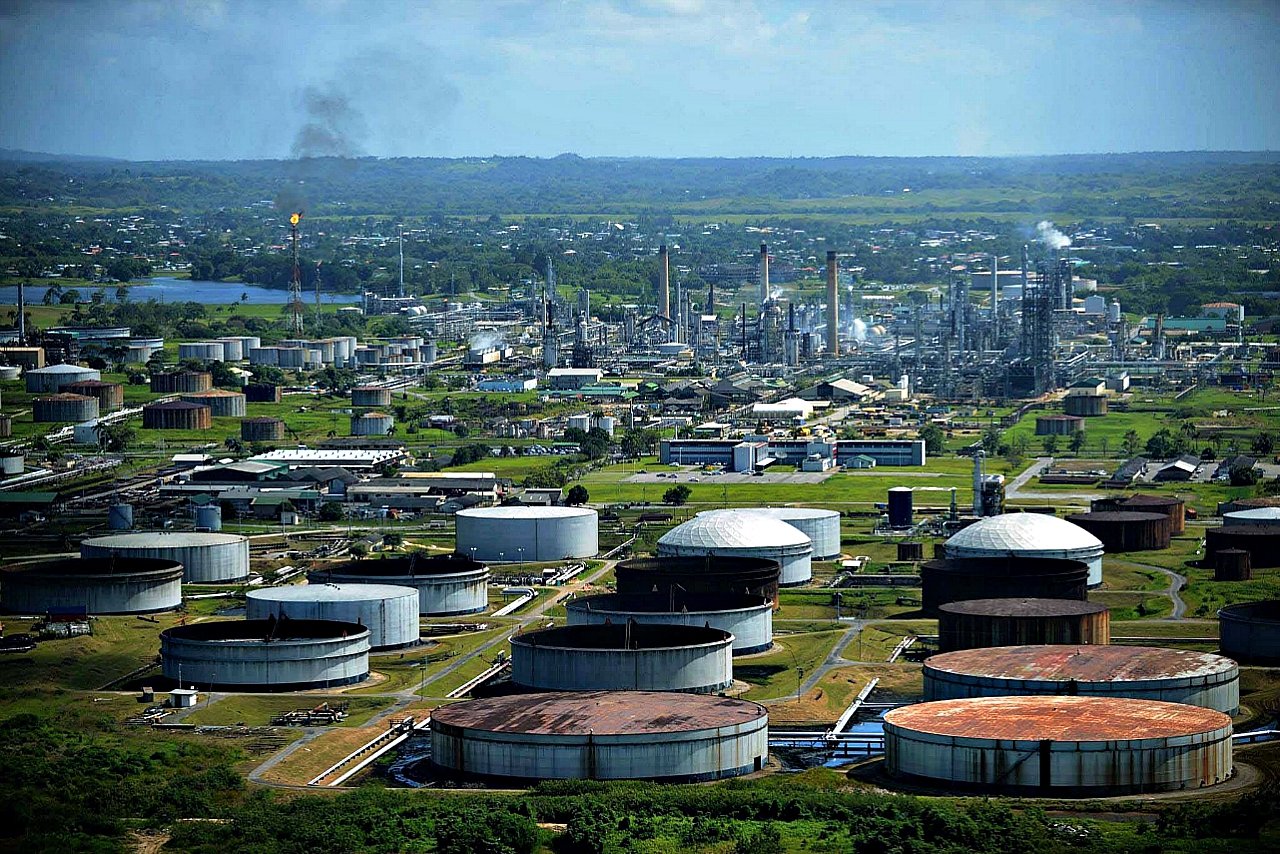
The Trinidad & Tobago government, earlier this week, reiterated its position that it was necessary to close down the refinery of the state-owned oil company, Petrotrin, insisting that the company was losing billions of dollars annually.
Finance Minister Colm Imbert, delivering the TT$51.7 billion (US$8.3 billion) budget to parliament, said that the Keith Rowley administration had agreed following a “comprehensive assessment and analytical review of its operations” to shut down the refining and marketing business unit of Petrotrin.
“We are repurposing Petrotrin which would now focus on the full exploitation of its exploration and production activities and on a new terminalling business through which imports will now meet the demand of Trinidad & Tobago and the CARICOM region for the refined products previously produced by the refinery,” Imbert said.
He said these would include motor gasoline, diesel, aviation fuel, liquefied petroleum gas and other derived and refined products. He said in 1985 when a former people’s National Movement (PNM) had decided to purchase the failing refinery assets from the international private sector in a bid to save jobs, the situation has changed.
“Since that time, the refinery economics have further deteriorated as the refinery has failed to adapt to the changing fuel environment which demanded cleaner standards for fuel technologies in local and foreign markets. The continuing efforts over time by the managerial, technical and governance personnel to improve the efficiency of the refinery to meet the standards for the internationally marketable products fell short of requirements.”
Imbert said that all the major plant upgrades failed – from the gas optimization plant to the ultra-low sulphur diesel complex and the gas-to-liquids plant – all experiencing substantial cost overruns in the process.
The cost of these upgrades has loaded the company with an unsustainable debt burden estimated at TT$12 billion (US$1.92 billion) of which TT$5.780 billion (US$925 million) is due in August 2019.
“While the company continued to incur persistent losses, the gasoline optimization initiative saw its cost rise from TT$2.45 billion (US$392 million) in 2005 to TT$12.6 billion (US$2.02 billion) when it was completed in 2013, the cost of the unfinished gas-to-liquids plant rose from TT$1.55 billion (US$248 million) to TT$3.15 billion (US$504 million) and that the cost of the ultra-low sulphur diesel complex rose from TT$791 million (US$127 million) to TT$2.89 billion (US$462 million).”
While the project is 98 percent mechanically completed, it cannot be operated because the structural specifications were not followed, meaning that the foundation is faulty and cannot be used. It would take TT$2.5 billion (US$400 million) to rectify the defects, Imbert added.
Over 4,500 Jobs at stake
According to Imbert, in the context of these managerial failures, the size of the employee-base at Petrotrin remained in the vicinity of 5,000, divided between the refining and marketing business unit and the exploration and production business unit.
“In addition, the monthly wage bill amounted to TT$2.2 billion (US$352 million) on an annual basis. Coupled with this wage bill, the medical plan was running at an annual cost to Petrotrin of approximately TT$245.0 million (US$39.2 million) but with very low contribution rates by the employees.”
The company’s medical plan currently covers 21,000 present and past employees and their unmarried family members under the age of 21 or under the age of 23 if still in school.
“It effectively covered a Petrotrin employee and spouse until death. This has to be one of the most generous medical plans in Trinidad & Tobago, if not in the entire Caribbean region,’ Imbert told legislators.
He said the survival of the company was only possible through the non-payment of TT$3.5 billion (US$560 million) in taxes and royalties, in breach of the law, and the procuring of government guarantees in the amount of TT$1.5 billion (US$240 million) for loans from financial institutions which have significantly increased the public debt.
Imbert said the government will do all that it can to assist displaced workers at Petrotrin to transition to their new circumstances.
“We will provide all available support at our disposal. And we will work with the company to ensure that adequate funds are available to pay termination benefits on time and in full,” he said, adding “we are confident that the reinvented Petrotrin will resume its rightful place as a leader in the oil and gas sector of Trinidad & Tobago and will become a profitable and efficient entity that makes a positive contribution to the Treasury and the country. – (CMC).