A Diaspora View of Africa
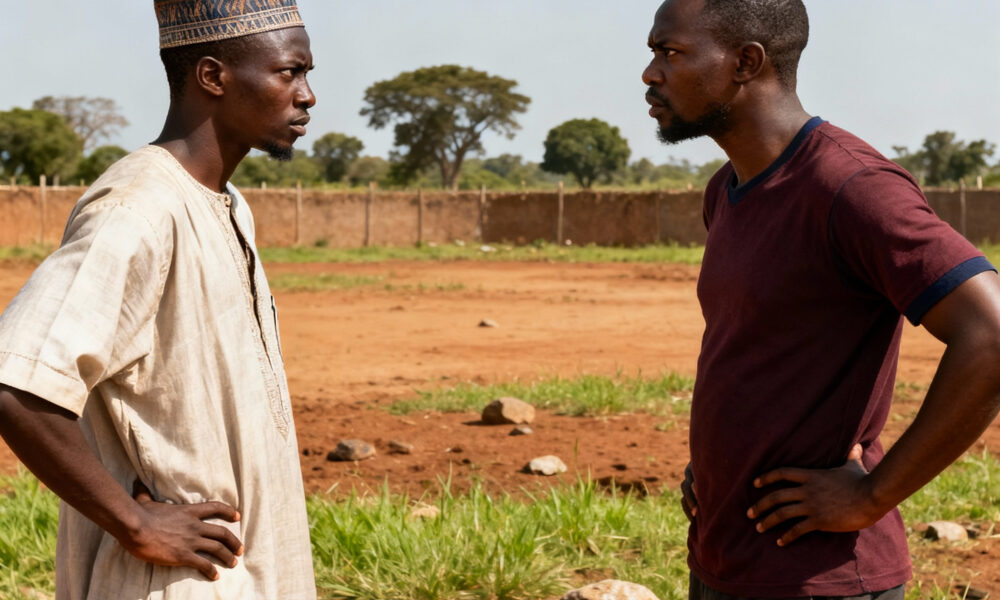
Tribalism Is a Global Concern


By Gregory Simpkins
In all the time I have analyzed African politics and economics, I have refused to refer to groups such as Zulu, Fulani, Acholi or Swazi as tribes. By definition, of course, they are would be considered tribes, but since European and other ethnic groups around the world are not usually called by that term, I refer to what would be called tribes in Africa as ethnic groups.
Using that term solely for Africans (and Native Americans) makes them seem primitive in my view, but that is only in comparison to how similar groups are described elsewhere.
The definition of tribalism, which comes from the ancient Latin word “tribus” and can be defined to mean an extended kin group or clan with a common ancestor. A tribe also can be described as a group of people who share the common interest of mutual survival and preservation of a common culture.
Some tribes can be located in geographically proximate areas, like villages or bands, and although telecommunications in theory could enable groups of people to form tribe-like communities, digital tribes and social networking websites are not quite tribes in that they do not inherently provide the mutual survival of both the individual members of the tribe and for the tribe itself, as tribes do.
Tribalism implies the possession of a strong cultural or ethnic identity that separates one member of a group from the members of another group. Based on strong relations of proximity and kinship, as well as relations based on the mutual survival of both the individual members of the tribe and for the tribe itself, members of a tribe tend to possess a strong feeling of identity.
Objectively, for a customary tribal society to form there needs to be ongoing customary organization, inquiry and exchange. However, intense feelings of common identity can lead people to feel tribally connected. Ethnic or tribal disputes in Africa are well-publicized such as:
- South Sudan’s Tribal Conflict: Ongoing conflict between the Dinka and Nuer tribes, has led to widespread atrocities and humanitarian crises.
- Ethiopia’s Ethnic Tensions: Ethnic violence, especially in the Tigray region between Amhara and ethnic Tigray, has escalated civil strife and further entrenched divisions.
- Nigeria’s Ethnic Conflicts: Conflicts between Fulani herders and numerous non-Fulani ethnic groups in the farming communities have resulted in violence and numerous casualties. Anti-Ibo sentiment led to horrific killings during the Biafran conflict in the 1960s.
- Democratic Republic of the Congo (DR Congo): Conflicts driven by ethnic factions over control of mineral-rich areas continue to fuel violence, as well as over citizenship issues, have long plagued eastern DR Congo.
- Central African Republic (CAR): Ethnic conflicts have destabilized local communities and escalated threats of domestic and regional terrorism.
Unfortunately, ethnic conflict is seen in countries across the African continent.
The Global Reach of Ethnic Conflict
Yet, such conflict is not confined to Africa. In fact, ethnic conflict can be observed in other areas of the world:
Europe
- Ukraine-Russia Conflict: Conflict is ongoing between Ukraine and Russia, with Russia occupying Crimea and supporting separatist groups in eastern Ukraine. This is an ethnic issue, with Russia claiming that Russian-speaking Ukrainians want to be part of Russia.
- Nagorno-Karabakh: Dispute between Armenia and Azerbaijan and their respective ethnic groups over the Nagorno-Karabakh region has flared, which has led to armed conflicts and humanitarian crises.
- Kosovo-Serbia Conflict: Ongoing tensions between Kosovo and Serbia, with Kosovo declaring independence in 2008, but Serbia still claiming it as part of its territory. This is an ethnic as well as political matter.
Near and East Asia
- Israeli-Palestinian Conflict: There is a longstanding dispute between Israelis and Palestinians over territory, rights and self-governance, and Arab antipathy for both groups doesn’t help the matter.
- Sino-Indian Border Dispute: Ongoing tensions exist between India and China over border demarcations, particularly in the Aksai Chin and Arunachal Pradesh regions.
- Kyrgyzstan-Tajikistan Conflict: Sporadic clashes have broken out between Kyrgyzstan and Tajikistan and their ethnic groups over border disputes and resource allocation.
South America
- While there aren’t as many prominent ethnic disputes in South America as in other regions, some border disputes with ethnic elements exist, such as:
- Belizean-Guatemalan Territorial Dispute: A territorial dispute between Guyana and Venezuela over the oil-rich Essequibo region, has led to rising tensions and diplomatic efforts to resolve the issue.
Caribbean
The Caribbean region has experienced ethnic disputes, particularly between countries sharing the island of Hispaniola, namely the longstanding conflict between the Dominican Republic and Haiti. Here are some key points about their dispute:
- Historical Background: The two countries have a complex history, with the Dominican Republic and Haiti having been a single colony under Spanish and French rule, respectively. This led to distinct cultural and ethnic differences, with the Dominican Republic having a mix of Spanish, African, and indigenous influences, while Haiti’s population is predominantly of African descent.
- Migration and Economic Disparities: Many Haitians migrate to the Dominican Republic seeking better economic opportunities, which has led to tensions between the two nations. The Dominican Republic’s economy is significantly larger, with a GDP roughly ten times that of Haiti.
- Border Disputes and Violence: The border between the Dominican Republic and Haiti has been a source of conflict, with disputes over territory, resources and migration. The Parsley Massacre in 1937, during which thousands of Haitians were killed, is a dark chapter in their shared history.
- Current Tensions: Today, tensions persist due to issues like migration, economic disparities and cultural differences. The construction of a border wall by the Dominican Republic has further strained relations.
- Efforts at Cooperation: Despite these challenges, there have been attempts at cooperation between the two countries, including agreements on trade, health, and infrastructure.
Much of the ethnic discord in the Caribbean involves the denial of rights to the original indigenous populations of the region. For example, in 2015, the Maya people of Toledo District, Belize obtained a historical ruling in the Caribbean Court of Justice (CCJ) affirming rights to lands they occupy, use, and enjoy.
The CCJ’s recognition of the Maya system of communal land tenure as commensurate with the private property rights outlined in the constitution of Belize was unprecedented. The Maya’s victory in the CCJ followed a series of contentious legal clashes that spanned nearly two decades.
The denial of full rights to these populations throughout the Caribbean and South America are more widespread than has been acknowledged.
Among black people in the United States, we assume that white people speak of us disparagingly in private, though we seldom acknowledge that we too often speak of them disparagingly in private as well.
The US Ethnic Divisiveness
Growing up the America in the 1950s and ‘60s, I witnessed firsthand the troubled transition of black people to full political and economic rights in this country. White racism was quite blatant in those days, and while it has toned down quite a bit, it has not disappeared.
By toning down, I mean that there have been efforts to avoid openly racist statements and actions by most white people, but an unspoken resentment lingers that interferes with efforts at racial reconciliation.
What also interferes with racial reconciliation in this country is what could be called reverse racism by blacks against whites despite a relative lack of power to discriminate. Among black people in the United States, we assume that white people speak of us disparagingly in private, though we seldom acknowledge that we too often speak of them disparagingly in private as well.
More than that, there are divisions among black people in the United States based on complexion, economic status, regional and national origin and increasingly for political affiliation. I remember growing up and hearing the saying: “If you’re light, you’re alright; if you’re brown, stick around, but if you black, get back.”
There were high schools in my hometown of Washington, DC, which declined to admit darker-skinned student and churches that avoided darker-skinned members unless their economic status was higher.
We have overcome much of this divisiveness among our people only to now fall into political division. I have a cousin with whom I grew up who recently told me he no longer wants to speak with me because we have opposing political views concerning leaders neither of us know personally and whose actions neither of us control or influence.
So, ethnic disputes, tribalism if you will, is not confined to Africa and is as poisonous elsewhere as it has been on the continent. Since the massacres and lynchings of black people a century ago, we have not witnessed such outright ethnic violence here on a large scale as we have seen in Africa, and while one hopes we never will, any such group conflict has the potential of erupting into violent confrontations that can escalate.
Gregory Simpkins, a longtime specialist in African policy development, is the Principal of 21st Century Solutions. He consults with organizations on African policy issues generally, especially in relating to the U.S. Government. He further acts as a consultant to the African Merchants Association, where he advises the Association in its efforts to stimulate an increase in trade between several hundred African Diaspora small and medium enterprises and their African partners.