Opinion
Trade Blocs Need More Than Good Intentions – They Need Working Systems


By Dishant Shah
Trade blocs often sound like the ultimate solution to regional prosperity. On paper, they promise unified markets, stronger negotiating power, streamlined supply chains, and economic resilience.
The vision is compelling: neighboring nations setting aside differences to build shared wealth through seamless trade.
But too often, that vision crumbles the moment it hits the ground.
While policymakers sign agreements and celebrate milestones, traders on the frontlines face a different reality – one of border delays, inconsistent regulations, fragmented logistics, and bureaucratic bottlenecks. The truth is, no amount of elegant policy language can compensate for broken roads, disconnected digital systems, or a lack of political follow-through.
The Gap Between Policy and Practice
Take the East African Community (EAC), frequently cited as one of Africa’s most advanced regional blocs. It boasts a customs union, a common market, and even aspirations for a monetary union.
Yet, a trucker hauling goods from Mombasa to Kigali will tell you that “common market” feels more like a slogan than a system.
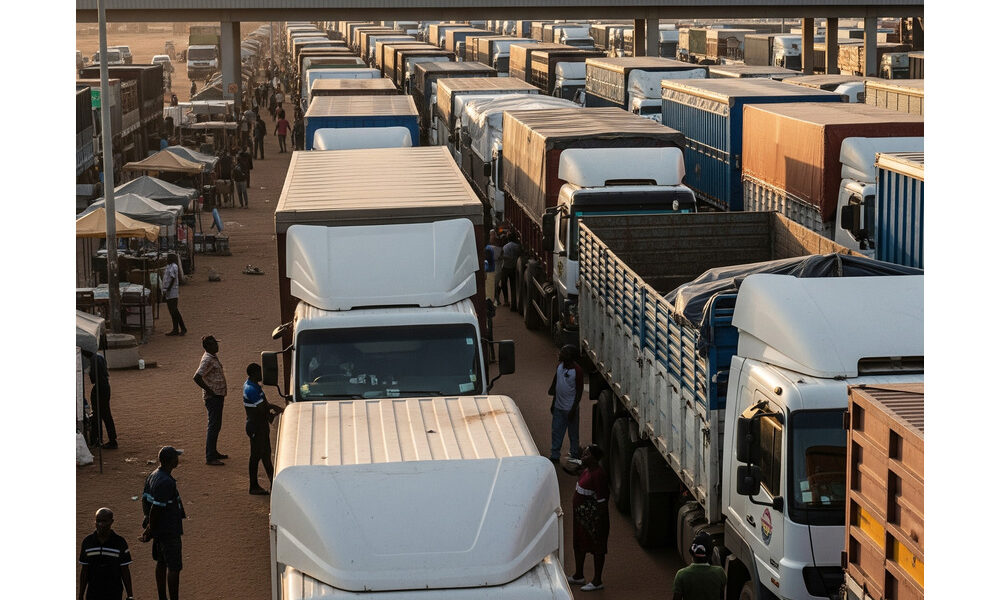
At border crossings like Namanga or Rusumo, delays stretch into days. Inconsistent customs interpretations, demands for informal payments, and outdated clearance processes plague the journey. Real-time data sharing between countries remains limited.
Currencies differ. Road conditions degrade. And political priorities shift with each election cycle.
The result? A trade bloc with impressive frameworks – but little real integration.
Compare this to the European Union, a union forged across far greater linguistic, cultural, and historical divides. Despite its own challenges, the EU enables goods to move across 27 countries with remarkable efficiency.
How? Not through cultural homogeneity, but through frictionless systems: integrated digital customs platforms, harmonized regulations, cross-border rail and road networks, and – for many members – a shared currency.
The lesson is clear: trade isn’t enabled by tariffs alone. It’s powered by movement.
What Really Makes Trade Work
Lowering tariffs is just the first step – the symbolic opening of the door. What matters more is what happens next:
- Can goods cross borders in hours, not days?
- Can payments be processed instantly across jurisdictions?
- Can businesses trust that rules will be applied consistently?
- Is there a unified logistics backbone to support the flow of commerce?
Without these elements, even the most ambitious trade agreement becomes a policy shell – elegant in PDF form, but hollow in practice.
This is where many regional initiatives falter. They focus on high-level agreements while underinvesting in the physical and digital infrastructure that makes trade real.
They assume cultural or linguistic proximity will naturally lead to integration, ignoring the fact that shared systems matter far more than shared heritage.
Shared Vision, Not Just Shared Language
Consider ASEAN – the Association of Southeast Asian Nations. It unites ten countries with vastly different political systems, religions, and languages, from Buddhist-majority Thailand to Muslim-majority Indonesia and communist Vietnam.
Yet, ASEAN has become a significant economic force by prioritizing practical integration: improving port connectivity, harmonizing customs procedures, and attracting regional investment.
Its success isn’t rooted in cultural similarity. It’s rooted in a shared vision – a commitment to economic resilience through cooperation, even amid differences.
That’s the mindset shift needed across emerging trade blocs: integration isn’t about eliminating differences. It’s about building systems that work despite them.
The Non-Negotiables of Regional Trade
So, what does it take for a trade bloc to succeed?
- Shared logistics infrastructure – reliable roads, rails, ports, and digital tracking systems.
- Interoperable payment and customs platforms – enabling fast, transparent transactions.
- Political will that outlasts elections – consistent commitment across administrations.
- A culture of trust and accountability – reducing reliance on informal payments and arbitrary enforcement.
- A unified vision – not uniformity, but alignment on goals and outcomes.
A common currency helps – as the euro has for much of Europe – but it’s not essential. Shared language or ethnicity? Even less so. What’s essential is the alignment of systems, incentives, and expectations.
The Bottom Line
A trade deal means nothing if the goods can’t move.
True regional integration doesn’t happen in conference rooms or legal documents. It happens at border posts, on highways, in shipping terminals, and within digital payment networks.
It happens when a trader in Nairobi can move goods to Kampala or Bujumbura as easily as a German exporter ships to France.
Until trade blocs invest as much in implementation as they do in declaration, they will remain architectural wonders built on sand.
The future of regional trade doesn’t depend on more agreements. It depends on better systems – and the collective will to make them work.
Dishant Shah is a partner at Legion Exim, a company specializing in facilitating the export of high-quality engineering products directly sourced from manufacturers in India to Africa. His areas of expertise include new business development and business management.