Zina’s Youth View on Africa
Togo at a Crossroads: Dynastic Rule, Constitutional Contortions, and the Future of Democracy
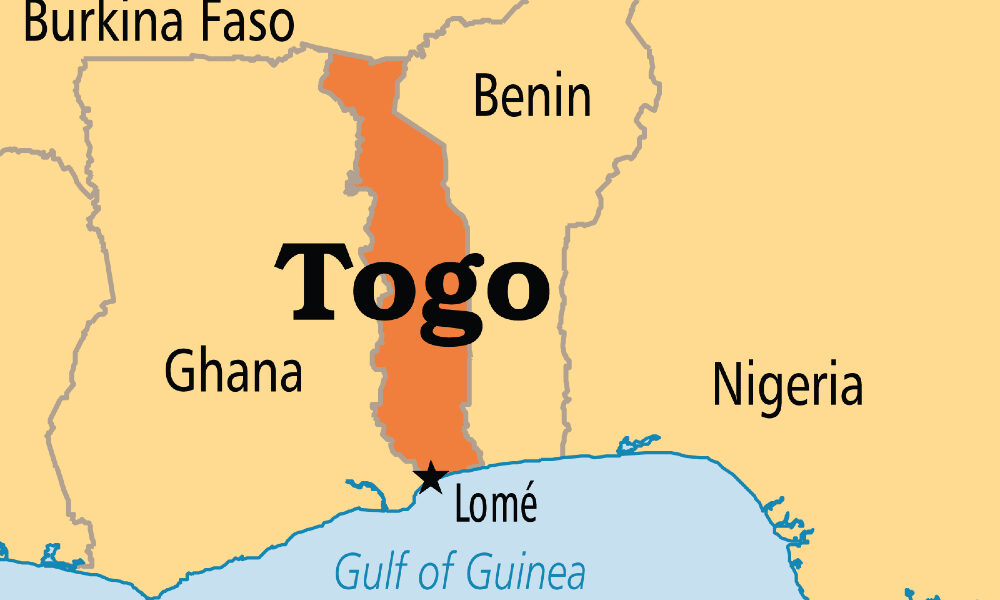


By Godfred Zina
A year after my initial analysis of Togo’s political trajectory, the nation finds itself at a pivotal juncture. President Faure Gnassingbé, heir to a six-decade political dynasty, has consolidated power further by assuming the newly created role of President of the Council of Ministers – a position critics argue could entrench his rule indefinitely.
This development, rooted in constitutional amendments passed in 2023, raises urgent questions about democracy, stability, and the resilience of West Africa’s fragile governance frameworks.
A Dynasty Entrenched: Constitutional Manipulation and Power Consolidation
Togo’s constitutional overhaul, which erased term limits and allowed Gnassingbé to seek re-election in 2024 and beyond, has now morphed into a structural power grab. The new Council of Ministers presidency – a post previously nonexistent – effectively transfers executive authority from the presidency to a role Gnassingbé will retain even if he formally steps down as head of state.
Crucially, the reforms do not retroactively count his 18 years in office, meaning he could theoretically remain in power until 2032 or longer. With his Union pour la République (UNIR) party dominating parliament, the path to perpetual incumbency appears disturbingly unimpeded.
The implications are stark: a hollowing out of democratic institutions, the erosion of checks and balances, and a regression toward autocratic governance. By diluting the presidency’s substantive powers and centralizing authority within the Council of Ministers, Gnassingbé’s move mirrors tactics seen in other long-standing African regimes, prioritizing regime survival over national progress.
Military Loyalty and the Specter of Instability
For years, Gnassingbé’s tight grip on the military – a legacy of his father’s authoritarian rule – has shielded Togo from coups, a recurring scourge in West Africa. Yet this stability is precarious.
Economic stagnation, soaring youth unemployment, and regional insecurity (notably spillover from Sahel conflicts) create fertile ground for unrest. Historically, Togo’s military has been both a stabilizer and a destabilizer; any fracture in loyalty – or a crisis severe enough to test its allegiance – could reignite coups or civil strife.
Regional and Global Stakes: A Call for Vigilance
The African Union (AU) and Economic Community of West African States (ECOWAS) face a critical test. Their past commitments to democratic norms, including ECOWAS’s historic opposition to unconstitutional changes of government, must now confront Togo’s legalistic but corrosive power play.
Advocacy for inclusive dialogue, mediated by civil society and opposition groups, is essential to prevent further democratic backsliding.
Meanwhile, the international community – including the U.S., EU, and France – must balance diplomatic engagement with targeted pressure. Sanctions or aid suspensions, as seen in response to similar crises in Mali or Burkina Faso, could force concessions, but risk alienating a regime adept at leveraging geopolitical rivalries.
Democracy in Peril
Togo’s democratic experiment, once hailed as a cautious success story in the 2010s, now hangs in the balance. The Gnassingbé dynasty’s survival strategy – constitutional manipulation, institutional erosion, and militarized patronage – threatens to unravel decades of incremental progress.
Without sustained regional and global scrutiny, Togo risks becoming the latest West African nation to succumb to the siren call of eternal rule.
As history shows, authoritarian transitions rarely occur in a vacuum. What unfolds in Lomé will reverberate across a region already grappling with democratic fatigue.
The time for complacency is over.
Godfred Zina is a freelance journalist and an associate with DefSEC Analytics Africa – a consulting agency specializing in the provision of accurate data and assessments on security, politics, investment, trade, and other risks within Africa. He is based in Accra, Ghana.