Opinion
To Build ‘Made in Africa,’ We Must First Build Africa


By Davida Ademuyiwa
Across boardrooms and policy forums, the phrase “Made in Africa” is gaining momentum – a rallying cry for a continent ready to assert itself not just as a source of raw materials but as a global manufacturing and innovation hub. But before we can slap that proud label on our exports, we must confront a fundamental truth: you cannot scale production on shaky foundations.
You cannot manufacture excellence without electricity. You cannot ship goods without roads.
And you certainly cannot build globally competitive African brands in the absence of basic infrastructure.
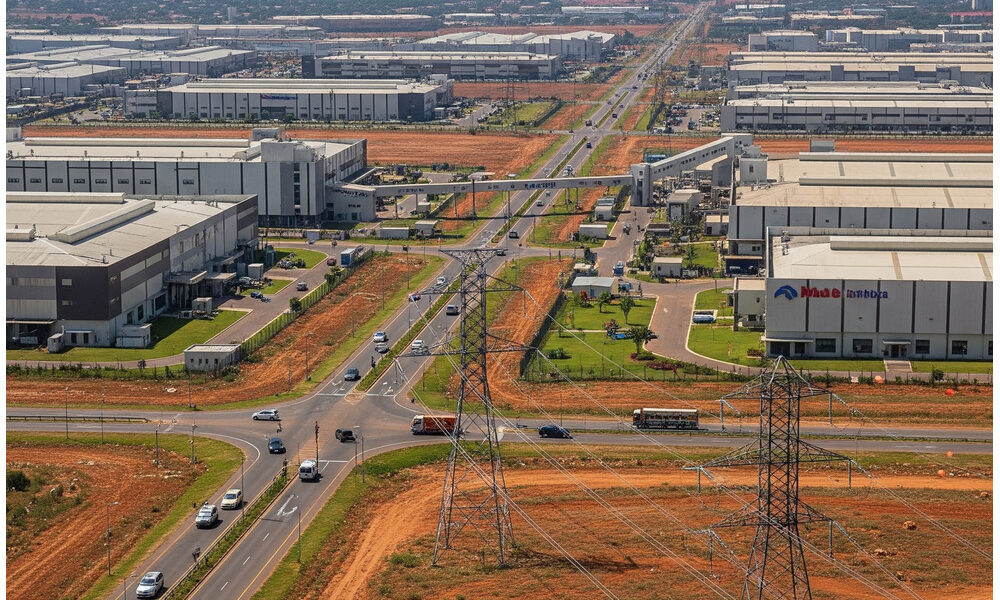
If Africa is serious about industrial transformation, then the real work starts not on the factory floor, but beneath it – in the power lines, roads, water pipes, fiber optic cables, and ports that enable economies to grow and products to move.
From Raw Extraction to Value Creation
For decades, Africa has been trapped in a cycle of raw extraction. We export what we dig, not what we design or build.
The promise of “Made in Nigeria,” “Made in Kenya,” or “Made in Tunisia” will remain a dream unless we radically shift our priorities – from exporting commodities to enabling value-added production.
Africa’s future lies in building the enabling systems that make complex supply chains possible. It’s not just about setting up factories. It’s about creating environments where factories thrive.
What Africa Needs to Build First
Before we talk about scaling African exports, we must ask: are we building what’s needed to support them?
- Industrial Cities and Special Economic Zones: Africa needs hubs of concentrated productivity – not just informal marketplaces, but fully equipped zones with logistics support, industrial clustering, and incentives for innovation.
- Reliable Transport Infrastructure: Roads, railways, and ports must serve the movement of finished goods – not just mineral ore or oil barrels. A container of processed food or textiles should move with the same ease as raw cocoa or crude oil.
- Modern Energy Systems: Off-grid solar may power rural homes, but manufacturing demands uninterrupted, large-scale energy. National grids must be made reliable, scalable, and clean.
- Digital Infrastructure: The next generation of African competitiveness depends on connectivity – from high-speed broadband and satellite internet to data centers and smart logistics systems.
- Water and Utilities: Industrial processes cannot function without stable access to clean water, sewage systems, and environmental regulation. Infrastructure must serve industry as well as households.
For Investors: This Is the Real Opportunity
The greatest investment opportunities in Africa are no longer in extraction – they are in enabling transformation. The continent’s rising population, growing middle class, and urbanization trends all point toward a future built on consumption and production, not just export of raw materials.
Investors have a critical role to play:
- Fund Infrastructure Projects: Energy, roads, ports, and water systems are the bedrock of long-term growth.
- Support Industrial Corridors: Back regionally integrated trade routes and clusters that encourage cross-border commerce and production.
- Finance Digital and Physical Logistics: From e-commerce logistics platforms to cold chains and warehouse hubs, Africa needs modern supply systems.
- Invest in Innovation Zones: City-level innovation districts can anchor tech, manufacturing, and design industries together – creating the next “Silicon Savannahs” and “Green Industrial Zones.”
From Potential to Production
The phrase “Made in Africa” should not remain a slogan. It should become a standard of quality – synonymous with resilience, innovation, and sustainability.
But to get there, we must stop thinking of industrialization as simply building factories. We must start thinking in ecosystems.
Before we can export excellence, we must build the conditions that make excellence possible.
The choice before us is clear: do we remain tethered to the past – economies built on extraction and dependence – or do we forge a new path, one rooted in production, infrastructure, and economic sovereignty?
The world is watching. And Africa must decide: are we ready to build the foundations of our own future?
Davida Ademuyiwa is a UK politician and founder of DaviGlobal International Trade & Investment. She facilitates cross-border investment and connects capital with scalable ventures across the UK, Europe, the Middle East, and Africa. She also serves as Regional Ambassador for the Conservative Policy Forum in the East of England, contributing to grassroots policy dialogue alongside her work in global trade and investment.