Business
Is it time for converged African stock markets?
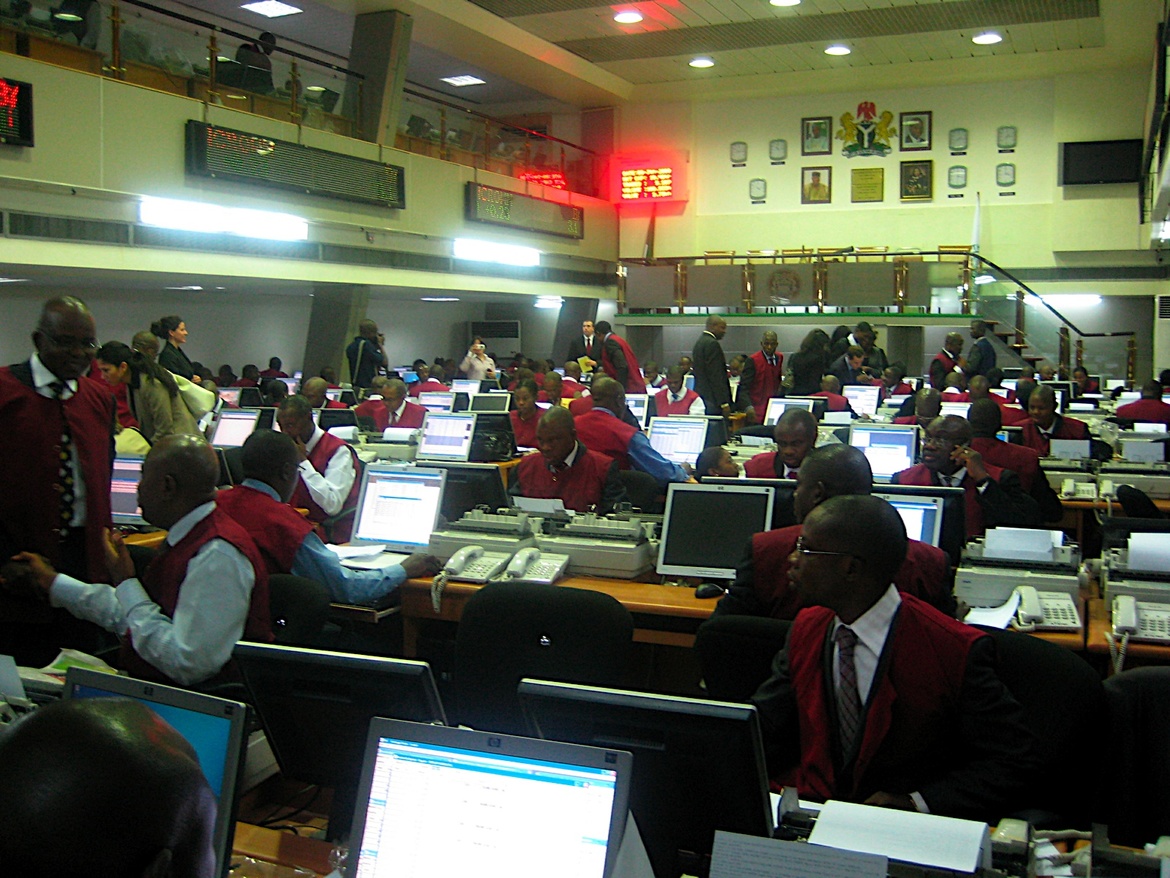
By James Anyanzwa
African capital markets regulators are working on a grand plan to merge all stock markets on the continent to reduce the cost of trading, facilitate cross-border trade in stocks and provide investors with a diversified basket of financial products and services.
The unification of the exchanges under the African Exchanges Linkage Project will, among other things, involve harmonizing trading rules and regulations, settlement cycles, listing fees and the cost of trading in shares and bonds across the countries.
The exchanges will also be linked electronically, helping investors to trade in shares across the borders.
Pilot
The pilot program involving 6 exchanges – Nairobi Securities Exchange, Johannesburg Stock Exchange, Nigerian Stock Exchange, Casablanca Securities Exchange, Stock Exchange of Mauritius and Bourse Régionale des Valeurs Mobilières – is expected to start in the first quarter of 2018.
The trial project will take 6 to 12 months, and it will involve connecting trading, clearing and settlement cycles and procedures across the 6 markets.
According to the chief executive of the Nairobi Securities Exchange, Geoffrey Odundo, consultations are under way on the operability of the project.
“Our technical teams are looking at various reports and global experiences,” said Odundo.
A number of technical committees have been set up to work on the harmonization criteria.
But, while the idea looks rosy on paper, critics say its implementation could prove a tall order, considering that attempts by regional blocs such as East African Community (EAC), Southern African Development Community (SADC), Common Market for Eastern and Southern Africa (COMESA) and the Economic Community of West African States (ECOWAS) to integrate their stock markets have not been easy.
“It sounds like a great idea to increase the continent’s market activity. But we have a long way to go. There lies a huge task to harmonize regulations and inter-operability across the countries involved.
“Some exchanges have demutualised while others have not, which would be a factor to consider while drafting the commission-sharing agreement,” said Eric Munywoki, head of research and business development at Sterling Capital in Nairobi.
Implementation
According to Daniel Kuyoh, senior investment analyst at Alpha Africa Asset Managers, capital markets legislation in different countries could make implementation of this project difficult.
“The legislative roadblocks as well as capital market objectives in different countries will make this an uphill task to achieve,” said Kuyoh.
“I believe that making the flow of labor, capital, goods and services easier will be a step in the right direction, before amalgamating exchanges. So far there is no clear benefit of merging the stock markets since African exchanges were not designed with convergence in mind,” he added.
According to Robert Baldwin, chief executive of Uganda’s Crested Capital Ltd, the problem with African stock exchanges is that the majority of the shares are being held by a few institutional investors and therefore they are not traded. In addition, the poor performance of most of the listed companies has reduced demand for their stocks.
“The small investors are the backbone of any successful stock market in the world. Liquidity is a factor of shareholder mix and company performance.
“If the majority of a company’s shares are held by a few institutional investors the shares will not be liquid. Likewise, if a company performs poorly, it is unlikely to attract buyers and hence liquidity will suffer,” said Baldwin.
Copyright 2017 The East African. All rights reserved