Business
The Unseen Backbone of Africa’s Real Economy: Trust, Not Glass Towers


By John Dale
In an era obsessed with sleek co-working spaces, Instagram-friendly packaging, and investor pitch decks, the enduring engine of commerce across much of Africa remains refreshingly unglamorous: traditional trade.
It doesn’t live in glass-walled offices. It doesn’t run on branded aesthetics or digital ad spend.
Often, it operates without air conditioning, websites, or even a receptionist. And yet – quietly, consistently, and profitably – it moves millions in commodities, supports families, and fuels real economic mobility.
Trust Is the Currency – Not Branding
At its core, traditional trade is local, grassroots, and trust-based. It thrives not on appearances, but on reliability: delivering the right quality, at the right time, to the right partner.
In this world, reputation is currency. Once you are trusted, you are in demand – not because you chased visibility, but because the market itself becomes your advocate.
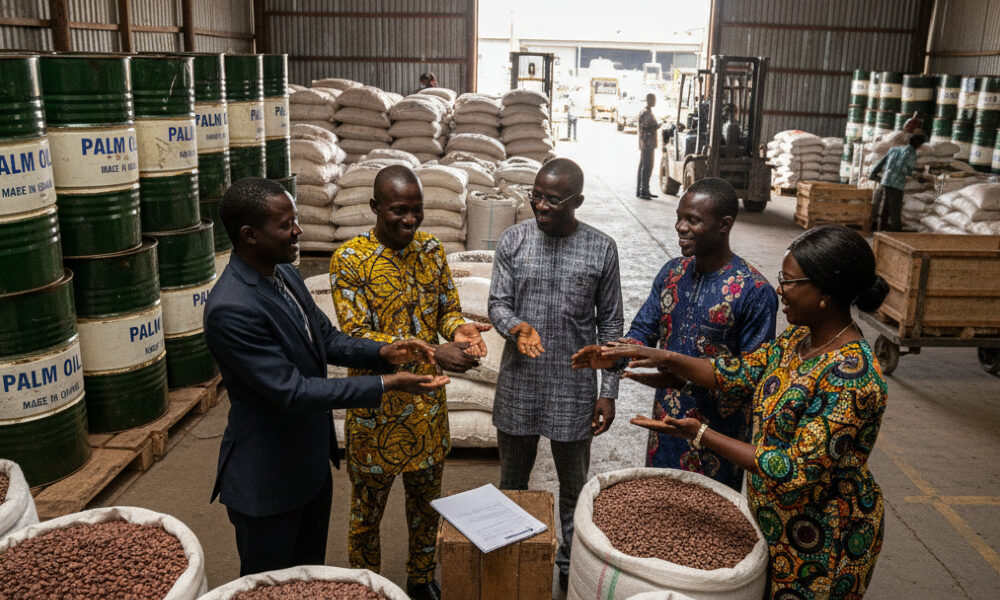
I have seen multi-million-naira palm oil deals sealed over a single phone call. No contracts stamped in boardrooms.
No glossy brochures. Just mutual understanding, proven consistency, and a shared language of quality – measured in free fatty acid levels, moisture content, and kernel-to-oil ratios (KOR), not LinkedIn followers.
In my own palm oil network, 31 people – 22 of them women – operate across several villages. None sit in corporate offices.
None carry business cards. Yet many earn more than mid-level bank employees, supporting households and funding education.
This isn’t charity; it’s performance-based economics in its purest form. Compensation follows contribution, not job titles.
Overhead is near zero. Every naira spent touches the product – not the floor polish.
The ROI of Real Work – Not Real Estate
This model defies modern startup orthodoxy. There’s no “burn rate” culture here.
No VC-funded race to scale before proving unit economics. Instead, traditional traders achieve returns upwards of 120% per cycle – without branches, without marketing budgets, and often without electricity.
Their infrastructure? A warehouse, a table, and a network that trusts them.
Meanwhile, too many aspiring entrepreneurs pour savings into luxury office leases and designer packaging before securing a single serious buyer – prioritizing the illusion of success over the substance of delivery. But in real trade, no one asks where your office is. They ask: Can you deliver? Is your product consistent? Are you reliable?
The Real Economy Thrives Where the Gloss Ends
The irony is stark: as inflation erodes savings and formal job markets stagnate, traditional trade offers one of the most resilient pathways to wealth creation in Africa. Yet because it lacks shine, it’s often overlooked – dismissed as “informal” or “unstructured” by those who mistake form for function.
But the real economy doesn’t live in pitch decks. It lives in villages, markets, and warehouses where men and women move commodities across 36 states not through venture capital, but through trust, discipline, and relentless execution.
For investors, policymakers, and young entrepreneurs seeking genuine opportunity, the lesson is clear: look beyond the gloss. Study traditional trade.
Partner with its integrity-driven practitioners. And recognize that in Africa’s economic future, some of the most powerful networks operate not on LinkedIn – but on handshakes, quality, and word of mouth.
Because in the end, commerce isn’t about how you look. It’s about what you deliver.
John Dale is an agricultural expert, procurement specialist, and export entrepreneur with 20+ years of experience in Nigeria’s agro-commodity value chain. He has deep expertise in farming, sourcing, storage, and international trade of commodities such as cashew, palm oil, ginger, and cocoa. As Co-Founder of Storgit Ltd., an agro-fintech company, he develops innovative solutions for commodity storage, trading, export, and livestock investment. Passionate about reducing post-harvest losses, strengthening procurement systems, and improving export infrastructure, John is dedicated to building a digital, efficient, and inclusive future for African agriculture.