Opinion
The U.S. Private Sector Can Benefit from the AfCFTA: An Interview with David Luke
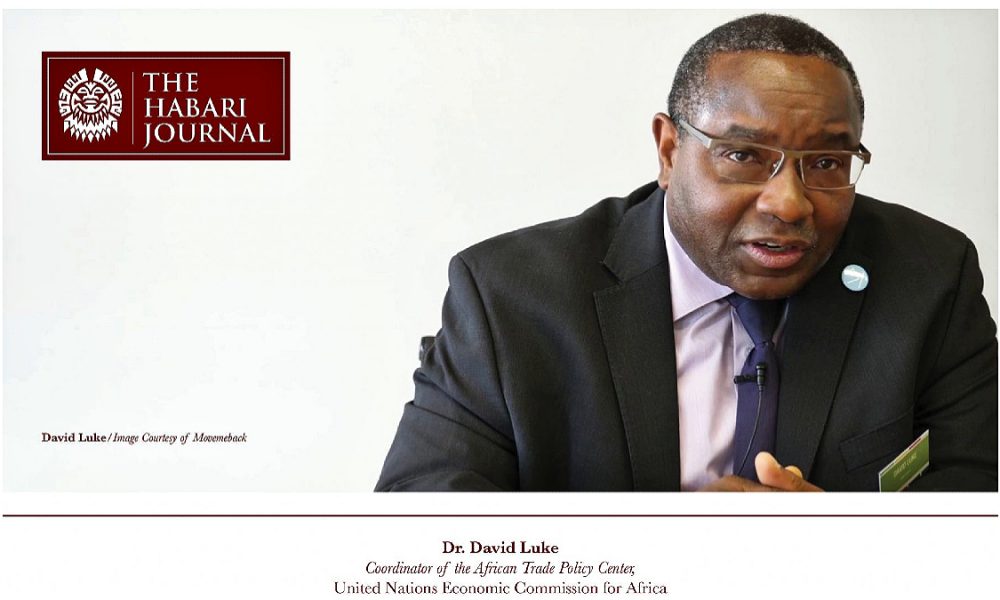
Editor’s Note & Introduction
At 6.30 a.m. in Palo Alto, 2.30 p.m. in London, and 9.30 a.m. in Washington, DC, Prince Heto and David Luke sat down to chat about Americans, Africans, and the African Continental Free Trade Area (ACFTA). We hopped onto this Zoom call, first to introduce Prince to David, and then to listen to what David had to say about how the continental pact could benefit nascent U.S.-based investors. We left the conversation a little smarter – the same feeling one has after speaking with David.
______________________________________________________________________________________
Prince Heto: I remember reading an Africa Trade Policy Center report from 2017. That report showed that the majority of American investment in Africa is in the extractive industry. With the United States spending about US$ 46 trillion in aggregate foreign direct investment between 2000 and 2019, what is it that the Americans are missing about Africa?
David Luke: There is a huge scope to diversify U.S. investment holdings from the extractive sector to other growth sectors. For example, energy is a US$ 25 billion a year opportunity. The International Energy Agency says Africa needs investments of at least $35 billion par annum [and the IEA’s World Energy Outlook 2020 shows that Africa’s demand for renewable energy will witness a huge growth between 2019 and 2020]. The World Bank says Africa needs US$ 18 billion a year to meet the cost of climate change adaptation in the energy sector. And then there is infrastructure. Africa needs about $93 billion a year for ports, roads, airports, border facilities, and the like. Then, the SDGs commit us to deal with poverty, hunger, education, and the like. UNCTAD says Africa has a pre-existing annual SDG finance gap US$ 200 billion. Well, when you break the figures into projects, you start to see that investors can infuse their resources into various African ventures.

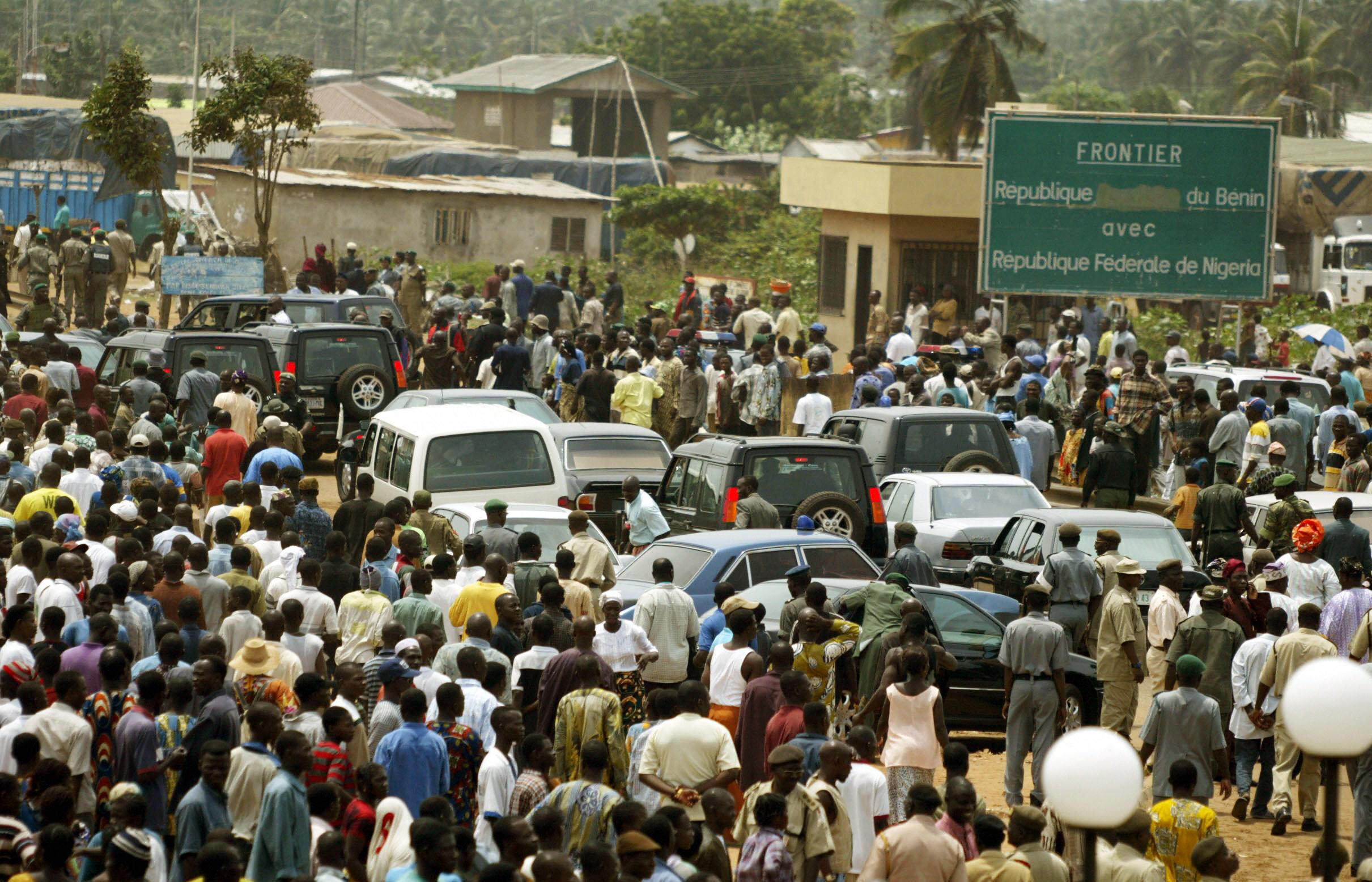
The Seme border town in Badagry (between Benin and Nigeria)/PIUS UTOMI EKPEI/AFP via Getty Images
David Luke: As a strategy, U.S. investors should benefit from looking at infusing resources into sectors instead of into individual African countries. Doing things in sectors across several countries will yield more benefit and you can invest in several countries across the energy and manufacturing sectors, in professional business services like transport, health, logistics, communications, environment and education as well as agriculture/agribusiness.
Prince Heto: That’s quite a way to tie up extractives and American investment in Africa.
David Luke: In the first place, I think investing in Africa does not just contribute to Africa’s growth. Diversified investment on the continent makes for a much more stable world. Looking at things from a national security perspective is quite effective. Investing means that we would have a likelihood of less terrorist activity. Al Shabaab in the Horn of Africa, or Boko Haram in the Sahel would not have as much sway if [recruits] had economic growth opportunities in their respective neighborhoods. The same can be said for economic migration [abroad]. I am simply saying that economic investment gives people a sense that growth on the continent can bring reward, and that is what changes the equation.
Prince Heto: But surely: this is not a short-term opportunity, is it?
David Luke: Of course, this is not an overnight opportunity. And that is why FDI is a long-term affair. And to go back to the national security thing. Investing in Africa can help to make the world more equitable. This is not a charity. Look at what impact investors are doing. Their ventures are win-win propositions because economic investment would be based on projects that [are] developed out of the aggregate picture I am trying to present is lucrative.
Prince Heto: Is this the same premise for the AfCFTA?
David Luke: The AfCFTA is a much simpler proposition. If you look at how trade is conducted throughout the world, you will see that there are very high concentrations of trade volume between neighborhoods. Look at trade between Mexico, Canada, and the United States. Or look at the European Union and Southeast Asia and the Pacific, Australia, New Zealand, and others. Then look at Africa. For the last three years – from 2016 to 2019 intra-Africa trade was just under 16 percent, compared with almost triple that figure in other places. So, there is something wrong here. And what is wrong has a lot to do with the way that Africa was inserted into the global economy. During colonial rule, trade was directed out of the continent, and Africa mainly traded in raw materials. But colonial rule ended almost 70 years ago. So, we cannot continue and perpetuate and hold ourselves blameless. There is no excuse now for us to say that it is the legacy of colonial rule. That legacy can change.
Basically, Africa has not engaged in intra-African trade for historical reasons. Now, these historical reasons are no longer an adequate alibi. With the AfCFTA, we have tried to open trade amongst ourselves and [beyond] regional economic communities because our economies are really small. And you cannot really benefit from scale, which is a major driver of growth via the supplier value chains. The other side of this equation is that as per the IMF, all fifty-five African countries have an aggregate GDP of US$ 2.5 trillion. The UK, the sixth largest economy in the world, has GDP of just under US$ 3 trillion. Therefore, Africa would probably be the eighth or ninth largest economy in the world if it functioned as one, as opposed to small, fragmented ones.
Prince Heto: This argument has always held water …
David Luke: Then let me give you something more practical. If you look at Africa’s largest private sector companies, you will note that they have also become major players via growing to scale outside their home country or region. Look at Dangote, for instance. It started out as a Nigerian company, and now operates in more than thirty African countries. Ethiopian Airlines operates in well over forty countries. MTN, Bank of Africa and Equity Bank are other examples. Essentially, there is potential for investment and for companies to grow in a wider African market, as opposed to the small regional economic communities and specific regions. But that is not to say that the experiences from trade in regional economic communities are not relevant. We’ve seen that trade liberalization can work among regional communities. There is a very strong evidence that intra-SADC trade is relatively high compared with the rest of Africa. And thus, there is scope for trade to grow. What we need to do is remove the impediments. It is unacceptable that we still have tariffs of about 8 percent amongst ourselves and yet average tariffs with partners outside the continent are less than 2 percent These need to come down – as close to zero as possible.
Prince Heto: What about non-tariff barriers?
David Luke: This is a good point. We talked about energy infrastructure, ports, airports, border facilities, and other trade facilitation facilities. We need to tackle these from the investing in hard infrastructure perspective. The AfCFTA is, itself, soft infrastructure, with common rules on customs procedure, common rules on the standard of products or on food safety, common rules, on, and on. Simple things like axle weight of vehicles that go across borders.
The AfCFTA harmonizes our rules, standards, procedures for customs, and so on. If we can honor the AfCFTA, then that surely will bring down the cost of trade. In the process, we will modernize the way we trade and open up the field for investment in digital approaches to cross border movement of goods. And we are in a great position to modernize – leapfrogging over the bureaucracy at borders, like filling forms in triplicate. If we can do away with all these things, we can embark on paperless trade, meaning that customs and trade facilitation requirements can go online.
If the AfCFTA is implemented well, it should be able to tackle the tariffs and non-tariff barriers and also bring the private sector into the picture. That’s what I think the AfCFTA is about. And that’s what is different. I say this with the caveat that the AfCFTA must be implemented well.
Prince Heto: Can I get insights into Phase II of the AfCFTA negotiations? Any significant progress on key things like open skies, free movement of people; the things that Americans may be really interested in?
David Luke: Phase II of the AfCFTA concerns investment, intellectual property rights (IPRs), competition policy, and e-commerce. If you take investment, there is a real benefit in having clear transparent rules, including dispute settlement. Without clear guidelines, it really is a race to the bottom. It is a similar situation for intellectual property rights. American investors need to have a clear understanding of how their innovation can be used in an African context and how African innovation can be used. With competition policy, [as the COMESA Competition Commission has experienced], it is important to have clear rules that provide a level playing field for both small and big players. So, I think America has a big stake in the next phase of the negotiations, but more broadly in helping to make the AfCFTA a success.
Prince Heto: Would I be right in suggesting that the AfCFTA should be the basis of economic relations between the United States and Africa?
David Luke: Yes. The AfCFTA should be the basis upon which the United States and Africa engage. As Africans, we are setting up common rules on trade and investment and other related areas amongst ourselves to govern the way we do business with each other and with partners outside the continent. The AfCFTA is a good basis.
But I think what the U.S. should be aiming to do is to engage the African continent as a whole rather than picking off the countries one-by-one. Negotiating Free Trade Area agreements with individual countries is not the way to go.
Prince Heto: What would you say to me as an American investor, and where will you recommend that I put my cash, if I have cash right now. Where should I put my money, so I can generate a return over the next six, eight, or twenty-four months if I was an officer of the U.S. International Development Finance Corporation.
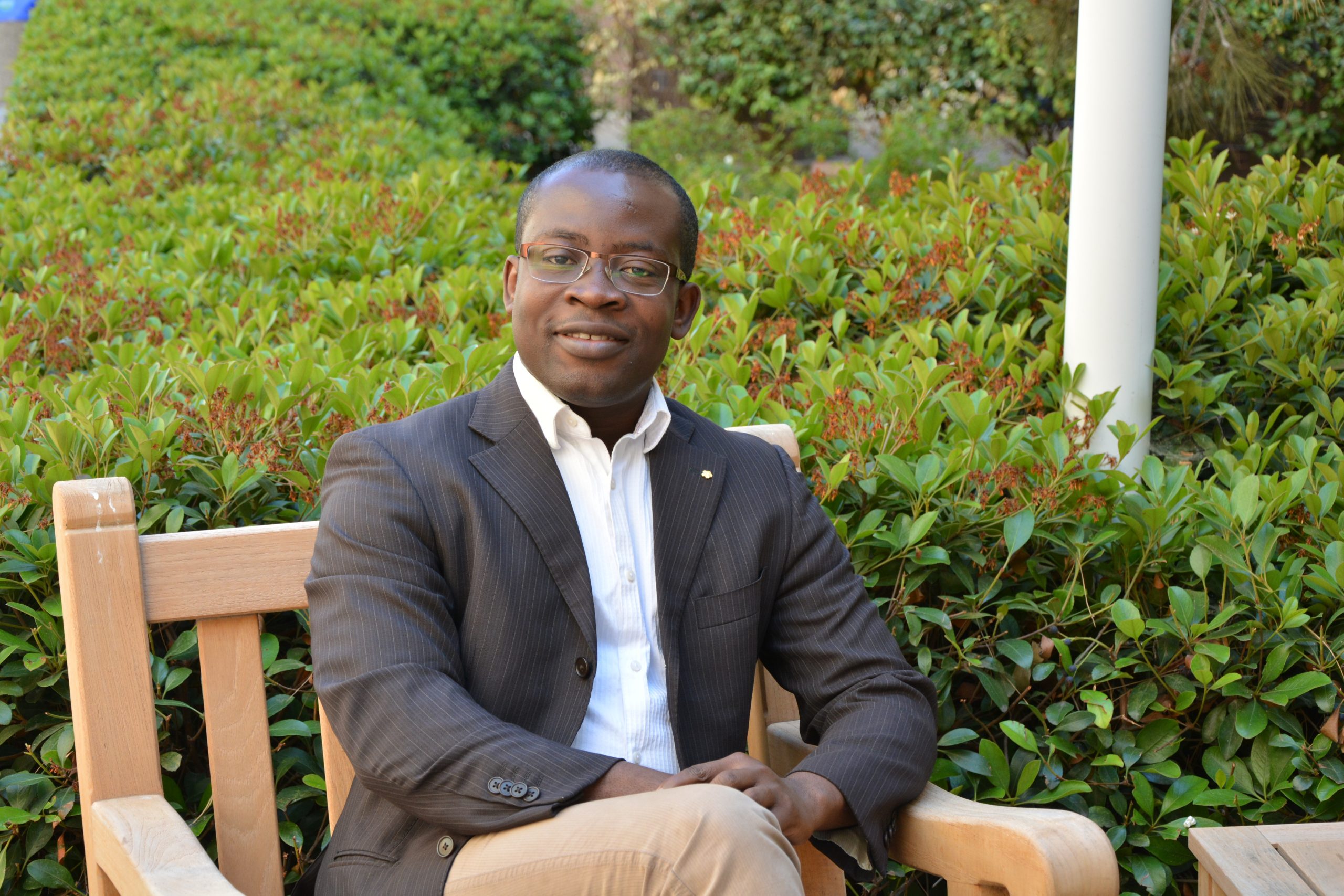

Prince Paa-Kwesi Heto\Image Courtesy of Prince Heto
David Luke: All the information I’ve shared about the financing gap in energy sector and in infrastructure, climate finance and adaptation is available and speaks to viable sectors and Africa’s growth prospects. As we emerge from COVID, the IMF is also revising its projections. From negative growth in Africa in 2020, the IMF is now projecting growth of 4.6 percent in 2021. And as we have seen in the past, some countries are going to have even double or triple those average growth rates. Again, the data is there for any prospective American investor. And by the way, the trends have already started to show that investment in Africa is shifting away from the extractive sector.
Americans have not necessarily looked at Africa as a potential destination for foreign direct investment. My advice to American investors is they must look at the fundamentals at country level, at regional level, at continental level, and look at where the opportunities are. Then go for them.
Prince Heto: What are some of the key lessons you’ve learned about the AfCFTA in the past fews?
David Luke: I think that Africa now has a much better understanding that the path to prosperity is through trade. Prosperity will not come through foreign aid. Beside, all countries that transformed their economies did so through trade. There is no alternative, really.
Prince Heto: But what really changed?
David Luke: Leaders now know that you need to have a growing economy to trade and even attract foreign direct investment. And again, Africans understand that there is no alternative.
Prince Heto: What kind of challenges do you anticipate for the AfCFTA Secretariat and the strategic stakeholders going forward?
David Luke: All stakeholders should be focused on implementation, which is what they’re doing. Focus should be on implementation, implementation, implementation! There are many good people involved in carrying out this implementation mandate. We have high quality protocols that have staked out the issues very well. Now, the issue is making sure that they’re implemented.
About David Luke
David Luke is professor in practice and strategic director at the Firoz Lalji Centre for Africa. Specializing in African trade policy and trade negotiations, Professor Luke has decades of experience in policy advisory services, managing and catalyzing research, building partnerships, training and capacity development for private sector and government. This experience stems from an extensive career spanning a tenured appointment at Dalhousie University in Halifax, Canada, and assignments at the African Union, the UN Development Program and the UN Economic Commission for Africa (ECA) with postings in Harare, Pretoria, Geneva, and Addis Ababa.
At ECA’s African Trade Policy Centre, Professor Luke and his team were instrumental in the preparation of the protocols that make up the African Continental Free Trade Area Agreement. His PhD in African Political Economy is from the School of Oriental and African Studies and his MSc. and BSc. Are from the London School of Economics and Political Science. His research and teaching interests are in the areas of: the role of trade in development; trade and inclusion; and trade and sustainability.