Business
The Trump Africa Summit: A Deal-Driven Diplomacy or Transactional Tactics?


By Mark-Anthony Johnson
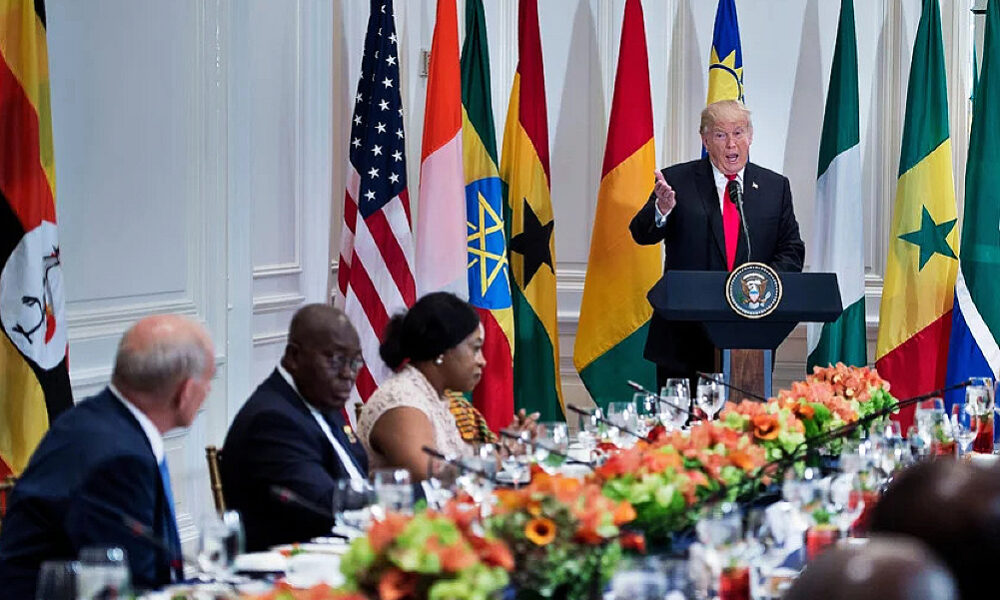
In a striking display of geopolitical chess, US President Donald Trump is set to host leaders from Gabon, Guinea-Bissau, Liberia, Mauritania, and Senegal from July 9–11 in what the White House has framed as a bold reimagining of U.S.-Africa relations. But beneath the veneer of diplomacy lies a complex web of mineral interests, security concerns, and strategic maneuvering that raises serious questions about the true intent behind the summit.
While these five African nations may not dominate global trade headlines, they do sit atop vast reserves of rare earth minerals, gold, oil, and iron ore – resources critical to America’s technological and economic ambitions, especially amid growing competition with China. According to White House officials, Trump views Africa not just as a partner for aid and development, but as a continent brimming with “incredible commercial opportunities” that can benefit both American and African economies.
Strategic Minerals and Shifting Alliances
The timing of the summit is no coincidence. As the U.S. seeks to reduce its reliance on Chinese-sourced rare earth elements – essential for everything from smartphones to defense systems – Africa’s untapped mineral wealth becomes increasingly valuable. By engaging directly with resource-rich nations, Trump aims to secure supply chains and counterbalance China’s deepening influence across the continent.
Yet critics argue that this summit is less about mutual prosperity and more about transactional politics. Professor William Ferreira of Guinea-Bissau, a noted analyst of international relations, voices a common concern: “I doubt this meeting will bring tangible benefits to the African countries involved. There’s no such thing as a free lunch.”
He adds, “All five regimes are grappling with major institutional problems and breaches of the rule of law – but that doesn’t seem to bother Trump.”
Security, Legitimacy, and the Cost of Engagement
Security also looms large on the agenda. West Africa remains a key corridor for migration flows and drug trafficking, making it a focal point for U.S. counter-narcotics and border control strategies.
Reports suggest that Trump may offer advanced military surveillance tools in exchange for tighter border enforcement – a quid pro quo approach that underscores his administration’s broader emphasis on national security over traditional foreign aid.
The summit’s selection of invitees has also raised eyebrows. By inviting these particular leaders, the Trump administration inadvertently lends them a measure of international legitimacy – and in return, gains a powerful visual narrative of global support.
As one recent analysis published by the U.S.-based Institute of the Black World 21st Century asks: “Why these five presidents? What strings are being pulled, and what deals are being dangled?”
The report, titled “Trump’s Africa Power Play: Deals Over Diplomacy, Minerals Over Manners,” suggests the answer is clear: “minerals, leverage, and strategic positioning.”
To some, the summit represents an opportunity to reset U.S.-Africa relations on more equal footing – one based on commerce rather than charity. To others, it signals a troubling shift toward a foreign policy driven by short-term gain rather than long-term partnership.
Either way, the event underscores a broader pivot in American foreign policy – one where economic self-interest increasingly shapes diplomatic engagement.
As the world watches, the real question remains: Will this high-stakes gathering lead to sustainable cooperation – or simply reinforce a pattern of extractive diplomacy under the guise of global statesmanship?
Mark-Anthony Johnson is the founder and CEO of JIC Holdings, a global asset and investment management firm founded in 2009. With over 30 years of experience and strong ties to Africa, his investments span mining, infrastructure, power, shipping, commodities, agriculture, and fisheries. He is currently focused on developing farms across Africa, aiming to position the continent as the world’s breadbasket.