Opinion
The trade area uniting two-thirds of Africa’s economy


By Dishant Shah
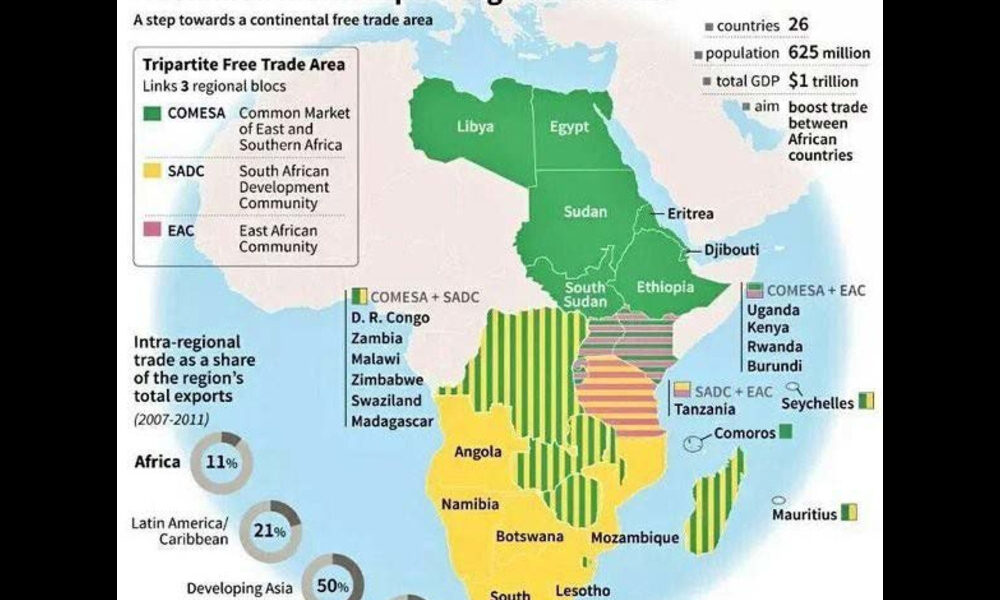
After more than a decade of negotiations, the Tripartite Free Trade Area (TFTA) officially came into force in 2024, marking a historic milestone in Africa’s economic landscape.
This groundbreaking agreement unites 29 African nations from the Common Market for Eastern and Southern Africa (COMESA), the East African Community (EAC), and the Southern African Development Community (SADC), creating one of the largest free trade zones on the continent.
Why Does the TFTA Matter?
Africa has long engaged in trade agreements, but the TFTA stands out due to its scale and impact. Covering a market of 800 million people and representing over 60 percent of Africa’s GDP (approximately US$1.88 trillion), it offers significant economic potential.
TFTA member states also account for 53 percent of the African Union’s total membership. By aligning trade policies across these three major regional blocs, the TFTA aims to:
- Eliminate tariffs on a substantial portion of traded goods, making trade more cost-effective.
- Reduce bureaucratic hurdles and streamline cross-border trade.
- Enhance industrialization by fostering a coordinated economic strategy.
- Improve infrastructure to facilitate the smooth movement of goods and services.
Although the idea for the TFTA was first proposed in 2008, it took 16 years to reach the required threshold of 14 ratified countries. This milestone was achieved when Angola officially ratified the agreement on June 25, 2024.
To date, 14 countries have completed the ratification process, representing 75 percent of the TFTA’s total GDP in 2022. Several others, including Tanzania and South Sudan, are in the process of ratifying the agreement.
Opportunities and Challenges
The TFTA is poised to transform Africa’s trade landscape by:
- Expanding Market Access: Businesses across Africa will now have a broader customer base with fewer trade barriers.
- Lowering Trade Costs: Reduced tariffs will make imports and exports more affordable.
- Attracting Foreign Investment: A more integrated market is likely to draw international investors seeking streamlined operations in Africa.
However, several challenges must be addressed:
- Implementation Hurdles: Aligning customs regulations, infrastructure, and border controls across multiple nations will take time.
- Economic Disparities: Smaller or less competitive economies may face difficulties adjusting to increased regional competition.
- Non-Tariff Barriers: While tariff reductions are a step forward, bureaucratic inefficiencies and regulatory inconsistencies could still impede trade flows.
With the African Continental Free Trade Area (AfCFTA) also in motion, the TFTA may serve as a crucial stepping stone toward deeper continental economic integration. What’s your take? Will the TFTA revolutionize African trade, or will challenges slow its progress?
Dishant Shah is a partner at Legion Exim, a company specializing in facilitating the export of high-quality engineering products directly sourced from manufacturers in India to Africa. His areas of expertise include new business development and business management.