Opinion
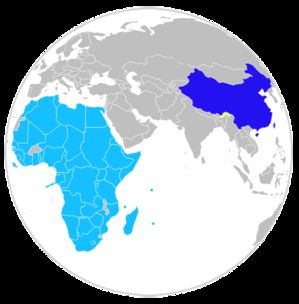
The story behind the emerging strategic Africa China alliance
By Emmanuel Musaazi

China has become the new cash cow on the block.
Money from China is being sought worldwide and countries are lining up bowl in hand from Africa to Asia and the Caribbean to South America.
Europe too has joined the queue and the Chinese are not disappointing, apparently willing to disburse freely, prompting suspicion about their motives.
It is said that nothing goes for nothing so the big question is what is China’s deal?
A lot of things had to happen by accident and design to bring China to this pivotal position.
(More: A Stellar Record of Failure: The IMF and Jamaica)
Firstly, the unquenchable desire by the West for cheap labor and cheap products resulting in a 50 year transfer of capital from the West to Asia and in particular China.
Secondly as a result of China’s aggressive saving policies: “China saves half of its gross domestic product (GDP) and its marginal propensity to save (MPS) approached 60 percent during the 2000s” – according to Dr. Zhou Xiaochuan, the present Governor of the People’s Bank of China in his article “Some Observations and Analyses on Savings Ratio” China has gradually built up capital.
Thirdly, the financial crisis/recession of 2009 exposed the vulnerabilities of western financial institutions and governments, weakening them fundamentally. These vulnerabilities and weaknesses naturally extended to international lending institutions such as the World Bank and International Monetary Fund (IMF) as they are structurally and financially dependent mainly on western public financing.
How has the prevailing status quo impacted the Sino-African relations?
The result is that of an emerging strategic shift in international relations on the African continent that could be duplicated elsewhere around the world.
China’s relationship with Africa is the most intriguing in this creditor-debtor debacle. This is because in my opinion, China stands to gain more long-term from Africa versus Europe.
Whereas Europe offers a market, Africa offers a growing market and an abundance of resources. Resources China needs badly given its ever expanding middle class brought about by its record breaking economic growth.
Resources that are obtainable with limited overheads in terms of capital investment and bureaucratic legalities. The Chinese approach in Africa, evokes different feelings and perceptions. On the one hand there is an appearance of getting “value for money” because of the “projects for resources” policy. Basically infrastructure projects such as roads, dams, hospitals, etc. are implemented in exchange for resources such as oil, copper, gold etc.
Rank and file Africans view this approach favorably since the outcomes are visibly accessible and/or ascertainable in a reasonable time frame.
As to whether the deals are fair is another issue. In contrast, the prevailing western approach through international lenders such as the World Bank or IMF bundles a lot of caveats political and otherwise along with financing.
In this regard the western model is classified as “AID”, hence the conditions. There is a school of thought that sees the western approach as nothing more than a political tool of control as in most cases the conditions tied to the funding are so stringent and impractical that defaulting is almost inevitable thus entrapping the recipient country into a cycle of indebtedness and dependence.
There is little or no oversight enforced on the part of the donors to ensure compliance thus creating an enabling environment for the misuse of the “AID” with impunity.
The donors appear to be in cahoots with corrupt government bureaucrats in the recipient country. To the rank and file African it appears to be one big scam with a lot of talk and promises but little in terms of ascertainable results.
Whereas the Chinese presence in Africa is about 15 years old, their footprint is generally viewed more favorably on the continent as opposed to the western presence which is over 50 years – pouring in far more money with apparently far less tangible results.
The prevailing western view that China does not have Africa’s interest in its dealings and is only interested in obtaining resources at any cost is increasingly being viewed as disingenuous given that western based companies which have a longer history in Africa have been guilty of the same charge resulting in more devastation than China is being accused of.
The main difference this time around is that Africa has options and if handled properly could work in her favor.
Having options means that the contenders in this case China and the West are forced to compromise and come up with fairer deals. In other words China may have inadvertently become the catalyst for better and more transparent strategic involvement in Africa either from a resource, business or political standpoint.
Conventional wisdom would suggest it wiser to deal with the devil you know than the one you don’t. In Africa’s case these days it is becoming more appealing to deal with the unknown devil, China.
Given the current state of affairs the West will be best advised to change their strategic engagement with Africa rather than complain about China. This approach of strategically leveraging relationships for better deals could be the blueprint for other regions such as the Caribbean and South America involved in similar dealings.
Chinese symbiosis seems to be winning over perceived western parasitism and I believe that the apparent success of China in Africa is not going unnoticed by other emerging economy nations such as Brazil, Russia, India, Malaysia and Indonesia.
Emmanuel Musaazi is a college professor based in Toronto, Canada