Opinion
The Sovereign Test: Transparency, Power, and the Small-State Dilemma
Antigua & Barbuda’s handling of U.S. deportation requests offers a rare, transparent case study in small-state diplomacy, sovereignty, and the limits of power.


By Ronald Sanders
Few tests of sovereignty are as revealing as a request from a powerful friend. What is a small state to do when cooperation is expected, but the terms on offer exceed its legal, financial, and institutional capacity to deliver?
That question sits at the heart of an unfolding negotiation between the United States and several Caribbean governments over so-called Third-Country Nationals – and nowhere has it been handled with more candor than in Antigua & Barbuda.
The Proposal Nobody Wanted to Say Out Loud
Third-Country Nationals, in the language of immigration policy, are people the United States wants to remove who are not citizens of the country receiving them. They are, in effect, sent to a third, unrelated nation under arrangements negotiated purely for the convenience of U.S. immigration enforcement.
The terms Washington has floated deserve scrutiny. The original proposal envisioned an open-ended, monthly transfer program. Key details about the individuals involved were to be shared only “where available” – a phrase that does a great deal of work. Who would pay for reception, housing, healthcare, and eventual return was left conveniently vague. And the pool of eligible transferees included people subject to expedited removal, meaning some may never have had a proper hearing at all.
It is not hard to see why these terms alarmed Caribbean governments and their citizens alike. A small-island nation that accepts people under such conditions inherits serious legal obligations: international refugee law, protections for stateless persons, and the principle of non-refoulement, which bars sending anyone back to a place where they face persecution or serious harm.
These are not bureaucratic footnotes. They are binding commitments – and most Caribbean states simply lack the legal infrastructure, administrative capacity, or financial depth that larger countries can summon with relative ease.
A Small Island With Its Books Already Full
Antigua & Barbuda is no stranger to migration. The country is already home to sizable communities from the Dominican Republic, Venezuela, Cuba, Jamaica, Guyana, Dominica, and St. Vincent & the Grenadines, among others. Capacity, in other words, must be measured against that lived reality – not against an absence of goodwill.
Antigua & Barbuda has never closed the door on an agreement with the United States. But any deal, its government insists, must be anchored in what a small island-state can responsibly absorb, both physically and financially, without placing new burdens on its own people.
The One Government That Chose Sunlight
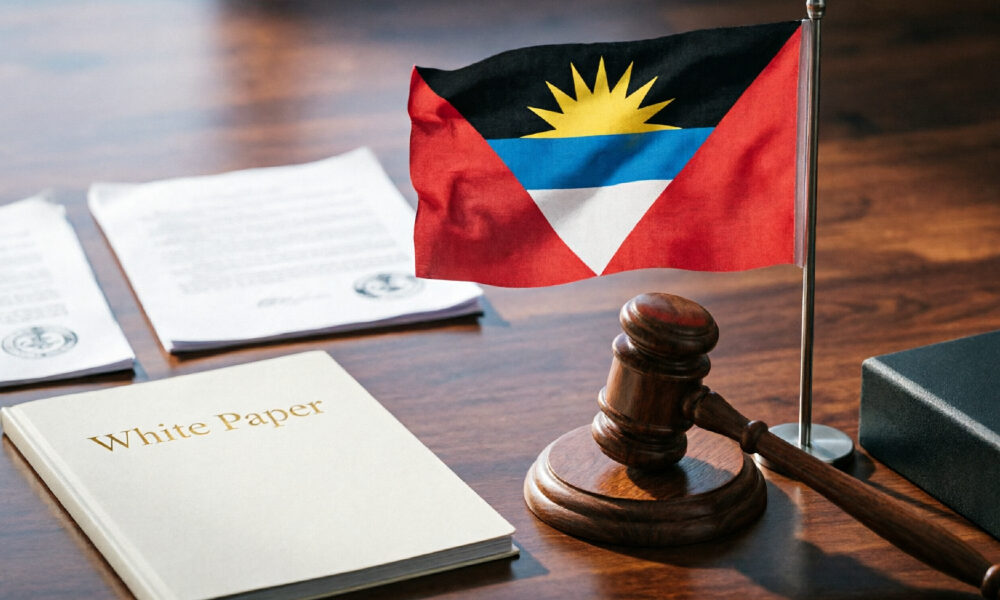
Here Antigua & Barbuda stands apart from its regional peers in a way worth underscoring: it appears to be the only Caribbean government to have fully disclosed the substance of the U.S. proposal, published its own detailed counter-proposal, and released a comprehensive White Paper for public review. Posted openly on government websites, the document lays out the background, the legal risks, Washington’s proposed operating procedures, and the principles behind Antigua & Barbuda’s own response.
That transparency came at a cost to regional coordination. By the time the White Paper appeared, several CARICOM member states had already entered bilateral talks of their own, closing off any real chance of a unified negotiating position. And truthfully, a single bloc-wide agreement was probably never realistic to begin with – Caribbean nations vary too widely in size, financial strength, absorptive capacity, and the particulars of their relationships with Washington.
Each government, in the end, has had to chart its own course. A one-size-fits-all solution was never on the table for an issue this sensitive.
Debating in the Open, Not Behind Closed Doors
The Antigua & Barbuda government’s rationale for publishing the White Paper was straightforward: inform Parliament and the public, fully and honestly, about what was being proposed and how the government intended to respond. Matters that touch sovereignty, national security, and public finance, the thinking goes, belong in open debate – not in quiet backroom deals.
That principle carried through to the legislature itself. On July 15, 2026, the House of Representatives adopted a resolution that did far more than rubber-stamp the government’s position. It set the actual terms within which negotiations may proceed: no standing program, complete sovereign discretion over every individual case, full funding secured in advance, strict eligibility criteria, and the preserved right to suspend or end any arrangement at will.
A Story Bigger Than Migration
This episode is about far more than deportation logistics. It is a case study in a much older dynamic that small states have always had to navigate: powerful countries and the institutions they dominate routinely set the rules that smaller nations are then expected to follow. The OECD’s tax and financial-services standards – enforced through the threat of blacklisting – are a familiar Caribbean example, not least because the OECD’s own members tend to enjoy far more forgiving treatment under those same rules.
The pattern repeats because power is unevenly distributed. Large states can shape international norms and enforce compliance in ways small states cannot. That leaves small states walking a narrow line between defending their sovereignty and absorbing the consequences powerful countries can impose – tourism advisories, tariffs, visa restrictions, financial sanctions. These are not hypothetical threats. They have been deployed before, and they remain available now.
Principled Engagement, Not Defiance or Capitulation
The lesson Antigua & Barbuda has drawn from this experience is neither reflexive defiance nor convenient submission. It is something more durable: principled, transparent engagement. States may be equal before the law, but they are plainly not equal in power – and pretending otherwise solves nothing.
What a small state can do – and what Antigua & Barbuda has tried to do – is negotiate with a clear-eyed understanding of its rights, draw firm lines it will not cross, put its decisions before its own people and legislature, and insist on reciprocity as the price of cooperation.
The real test of friendship between sovereign nations was never whether one side always says yes. It is whether each side respects the other’s genuine limits. Cooperation should never require a small state to shoulder another country’s burden without proper safeguards, adequate funding, and clear accountability. Where those conditions are met, cooperation is not just possible – it is worth pursuing.
For small states, transparency is what makes sovereignty credible. For large ones, respect is what makes partnership real. Only where both are present can cooperation actually last.
Ronald Sanders is Antigua & Barbuda’s Ambassador to the US and the OAS, and the Chancellor of The University of Guyana