Alorh’s eye on the Motherland
The Rise of a Multipolar World: Africa’s Strategic Opportunity in Shaping Global Trade


By Mary Alorh
The global stage is undergoing a seismic shift, ushering in a multipolar world order that offers nations an unprecedented array of choices. Gone are the days when countries were confined to a single dominant power or economic bloc.
Instead, the intensifying tariff wars and evolving geopolitical dynamics have opened new pathways for collaboration – and competition – across continents. For emerging markets, particularly those in Africa, this changing landscape presents a golden opportunity to redefine their role on the global stage.
Africa’s Urban Renaissance Drives Economic Ambitions
At the heart of Africa’s growing influence lies its rapidly expanding urban population – a demographic characterized by rising sophistication, increasing disposable incomes, and a burgeoning appetite for high-quality goods and services. This urban renaissance is not only reshaping consumption patterns within the continent but also creating opportunities for African businesses to engage with international markets, including Europe.
For instance, several European car manufacturers have recognized Africa’s potential by establishing local production facilities in countries like Ghana and South Africa. These strategic investments leverage Africa’s geographic positioning as a gateway to regional markets while responding to the growing demand from an aspirational urban class.
Such initiatives underscore how African markets are becoming integral players in global value chains.
Agriculture: A Sector Ripe for Transformation
Beyond its urban centers, Africa’s agricultural sector stands out as another pillar of immense promise. With a population projected to double by 2050, the continent faces both challenges and opportunities in feeding its people.
This necessity has created fertile ground for innovation, attracting interest from investors keen to support technological advancements and modernize agricultural practices.
For European markets seeking sustainable partnerships, Africa’s agricultural sector offers compelling prospects. By investing in technology-driven solutions – from precision farming tools to advanced irrigation systems – the European Union (EU) can help unlock Africa’s latent agricultural potential.
In return, Europe gains access to a reliable source of food products and raw materials essential for its industries. It’s a symbiotic relationship that aligns with broader goals of sustainability and shared prosperity.
Africa-EU Trade: A Partnership Poised for Growth
Trade statistics further highlight the depth of the existing ties between Africa and the EU. As of 2023, Morocco leads as the largest importer of European goods in Africa, with imports valued at a staggering US$33 billion.
Meanwhile, Algeria tops the list of African exporters to Europe, closely trailed by South Africa and Egypt. These figures reflect the robust trade flows underpinning this transcontinental partnership.
Moreover, Africa supplies approximately 9.7 percent of the EU’s total raw material needs. Notably, the continent accounts for nearly 20 percent of the EU’s mineral, fuel, and lubricant imports – a testament to Africa’s indispensable role in powering Europe’s industrial machinery.
Strengthening these trade relations is more critical than ever amid escalating global tariff wars and shifting geopolitical alliances.
The EU’s Global Gateway Initiative: A Blueprint for Mutual Success
To deepen ties with Africa, the EU has introduced its Global Gateway initiative – an ambitious framework designed to empower developing nations to drive their own growth agendas. By prioritizing infrastructure development, digital connectivity, and green energy projects, the initiative aims to foster a more inclusive and sustainable economic relationship.
For African countries, this represents a timely opening to diversify their economies, boost intra-continental trade, and attract foreign direct investment. By partnering with the EU, they can accelerate progress toward achieving key developmental milestones while ensuring that globalization works for everyone – not just a privileged few.
Toward a Win-Win Future
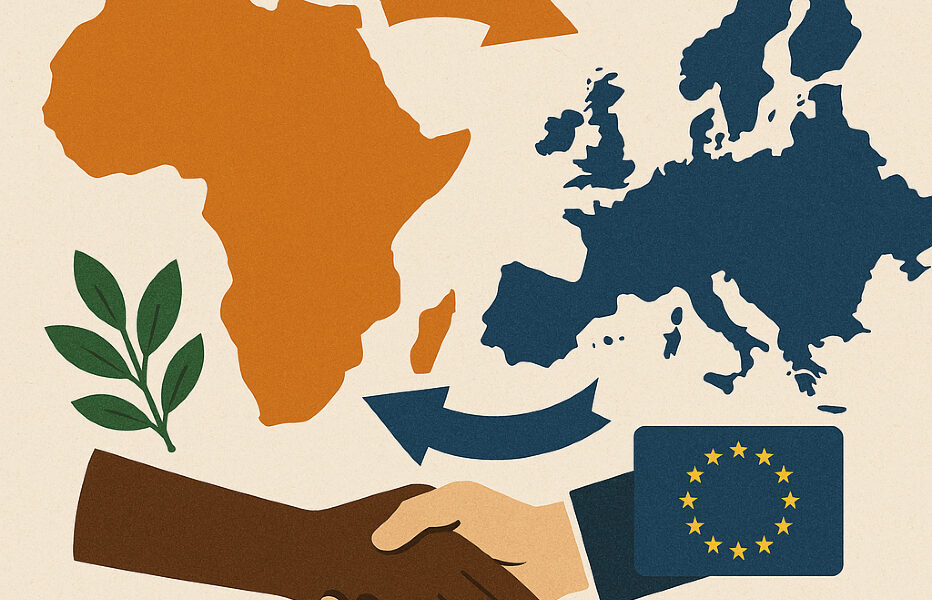
As the world moves away from unipolar dominance, the EU-Africa partnership exemplifies what’s possible when two regions collaborate based on mutual respect and shared interests. By building stronger trade links, investing in transformative sectors like agriculture, and leveraging innovative frameworks such as the Global Gateway initiative, both parties can create a model of cooperation that benefits all stakeholders.
In this era of multipolarity, Africa is no longer a passive participant but an active architect of its destiny. And for the EU, strengthening its alliance with Africa isn’t just smart economics – it’s a strategic imperative. Together, they can chart a course toward a future defined by inclusivity, resilience, and shared prosperity.
Mary Alorh is Director of Administration at DefSEC Analytics Africa Ltd., and is an expert in Gender, Youth, and Peace & Security initiatives in West Africa.