Opinion
The Other Face of Migration


By Jamila Bukar Gana
The movement of people – so natural in its pursuit of safety, dignity, and opportunity – can, under certain conditions, be weaponized.
Throughout my career, whether in customer service or immigration, empathy has been my guiding principle. It is a value deeply embedded in me, shaping how I approach every task.
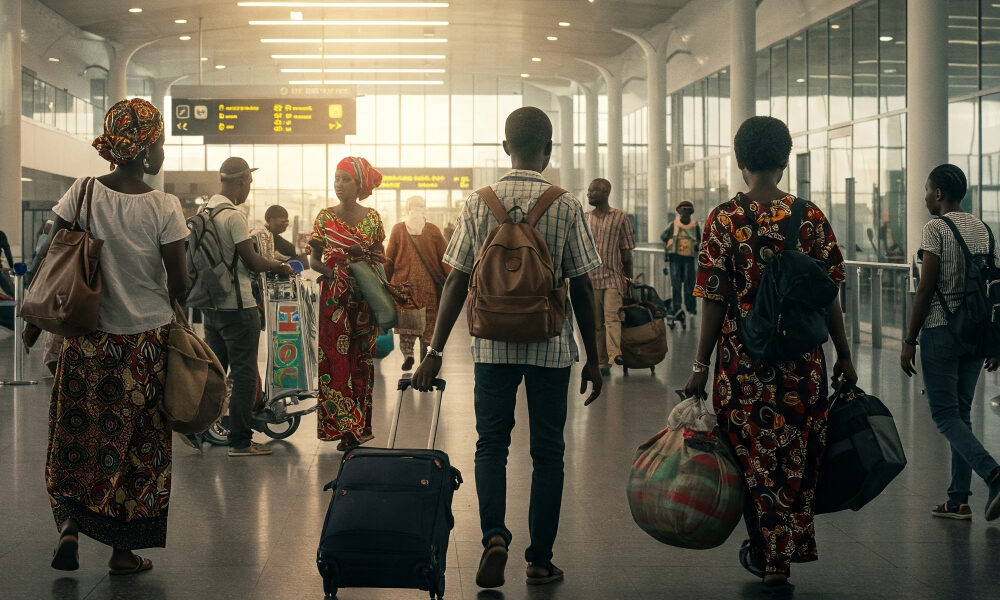
But nothing has influenced my perspective more than witnessing the lived realities of people navigating irregular migration routes. These are not just travelers – they are individuals driven by desperation, clinging to the hope of a safer tomorrow.
And yet, far too often, they are met with cruelty, indifference, or suspicion. Watching this unfold feels like observing a nightmare in real time – silent, slow-moving, and devastating.
As someone now working in border management, I have come to see migration not just as a movement of people but as a phenomenon woven into the fabric of global politics, economics, and conflict.
What initially seems like a personal journey often carries the weight of systemic forces. Behind every headline or policy decision lies a deeper complexity – one that has reshaped how I understand my work and the people most affected by it.
When Movement Becomes a Tool of Strategy
One moment in particular has stayed with me. During my master’s program, we had a class discussion on terrorism, insurgency, and weapons of mass destruction.
We talked about Hiroshima and Nagasaki – names that instantly evoke images of catastrophic loss. It was a sobering reminder of how tools of power can be used to dehumanize and destroy.
What I didn’t grasp then, but understand more clearly now, is how, in a different form, migration itself can be used strategically – to destabilize, to provoke, to manipulate.
Borders, often seen as protective barriers, have become frontlines – places where human dignity is frequently compromised. Migration, which should reflect resilience and hope, is sometimes distorted into a political tool that fosters division and fear.
It is no longer just about movement; it is about survival, vulnerability, and the systems that decide who gets help, who is turned away, and who is forgotten.
Centering Humanity in Migration Management
Yet, within this web of complexity, there is still hope. Every day, individuals and organizations work tirelessly to uphold human rights, provide safe pathways, and restore dignity to those on the move.
Their efforts remind us that in the world of migration management, every decision has a ripple effect – and that putting humanity at the center must never be an afterthought.
This journey – both personal and professional – has profoundly shaped my understanding. Migration isn’t just about crossing borders, It’s about people.
It’s about justice, equity, and the kind of world we choose to build. The conversation may be difficult, layered, and at times uncomfortable – but it is essential.
Because migration doesn’t just carry people. It carries their stories, their struggles, and their dreams.
Jamila Bukar Gana is a seasoned Nigerian immigration professional with expertise in migration intelligence, compliance, interagency coordination, and risk assessment. She is committed to aligning security frameworks with both national priorities and international best practices. Passionate about the intersection of technology and border security, Akan actively explores innovative, data-driven approaches to strengthen migration systems. Her long-term vision is to contribute to global migration security initiatives that promote both cross-border efficiency and robust security standards.