Owusu on Africa
The New “Quad” Initiative on Sudan: A Fresh Chance for Peace or More of the Same?


By Fidel Amakye Owusu
On September 12, 2025, in a high-stakes diplomatic move, a newly formed “Quad” coalition – comprising the United States, Saudi Arabia, Egypt, and the United Arab Emirates (UAE) – unveiled a coordinated initiative aimed at halting the devastating conflict in Sudan. With the war now entering its third year, having claimed tens of thousands of lives and displaced over 10 million people, this latest effort raises urgent questions: Is this a genuine turning point in diplomacy – or just another well-intentioned but ultimately flawed attempt to contain a crisis spiraling beyond control?
The Quad’s announcement calls for an immediate truce, followed by a sustainable, indefinite ceasefire across Sudan. The country, once a geopolitical linchpin in the Horn of Africa, now teeters on the brink of state collapse.
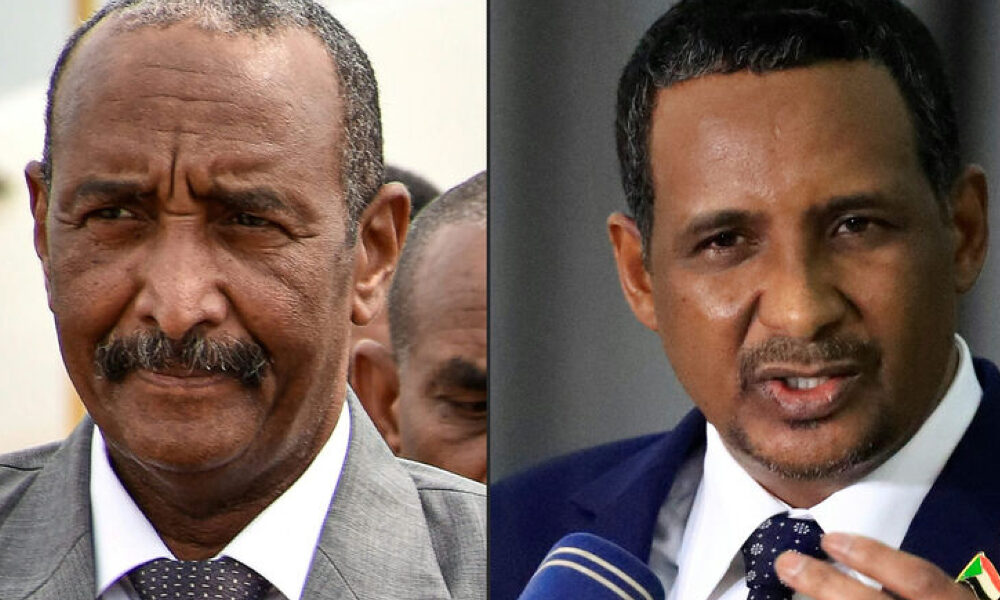
What began as a power struggle between the Sudanese Armed Forces (SAF) and the paramilitary Rapid Support Forces (RSF) has devolved into one of the world’s worst humanitarian disasters. Reports from famine-stricken regions describe families reduced to eating grass to survive – a grim testament to the scale of suffering.
On the battlefield, the dynamics have shifted. After being pushed out of central and eastern Sudan, the RSF has entrenched itself in the west, particularly in Darfur, where ethnic cleansing and mass atrocities continue with alarming frequency.
Disturbingly, both sides are now deploying increasingly sophisticated weaponry, including long-range suicide drones reportedly capable of striking targets up to 2,000 kilometers (1,243 miles) away – raising fears of regional escalation.
Why This Quad Matters – And Why Skepticism Remains
What distinguishes this initiative from previous failed mediation attempts is the inclusion of two pivotal regional actors: Egypt and the UAE. While the U.S. and Saudi Arabia have long led peace efforts, the addition of Abu Dhabi marks a strategic shift.
The UAE has been widely accused – though it denies – of providing material support to the RSF. If true, its participation could lend crucial leverage over the group, potentially opening channels previously closed to Western and Gulf mediators.
Similarly, Egypt’s involvement adds a layer of regional legitimacy. As a neighboring country with deep historical, cultural, and security ties to Sudan, Cairo has a vested interest in stabilizing its southern flank.
Yet, while these additions strengthen the coalition’s geopolitical weight, they also expose critical gaps in inclusivity and credibility.
Missing Pieces: Where the Quad Falls Short
For all its promise, the new Quad initiative suffers from two fundamental shortcomings that could undermine its effectiveness.
First, the absence of broader African representation. Despite Egypt’s inclusion, it remains the only African nation in the group – and notably, not a member of the Intergovernmental Authority on Development (IGAD), the regional bloc historically mandated to mediate conflicts in East Africa.
Sudan was an active IGAD member before the war; any durable peace will require buy-in from countries like Ethiopia, Kenya, Uganda, and especially South Sudan – whose own stability is directly impacted by cross-border displacement and spillover violence. Excluding these voices risks rendering the initiative a top-down, externally driven process with limited local ownership.
Second, internal contradictions within the coalition itself. While the Quad calls for unity, U.S. policy continues to impose sanctions on Islamist-aligned factions allied with the SAF.
These groups, though controversial, remain part of the government’s wartime coalition. By alienating them, Washington risks weakening the very partners it seeks to empower in negotiations – an inconsistency that could fracture the SAF’s cohesion and complicate ceasefire talks.
Moreover, the conflict is no longer a binary struggle between the SAF and RSF. Dozens of armed groups, tribal militias, and regional actors now hold sway across Sudan’s fractured landscape.
Any peace process that fails to acknowledge this multipolar reality risks irrelevance.
Silence from the Belligerents – A Warning Sign
Perhaps most telling is the deafening silence from the warring parties. Neither the SAF nor the RSF has acknowledged the Quad’s call for a truce.
This lack of response echoes past rejections – most notably when the RSF dismissed a direct appeal from UN Secretary-General António Guterres earlier this year. Without even minimal buy-in from those holding the guns, no diplomatic framework, however well-designed, can succeed.
The Path Forward: Inclusivity, Credibility, and Accountability
To stand a chance, the Quad must evolve from a narrow power-brokering alliance into a genuinely inclusive platform. That means formally integrating IGAD, engaging civil society and women’s groups sidelined in elite negotiations, and pressuring all external backers – whether in the Gulf or beyond – to cease fueling the war economy.
Transparency is equally vital. The UAE must clarify its role in Sudan.
Egypt must balance its national interests with regional responsibility. And the U.S. must align its sanctions policy with its peace objectives.
Ultimately, ending the war in Sudan will not be achieved through announcements alone, but through sustained, coordinated pressure and a peace process that reflects the complexity of the conflict – not just the convenience of powerful outsiders.
The Quad may represent a new chapter in Sudan diplomacy. But unless it addresses the full spectrum of actors, grievances, and regional realities, it risks becoming just another footnote in a tragedy that demands far more than symbolism.
Fidel Amakye Owusu is an International Relations and Security Analyst. He is an Associate at the Conflict Research Consortium for Africa and has previously hosted an International Affairs program with the Ghana Broadcasting Corporation (GBC). He is passionate about Diplomacy and realizing Africa’s global potential and how the continent should be viewed as part of the global collective.