Owusu on Africa
The new phase of politics in Southern Africa: from “monopolistic” to working duopoly and multiparty systems
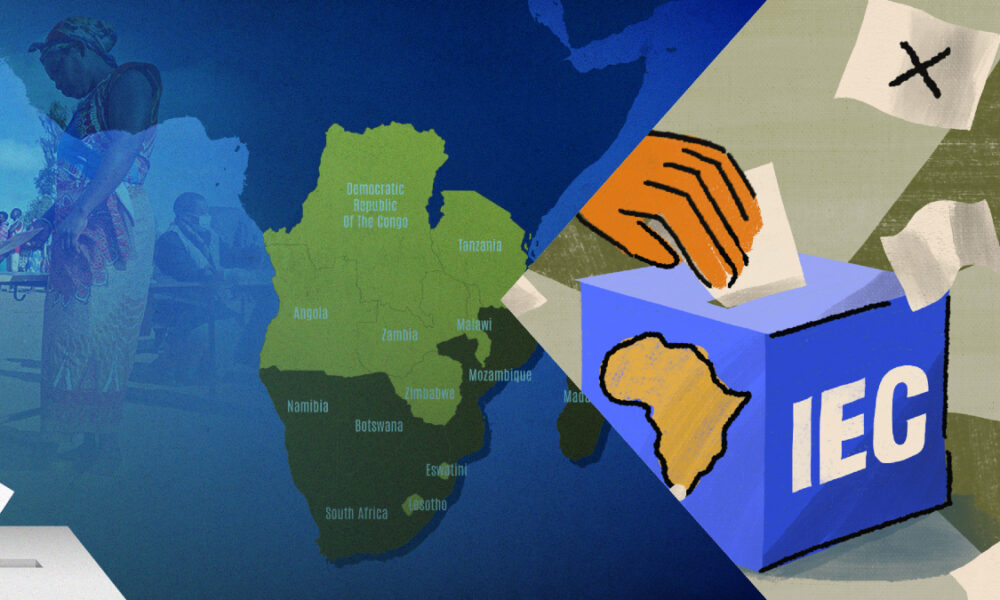


Southern Africa was one of the regional security complexes in Africa that was pronouncedly affected by the Cold War.
In the 1960s and the 1970s, ideologically induced wars started in the Portuguese colonies of Angola and Mozambique. By the mid-1970s, Cuban forces backed by the Soviets were in Angola fighting alongside the MPLA faction.
This meant that neighboring South-West Africa (present-day Namibia), which was occupied by South Africa during the First World War was also affected by the Cold War.
As the Cuban forces and the Soviets supported one side of the war, the West through apartheid South Africa supported the opposite side. Similar dynamics occurred in Mozambique.
And so, what?
Essentially, it took negotiations that involved Cuba to bring some peace to the region. Consequently, South-West Africa gained independence in 1990 – about 10 years after Zimbabwe’s independence. And some stability was realized in Angola and Mozambique. Not long after, multiparty democracy started in South Africa.
This meant that the early 1990s and the next decade saw the beginning of new political systems that were significantly dominated by parties that had led them. The ANC in South Africa, SWAPO in Namibia, MPLA in Angola, and Frelimo in Mozambique.
With the glory of liberating their systems from chaos and apartheid, these parties over the next decades faced almost no serious challenge from opposition parties. Recently, however, this trend has changed.
The last Angolan elections saw the opposition UNITA performing impressively well. After 30 years, the ANC’s domination of South Africa’s political landscape ended this year, and the recently held elections in Mozambique have led to widespread violence due to suspected fraud by the ruling party.
Currently, Namibia’s ruling party, SWAPO is reportedly faced with unprecedented challenges in the next general elections.
Why?
Apart from the emergence of a new generation of youth that seldom identifies with the ideals and aspirations of the 1990s era, several other issues are responsible for the decline in the popularity of these parties.
These include widening inequality, high youth unemployment, corruption, and governments that are not responsive to the demands of their populations.
Apart from the emergence of a new generation of youth that seldom identifies with the ideals and aspirations of the 1990s era, several other issues are responsible for the decline in the popularity of these parties.
Also, the quest for change as an end in itself is often overlooked. For many youths, after many decades of single parties dominating, they would like to experience new leadership with new ideas.

Fidel Amakye Owusu is an International Relations and Security Analyst. He is an Associate at the Conflict Research Consortium for Africa and has previously hosted an International Affairs program with the Ghana Broadcasting Corporation (GBC). He is passionate about Diplomacy and realizing Africa’s global potential and how the continent should be viewed as part of the global collective.