Editorial
The Need for an African Rapid Reaction Force
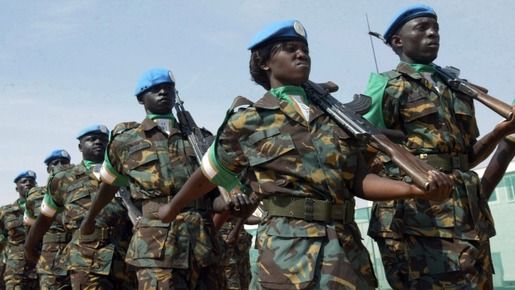
African Union Peacekeepers in Dafur, Sudan. PHOTO/Abd Raouf/AP
In the last decade, the African continent has experience dramatic political, economic and social progress. Thus changing the well worn and tired narrative of a ravaged continent in perpetual conflict and therefore, not safe for investment.
However, this progress may be greatly be impeded if the African Union (AU) cannot better manage conflicts on the continent without external intervention.
External intervention only works to suit the interests of the external actors involved, once those interests are no longer threatened, they usually leave Africans to fend for themselves – usually in conditions far worse.
In 1997, African chiefs of defense staff at a conference in Harare, Zimbabwe proposed a continental rapid reaction force that would be able to intervene in the continent’s trouble spots. It was a concept first envisioned by the former Ghana President Kwame Nkrumah in 1963. But, it was after the failure of the Organization of African Unity to muster the necessary military force to intervene during the genocide in Rwanda that the idea gained momentum.
In 2002, the African Union adopted the African Standby Force (ASF) concept.
The standby force will include the following components:
– a civilian component that includes a police force;
– and a Rapid Deployment Capability (RDC) component.
The civilian component will consist of detectives who will be responsible for investigating war crimes and crimes against humanity. The police force will be responsible for policing and humanitarian affairs. The RDC will consist of 25,000 troops divided into 5 brigades of 5,000 troops from each of the 5 regional economic blocs of the continent.
The African Standby Force was supposed to have been operational in 2010, however, its launch was rescheduled for 2015. However, some African heads of state and government have noted that due to the complexity and the size of the force, there might be further delays in its launch and eventual implementation.
The lack of an African rapid reaction force has already rendered the African Union ineffective in addressing the ongoing conflicts in Mali, the Central African Republic (CAR) and South Sudan. As a result, South African President Jacob Zuma has proposed the African Capacity for Immediate Response to Crises (ACIRC).
The ACIRC will consist of countries willing to quickly deploy their troops on the ground in conflict zones. Like the standby force, the ACIRC will be ready for deployment in 14 days and be under the command of the African Union Peace and Security Council. Chad, South Africa, Tanzania and Uganda have agreed to contribute a battalion each. However, Cameroon and Nigeria have opposed the proposal. The South African delegation to the African Union have stressed that the ACIRC concept is temporary until the ASF is standby force. However, some analysts argue the ACIRC proposal may derail the implementation of the African Standby Force.
While this may be a possibility, conflicts on the continent will not wait for the standby force to be operational. The standby force and the ACIRC concepts demonstrate the level of importance African leaders attach to addressing crises on the continent.
In the past decade, the African Union has led 10 peacekeeping operations. In Somalia, the mission succeeded in driving out the Al-Qaeda-linked Al-Shabaab militants from Mogadishu. Another mission has been hunting remnants of the infamous Joseph Kony’s Lord’s Resistant Army. Additionally, the UN mandated 3,000-strong Force Intervention Brigade compose of Malawian, South African and Tanzania soldiers defeated and subdued the M23 rebels in the eastern part of the DR Congo. In 2013 alone, 40,000 African troops participated in AU peacekeeping operations across the continent.
However, the response of the regional economic blocs at the starts of the conflicts in Mali and the Central African Republic (CAR) was late and inadequate. And the partisan role of South Africa and Chad in the CAR as well as the response of Uganda in South Sudan illustrate now more than ever the need for a more rapid and effective African Union response to the crises on the continent. The ACIRC concept at least addresses that, because the people living in conflict zones cannot wait until the standby force is operational.
For Africa to continue its forward march as “The Confident Continent” then it is time to have an African solution to the remaining security challenges on the continent.
The Habari Network Editorial Board | March 10, 2014