Opinion
The Mirage of Mineral Wealth: Why Extractive Dominance in Africa Should Give Investors Pause


By Michele Moscaritoli
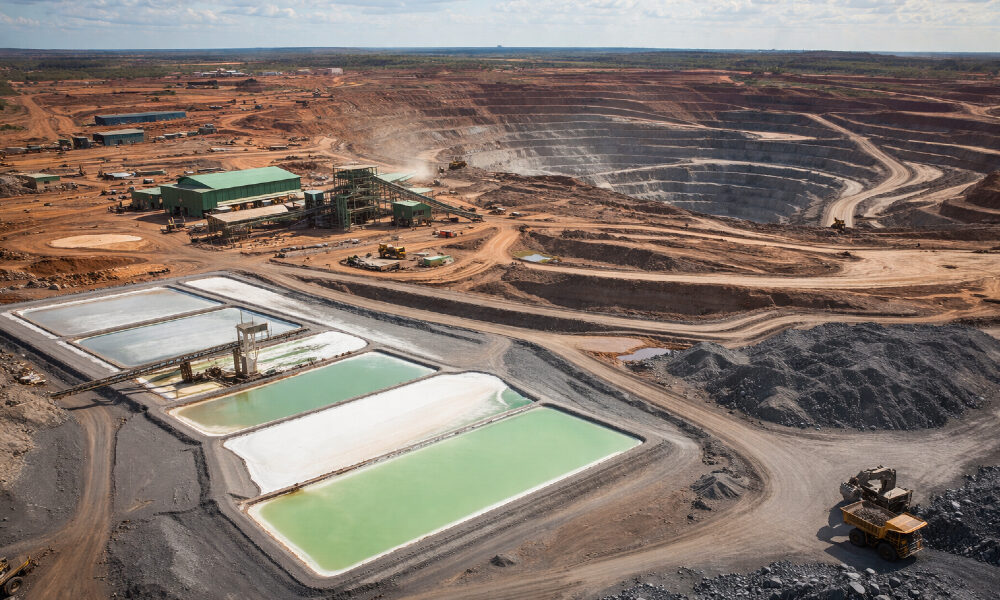
Africa’s investment landscape tells a story of striking contradictions. Extractive industries – mining, oil, gas, and the minerals powering the global energy transition – account for fewer than 2 percent of all greenfield project activity on the continent.
Yet they command roughly 13 percent of total project value. The average extractive deal exceeds US$700 million. That is not diversification. That is concentration – and investors would do well to understand what it means.
The arithmetic is stark. A relatively small number of large mining and resource transactions carry a disproportionate share of committed capital across the continent.
Lithium, cobalt, and rare earth elements – each indispensable to the manufacture of electric vehicle batteries and renewable energy infrastructure – are attracting billion-dollar bets from sovereign wealth funds, multinational corporations, and development finance institutions alike. The energy transition, far from democratizing investment flows, is intensifying them around a narrow band of resource-rich geographies.
When One Sector Sets the Tempo
For investors with meaningful exposure to countries whose economies depend on one or two flagship extractive projects, this creates a structural vulnerability that deserves serious attention. Revenue rhythms in such markets are not driven by domestic demand, institutional development, or productivity gains.
They follow commodity cycles. When lithium prices surge, capital flows freely and project timelines compress. When they correct – as all commodity prices eventually do – financing tightens sharply, construction stalls, and fiscal revenues disappoint. The mechanism is as reliable as it is brutal.
It would be misleading, however, to dismiss the role of large resource projects entirely. Billion-dollar mining developments generate genuine economic pull beyond the pit head.
They create demand for logistics networks, reliable energy supply, and transport infrastructure. They anchor supply chains and, at their best, catalyze broader industrial activity.
The ecosystem effects are real. But the dependency chain can be dangerously narrow – a single commodity, a single customer, a single price benchmark.
The Case for Layering Beyond the Commodity Cycle
The more resilient investment thesis lies in markets where capital layers meaningfully across multiple sectors. Industrial services, logistics, digital infrastructure, and light manufacturing do not move in lockstep with copper or lithium prices.
Their revenue drivers are more diffuse, their demand more locally embedded. When a resource price collapses, a diversified portfolio does not necessarily collapse with it.
This is not an argument against resource investment. Mineral capital in Africa is not a temporary phenomenon driven by cyclical enthusiasm. It is strategic – reflecting the continent’s structural role in supplying the materials that the global energy transition requires.
That role will only grow more significant over the coming decades as demand for battery metals intensifies and Western governments seek to reduce dependence on Chinese-controlled supply chains.
But strategic concentration, however well-motivated, is still concentration. The upside of a dominant extractive position is visible and frequently celebrated.
The downside volatility is equally real, and considerably less discussed. Diversifying across sectors and geographies – spreading exposure beyond the commodity cycle – is not timidity. It is discipline.
Watching where mineral capital lands is prudent. Building a portfolio that balances around it is wiser still.
Michele Moscaritoli is the Founder of Callaborade, a platform connecting high-potential talent from underserved regions with European entrepreneurs while enabling companies to expand into new markets through structured, data-driven sales operations. A tech and services sales professional specializing in market entry strategy, he is driven by a belief in collaboration and building bridges where barriers exist.