Owusu on Africa
The Lake Chad Basin: another geopolitical ‘overlap’ worth the attention of Africanists


By Fidel Amakye Owusu
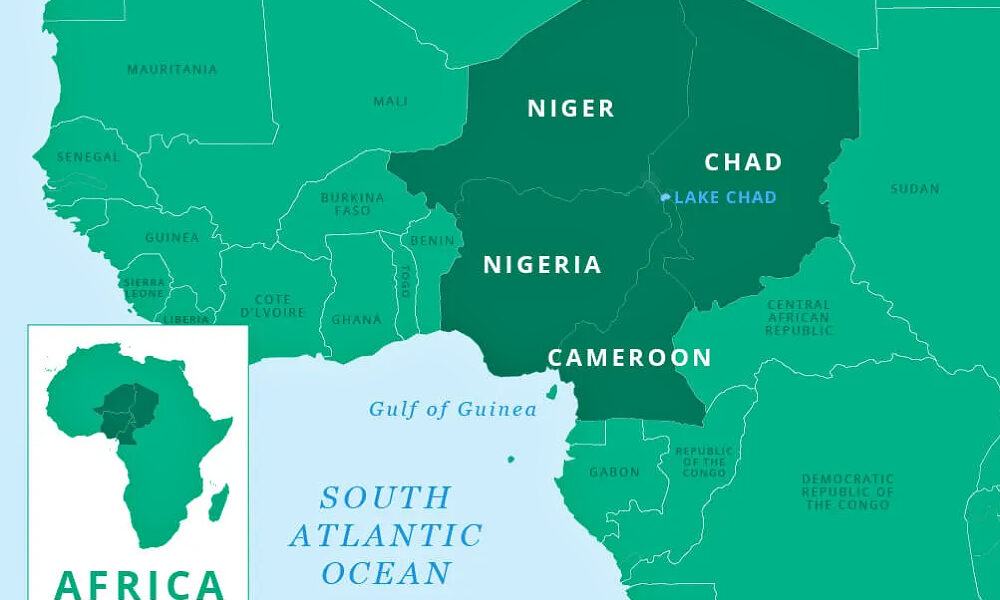
The Lake Chad Basin, located in the upper central region of Africa, serves as a critical transition zone with significant implications for the stability of the continent. Its geographical position links several regions: West Africa to Central Africa through Nigeria, West Africa to East Africa via Chad, and North Africa to Central Africa, also through Chad.
The region’s interconnectedness is reinforced by Lake Chad and its network of rivers and streams, which provide essential water resources. The region’s importance extends beyond geography, as it is home to numerous ethnic groups that cross national boundaries.
For instance, the Hausa people are found in Nigeria, Niger, and Chad, while various pastoralist groups also traverse multiple borders. This ethnic distribution, coupled with the vast Sahel and savannah landscapes, facilitates ethno-economic activities and fosters interaction between groups.
However, this transnational connectivity has also created vulnerabilities. The porous borders and cross-border ethnic ties enable illicit trade, including arms and drug trafficking, to flourish. The Central African Republic, for example, has become a key transit hub for arms entering Africa through the Somalia corridor.
These conditions have made the region a hotspot for terror organizations. Groups that initially emerged in northeastern Nigeria have expanded their reach across the Lake Chad Basin, finding safe havens to operate, profiting from illicit trade, and exploiting ethnic networks for protection.
The convergence of multiple borders has further allowed these extremist groups to move freely, carrying out attacks across national lines. Boko Haram and ISIS West Africa Province (ISWAP) are particularly active in the area, targeting northern Nigeria, southwestern Niger, northern Cameroon, and southeastern Chad.
Despite ongoing regional military efforts, these groups remain a potent threat. The resulting instability has led to a refugee crisis and disrupted economic activities, undermining social cohesion and legitimate trade in the region.
This instability poses a challenge to broader regional initiatives like the African Continental Free Trade Area (AfCFTA). The situation is especially concerning, given that Chad’s capital, N’Djamena, lies within the Lake Chad Basin.
Moving forward, ensuring the stability of the Lake Chad Basin is crucial not only for regional peace but also for continental and global security. All stakeholders, including local communities, national governments, and international actors, must collaborate to address the underlying socio-economic and educational challenges that fuel instability and conflict in the region.
Fidel Amakye Owusu is an International Relations and Security Analyst. He is an Associate at the Conflict Research Consortium for Africa and has previously hosted an International Affairs program with the Ghana Broadcasting Corporation (GBC). He is passionate about Diplomacy and realizing Africa’s global potential and how the continent should be viewed as part of the global collective.