Alorh’s eye on the Motherland
The increasing youth political protests for Africa’s development


By Mary Alorh
Every generation faces its own revolutionary battles. In the 1950s and 1960s, young Africans were focused on decolonizing the continent. By the 1990s, following the end of the Cold War, many African nations had transitioned to democratic rule.
Today, high costs of living, taxes, corruption, poverty, and youth unemployment are pressing societal issues across Africa. The current generation of African youth, adept with social media and technology, is prepared to demand accountability from their governments, from the northern regions to the southernmost parts of the continent.
In 2010, the Arab Spring began when a young Tunisian self-immolated in protest against an oppressive regime and severe economic hardship, sparking revolutions that toppled governments in Libya, Egypt, and beyond.
In 2019, Sudanese youth organized a social movement that led to the overthrow of Omar al-Bashir’s 30-year regime.
In 2020, Nigerian youth launched the #EndSARS movement to protest police brutality at the Lekki toll gate, leading to significant youth participation in the 2023 general election.
In 2015, Ghanaian youth protested frequent power outages with the #DumsorMustStop campaign. By 2021, the #FixTheCountry campaign emerged, addressing political demands and social inequalities exacerbated by corruption and greed among politicians. This movement has since become a significant force in Ghanaian politics.
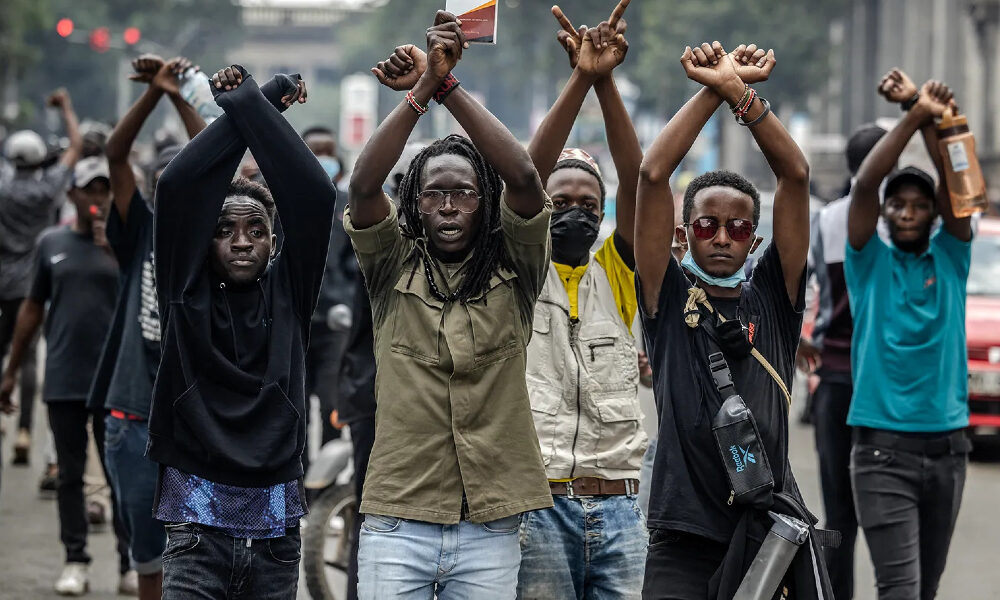
Kenya has also seen increased youth involvement in politics. Since 2022, young people have protested the high cost of living, with major demonstrations on Saba Saba Day in Nairobi. In 2023, 87 percent of Kenyans reported that the cost of living had risen compared to the previous year. In 2024, the youth are protesting against new taxes that would further increase living costs with the #KillTheFinanceBill2024 movement.
Generation Z (Gen Z) has been at the forefront of these protests, from Senegal to Nigeria, Tunisia, and South Africa.
Accountability and transparency are the cornerstones of democracy. However, many African nations practice democracy without being truly accountable to their citizens. Following recent coups in the Sahel, many young people celebrated, disillusioned with the lack of development under democratic regimes and open to trying military rule or other alternatives.
In conclusion, the youth have the power to demand accountability, and governments must be ready to justify their use of state resources for development.
Mary Alorh is Director of Administration at DefSEC Analytics Africa Ltd., and is an expert in Gender, Youth, and Peace & Security initiatives in West Africa.