Owusu on Africa
The Horn’s New Realities: Why the US Cannot Afford to Walk Away
Washington’s extended support for African peacekeepers and its easing of sanctions on Eritrea are no coincidence. Both reflect a Horn of Africa that is growing more dangerous.


By Fidel Amakye Owusu
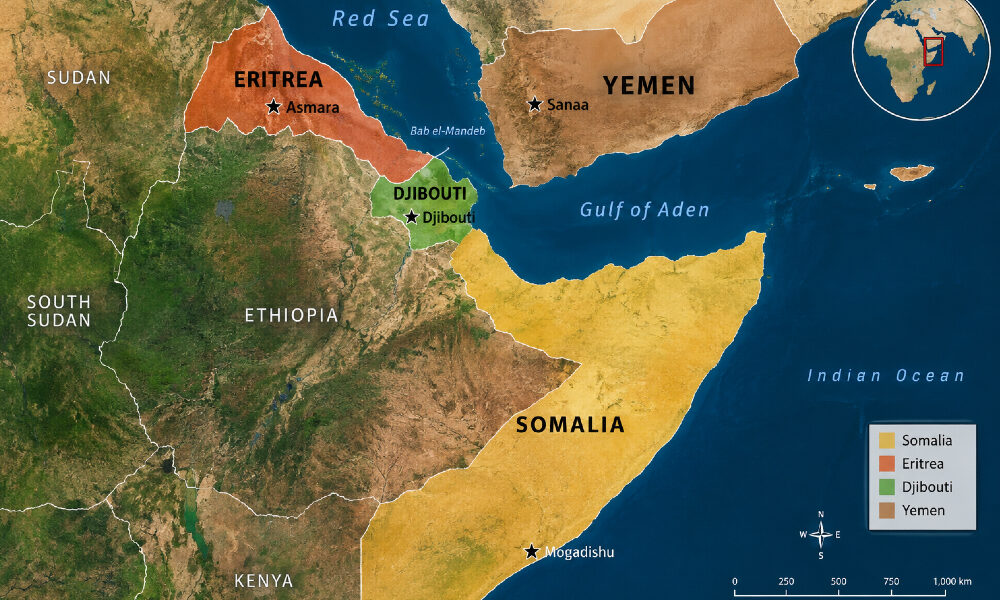
When US President Donald Trump’s second administration took office in 2025, one of its first military orders was a strike on Islamic State (IS) elements in Somalia and the wider Horn of Africa. Carried out with local forces, it aimed, among other things, to protect American interests in the region. The logic was plain. IS is among the terrorist groups operating closest to the U.S. military base in Djibouti and near the Gulf of Aden, one of the world’s most strategically important waterways. Its growing activity demanded a pre-emptive response.
Yet the same administration has been unambiguous about its desire to slash funding for international peacekeeping and other foreign aid. It has acted on that promise, and ending American support for peacekeeping in Somalia was among its early targets. The United States was expected to cut its vital backing for the UN-endorsed mission in Somalia this year. Until recently, little seemed likely to alter that course.
So what changed?
A Widening Threat Map
The conflict involving Iran, and its ripple effects along the Red Sea–Gulf of Aden corridor, has made an abrupt American exit from Somalia look reckless. Three developments stand out.
First, there are reports that Al-Shabaab fighters from Somalia have turned up on the battlefield in Yemen. Ties between Al-Shabaab and the Houthis are not new. But evidence of operational cooperation suggests the al-Qaeda affiliate could menace not only Somali forces but the wider region. That is a poor moment to withdraw or suspend funding for the troops holding the line in Somalia.
Second, Al-Shabaab could acquire more lethal drone capabilities from the Houthis. That prospect should worry Washington. African forces in Somalia may struggle to confront a significantly upgraded threat alone, which makes the peacekeepers more, not less, important.
Third, piracy is on the rise again off the Somali coast, adding another layer of risk to a corridor through which much of the world’s trade passes.
Presence Is Imperfect, Absence Is Worse
The mere presence of peacekeepers will not neutralize these threats. Nobody should pretend otherwise. But their absence, or a sharp short-term cut in their funding, would probably produce worse outcomes: a security vacuum that Al-Shabaab, its partners and opportunistic pirates would be quick to exploit.
Reading the Eritrea Signal
Washington’s decision on Somalia comes alongside its move to lift sanctions on Eritrea’s defense forces and other entities. Taken together, the two moves say something about how America reads the region. They suggest that policymakers expect a long period of instability and see an urgent need to protect U.S. interests and assets. That urgency is sharpened by repeated attacks in recent weeks and months on American military installations and bases in the Middle East.
The lesson for African governments is worth stating bluntly. Washington’s commitments in the Horn are driven less by its enthusiasm for multilateralism than by its calculation of risk. For now, that calculation favors staying engaged in Somalia. The wiser course for Africa’s leaders is to treat that as a window, not a guarantee, and to use it to build the regional security capacity that would make future American decisions matter less.
Fidel Amakye Owusu is an International Relations and Security Analyst. He is an Associate at the Conflict Research Consortium for Africa and has previously hosted an International Affairs program with the Ghana Broadcasting Corporation (GBC). He is passionate about Diplomacy and realizing Africa’s global potential and how the continent should be viewed as part of the global collective.