Opinion
The Horn’s Critical Minerals: Promise and Peril in the Green Transition
A country long defined by its troubles now claims to be sitting on the raw materials of the energy transition. Turning geology into growth will take more than a speech.


By Ratnakar Wagh
Few countries arrive at the global economy’s high table with as much baggage as Somalia. For three decades, the Horn of Africa nation has been a shorthand for civil war, famine and piracy. So when President Hassan Sheikh Mohamud told delegates at the Development Finance Forum in Mogadishu that his country holds major untapped deposits of uranium, lithium and cobalt, the announcement carried an unmistakable subtext. Somalia would like to be known for something else.
The timing is shrewd. Governments and manufacturers around the world are scrambling to secure the minerals that power electric vehicles, advanced electronics and renewable-energy grids. Lithium and cobalt sit at the heart of the battery supply chain. Uranium is enjoying a revival as countries look to nuclear power for reliable, low-carbon electricity. Supply of all three is concentrated in a handful of countries, and consumers from Washington to Brussels to Tokyo have made no secret of their desire to diversify. An under-explored territory with a promising geological pedigree is, to put it mildly, of interest.
A Whisper Becomes a Pitch
The president’s claim is less a discovery than a declaration. Geological surveys have hinted at Somalia’s mineral endowment for decades. Legacy uranium occurrences are associated with central regions such as Galmudug, while lithium-bearing pegmatites are thought to stretch across the north. Little of this has ever been systematically mapped to modern standards, still less drilled and costed. Civil conflict saw to that.
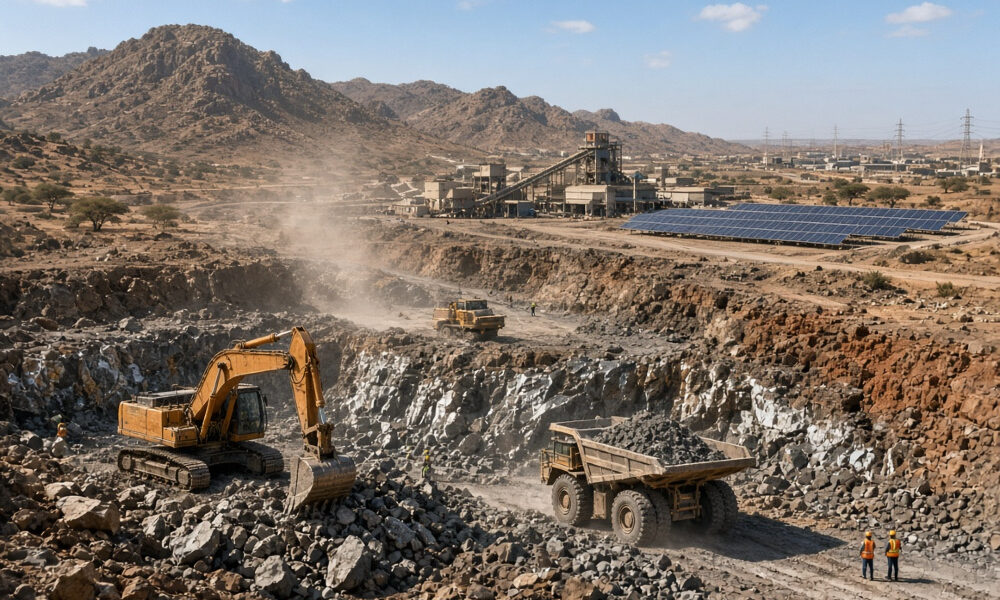
What has changed is the posture of the state. Mogadishu says it is now throwing open its doors to international expertise, modern geological mapping and foreign capital. That is a notable shift for a sector that has remained, in the government’s own telling, largely untouched. It also arrives alongside a second front: offshore oil and gas exploration, backed by international partnerships, which officials hope will anchor a broader move from an import-dependent economy toward an export-led one.
The ambition is easy to understand. Somalia imports much of what it consumes, from food to fuel, and relies heavily on remittances from its diaspora. A functioning extractive sector would, in theory, diversify the economy, generate hard currency and fund the public services that decades of instability have starved. For a country that only recently cleared its path to debt relief, the appeal of a new revenue stream is obvious.
The Resource Curse Is Not a Myth
And yet the history of mineral-rich developing countries is a cautionary tale. Underground wealth has too often produced overvalued currencies, entrenched elites and grievances that curdle into conflict. Scholars call this the “resource curse,” and Somalia’s circumstances make it a more pressing danger than most.
Consider the preconditions. Somalia’s federal system remains a work in progress, and the division of authority between Mogadishu and the federal member states over natural resources is contested. A mining license issued in one capital can be disputed in another. Security remains fragile in many regions, and the Islamist insurgency of al-Shabaab continues to control or contest territory. Investors, who must commit capital for a decade or more before seeing returns, will price that risk accordingly. They will also want to know who owns what, who signs what, and who gets paid.
This is why the president’s closing emphasis matters more than his headline. The real story, as he and his advisers seem to grasp, is not what lies beneath the earth. It is whether the rules above ground are credible enough to attract serious partners and fair enough to share the proceeds.
Three Tests for Mogadishu
Three tests will decide whether Somalia’s mineral ambitions become an economic breakthrough or another false dawn.
The first is transparency. Investors and citizens alike need to see how licenses are awarded, what royalties are paid and where the money goes. Publishing contracts, joining international standards on extractive-industry transparency and building an independent regulator would send a stronger signal than any forum speech. Opaque deals struck with unaccountable middlemen are precisely how resource wealth is lost.
The second is infrastructure. Minerals have value only if they can reach a market. Somalia has the longest coastline on the African mainland and several deepwater port prospects, but roads, power and reliable logistics are thin. A lithium deposit in the north or a uranium occurrence in the center is a theoretical asset until a road, a rail line or a power grid connects it to a port. Bridging that gap will demand patient capital and, probably, a larger role for development-finance institutions that can absorb risks private lenders will not.
The third is partnership. The scramble for critical minerals has turned resource-rich countries into prizes in a wider geopolitical contest. Somalia has suitors in the Gulf, in Turkey, in the West and in Asia. That is a source of leverage, but also of risk. The wisest course is to resist exclusive, opaque arrangements and to insist on terms that include local processing, skills transfer and environmental safeguards. Countries that merely ship out raw ore tend to capture a small fraction of its eventual value.
Promise is not Proof
A note of caution belongs in any honest assessment. Announcing that deposits exist is not the same as demonstrating that they are commercially viable. Mineral resources become reserves only after rigorous exploration, independent verification and sound economics. Many promising prospects around the world never become mines. Somalia’s president has set a headline; geologists, engineers and financiers will write the footnotes.
Still, there is reason for measured optimism. The global appetite for transition minerals is not a passing fad but a structural shift likely to last for decades. A country that gets its fundamentals right early, with clear laws, credible institutions and honest dealmaking, could carve out a place in that market. Somalia’s very lack of development is, in one narrow sense, an opportunity: it can design a mining sector from scratch rather than reform a broken one.
The Next Chapter
Somalia’s leaders have told the world that a long-ignored country is open for business and that the ground beneath it may be worth far more than anyone assumed. The claim deserves attention, and scrutiny. If Mogadishu pairs its geological promise with transparency, infrastructure and genuinely sustainable partnerships, the minerals of the Horn could finance a generation of recovery. If it does not, they will join a long list of buried riches that enriched everyone but the people living above them.
The rocks have waited millions of years. The question now is whether Somalia’s institutions can be ready before the bulldozers arrive.
Ratnakar Wagh is an entrepreneur, management professional, and CEO of Tanzania-based Kinglion Investment Company, an investment firm driving industrial development across Africa through initiatives in manufacturing, renewable energy, and logistics infrastructure. He specializes in organizational transformation, sustainability, and leadership, with a strong focus on building high-performing teams and creating long-term value across emerging markets.