Owusu on Africa
The Hidden Cost: U.S.-Iran Conflict Hits African Economies
A conflict Africa did not start, and cannot stop, is reshaping the continent’s economic prospects – and its political landscape.


By Fidel Amakye Owusu
At the start of 2026, Africa’s economic story was, by and large, an encouraging one. Growth trajectories across much of the continent remained positive. Even nations enrolled in IMF support programs appeared to be making measurable progress toward fiscal discipline.
Security challenges persisted in scattered localities – the Sahel, parts of the Horn – but these were familiar headwinds, not new crises. The broader picture was one of cautious optimism.
That picture has since been upended.
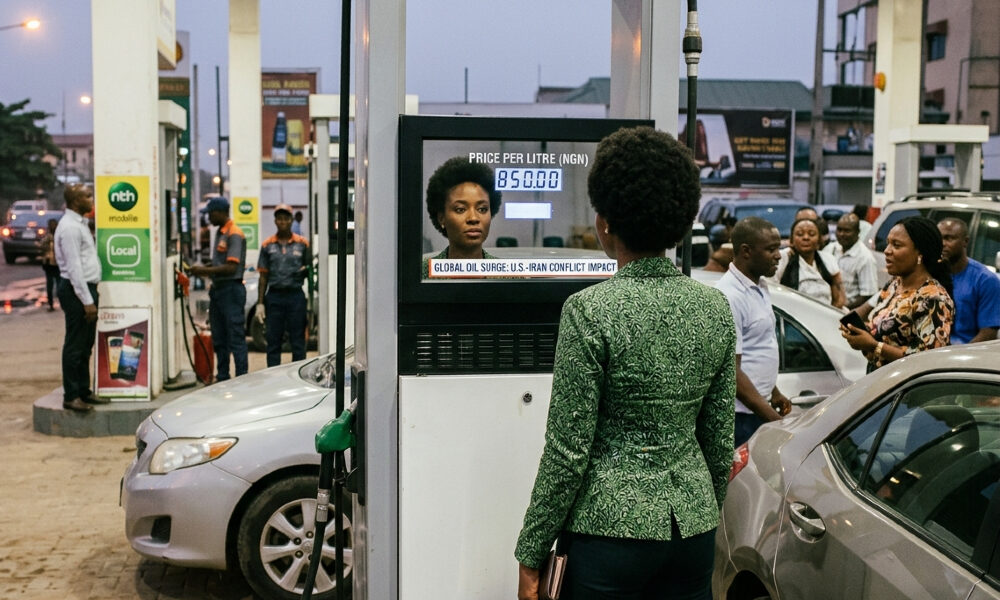
The outbreak of war between the United States and Israel on one side and Iran on the other – a conflict with roots entirely foreign to Africa – has sent shockwaves through economies that had no seat at the table when the shooting started. The mechanism is straightforward and brutal: oil prices have surged, and Africa, whether it produces petroleum or imports it, is paying a steep price.
Subsidies Gone, Exposure Laid Bare
The vulnerability is partly self-inflicted, though for defensible reasons. In recent years, a wave of African governments removed or reduced energy subsidies as part of broader efforts to rein in fiscal deficits and earn the confidence of international creditors.
Others went further, raising fuel taxes to bolster government revenues. At the time, these were rational choices, encouraged by multilateral institutions and praised by markets.
What those reforms did not anticipate was a sudden, externally driven spike in global oil prices – the kind that transforms a prudent policy into a political liability overnight. Governments that dismantled the cushion between world prices and domestic consumers now find themselves with no buffer at all.
The consequences have landed hard and fast. Ghana’s president convened an emergency cabinet session to eliminate fuel taxes after rising prices threatened to push ordinary Ghanaians deeper into hardship.
Madagascar declared a state of emergency over oil supply disruptions. Tanzania instructed government officials to ride buses rather than fuel-hungry SUVs – a gesture that is partly symbolic but signals the seriousness with which Dar es Salaam is treating the strain on the public purse.
Even Winners Are Losing
For oil-exporting nations – Nigeria, Angola, Libya, and others – one might expect a windfall. Higher crude prices, after all, mean higher revenues.
But the calculus is less forgiving than it appears. Rising oil prices are, at their core, inflationary. They raise transport costs, push up food prices, and erode purchasing power across the economy.
For governments already navigating populations with significant numbers living in poverty, the social costs of inflation quickly swamp any fiscal gains from elevated export revenues. The poor, as always, absorb the sharpest blow.
Talks That Raised Hopes – and Then Collapsed
When Washington and Tehran agreed to send negotiators to Islamabad in search of a diplomatic off-ramp, there was measured relief in African capitals. Leaders were not naïve – they understood the depth of the impasse – but the mere fact of talks suggested the possibility that a critical waterway could reopen and that oil markets might stabilize.
That relief proved short-lived. The talks collapsed. Negotiators left Pakistan without an agreement, and the prospect of a swift resolution receded.
The fallout has left African policymakers in an anxious holding pattern, forced to improvise emergency responses to a crisis entirely of someone else’s making.
Political Fallout: Incumbents Beware
The economic strain carries political consequences that could prove equally severe. For African democracies heading into elections in the coming months and years, inflation and economic hardship are the classic ingredients of electoral defeat.
Incumbents who had reasonable stories to tell at the start of the year now face an electorate increasingly focused on the price of fuel, food, and transport.
For countries under more authoritarian governance, the pressure finds a different outlet. Citizens who take to the streets to protest economic conditions may face not ballot boxes but batons.
History offers little comfort here: in Africa, externally induced economic crises have more than once provided the tinder for domestic political conflagrations.
Africa’s Familiar Predicament
There is something deeply familiar – and deeply unfair – about Africa’s current predicament. A war conceived in Washington, Tel Aviv, and Tehran; fought over interests that have nothing to do with Accra, Antananarivo, or Dar es Salaam; and negotiated, unsuccessfully, in Islamabad – is nonetheless extracting a painful toll from ordinary Africans who had no hand in any of it.
The continent has been here before. External decisions – on trade, on debt, on climate – have repeatedly shaped African outcomes in ways that African governments were powerless to influence.
The current crisis is a reminder that, whatever progress the continent has made in building economic resilience, it remains acutely exposed to the decisions of powers that rarely factor African welfare into their strategic calculations.
Until that changes – until Africa’s voice carries genuine weight in the rooms where global decisions are made – its economies will remain hostage to distant wars, distant negotiations, and distant failures of diplomacy.
Fidel Amakye Owusu is an International Relations and Security Analyst. He is an Associate at the Conflict Research Consortium for Africa and has previously hosted an International Affairs program with the Ghana Broadcasting Corporation (GBC). He is passionate about Diplomacy and realizing Africa’s global potential and how the continent should be viewed as part of the global collective.