Opinion
The Grid Gap: When Power Lines Bypass the People They Are Meant to Serve
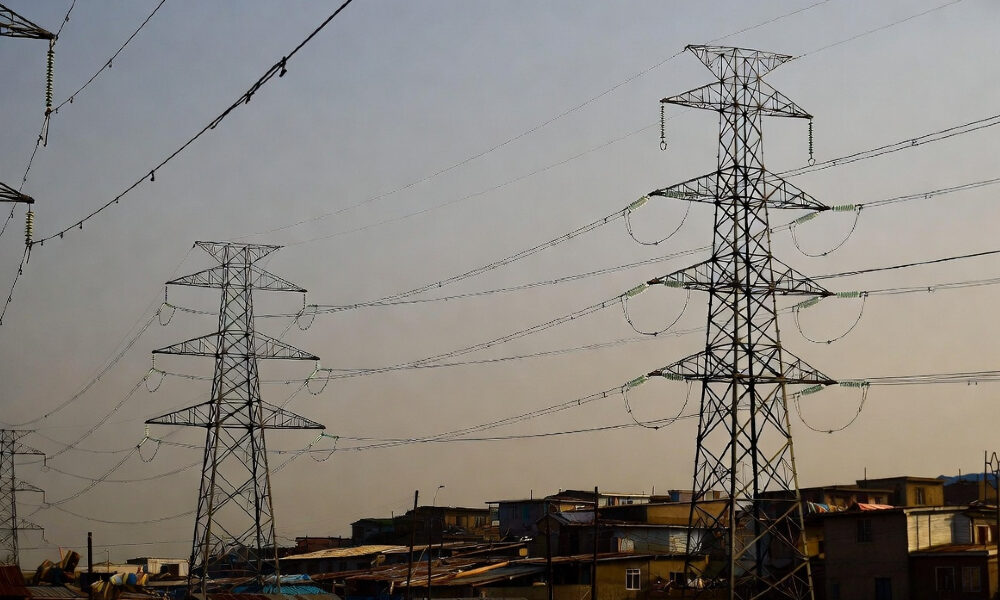
In Nigeria, Kenya, and the Caribbean, high-voltage lines pass over villages that still cook with charcoal. This is not an infrastructure gap – it is energy segregation by design.


By Franco Bonghan
In boardrooms far removed from the communities they claim to serve, governments and investors celebrate new gigawatts of generating capacity and “flagship” transmission corridors with the confidence of people who have never waited for a kerosene lamp to warm up. Meanwhile, in Nigeria’s informal settlements and Kenya’s peri-urban neighborhoods, families watch high-voltage lines arc overhead while they still cook with charcoal and send their children to clinics that cannot reliably keep vaccines cold.
The contradiction is not incidental. It is structural.
In Pointe-Noire, in the Republic of Congo, families live in the shadow of gas flares and atop oil pipelines – some of the most energy-dense real estate on the planet – yet their homes remain unconnected to the grid. After dark, they rely on diesel generators and kerosene lamps while the wealth embedded in the ground beneath them flows to distant commodity markets.
This is the defining paradox of energy development in the Global South: proximity to power without access to it.
A Trap Built on Fuel
The Caribbean version of this failure wears a different face, but carries the same logic. Households across the region pay some of the highest electricity tariffs in the world – and yet a single hurricane can render entire islands powerless for days or weeks, because centralized grid infrastructure was never designed with small, storm-exposed archipelagos in mind.
More than 90 percent of Caribbean electricity generation runs on imported diesel and fuel oil, locking low-income households into exposure to global price shocks they played no role in creating. When the system reliably powers mines, resort hotels, and data centers while leaving clinics and classrooms dark, the appropriate word is not “underdevelopment.”
It is segregation – energy segregation, built into the architecture of the grid itself.
This is the position of the African & Caribbean Energy Network (ACEN): that the success of any energy transition must be measured not from the balance sheets of independent power producers, but from the lived realities of communities in Mathare, in rural fishing villages along the West African coast, and on storm-battered islands across the Lesser Antilles.
Communities Are Not Powerless
The temptation, when confronted with a failure this systemic, is to treat affected communities as passive recipients of whatever policy eventually trickles down. That framing is both inaccurate and dangerous.
Communities have concrete levers available to them – and the sophistication to use them.
The first is ownership. Energy cooperatives and community trusts, already taking shape in South Africa, Kenya, Tanzania, and across the Caribbean, offer a proven model for co-owning solar mini-grids, rooftop systems, and local distribution networks.
Receiving electricity and owning the means of its generation are categorically different propositions; the latter creates wealth, jobs, and resilience where the former creates dependency.
The second lever is negotiation. Where independent power producers, extractive industries, or large tourism operators function in proximity to underserved communities, the framework for community-benefit agreements already exists.
It simply needs to be demanded and enforced. These are not charitable arrangements – they are the appropriate cost of operating in communities whose land, labor, and tolerance are essential inputs to commercial energy projects.
The third is workforce development. Caribbean electrification initiatives have demonstrated that locally accredited training programs – modeled on frameworks like NABCEP certification – reduce system costs, retain skilled jobs within communities, and measurably improve the reliability of installed systems.
Importing both the technology and the technicians is a subsidy to foreign labor markets dressed up as development assistance.
Organizing for Structural Change
None of these levers operate in isolation. Their power is multiplied when communities organize across existing civic structures: farmer cooperatives, fisheries associations, women’s savings circles, and youth groups.
These institutions are not merely social infrastructure – they are the credible counterparties that climate finance mechanisms, development banks, and regulators actually need in order to function at the last mile.
By aggregating through these bodies, communities can attract concessional climate finance, negotiate benefit-sharing agreements with adjacent commercial operators, and compel regulators to prioritize last-mile electrification, equitable tariff structures, and local technical capacity – rather than the high-visibility transmission projects that look better in an investment prospectus than they perform in a coastal village.
The energy transition, as currently constituted, risks replicating the extractive geometry of the systems it is meant to replace: capital flows in, energy flows out, and communities are left with the pollution, the price exposure, and the dark. Changing that geometry requires not just better policy, but organized communities who understand – and insist – that the grid exists to serve them.
Franco Bonghan is an international development strategist and Co-Founder/Co-Chair of the African and Caribbean Energy Network (ACEN) and Founder of Bright Light Projects (BLP). He curates the LinkedIn newsletter Global Pulse Africa, unpacking Africa’s economic challenges and showcasing innovative solutions for a sustainable future. He can be reached on X via https://x.com/Francobonghan