Opinion
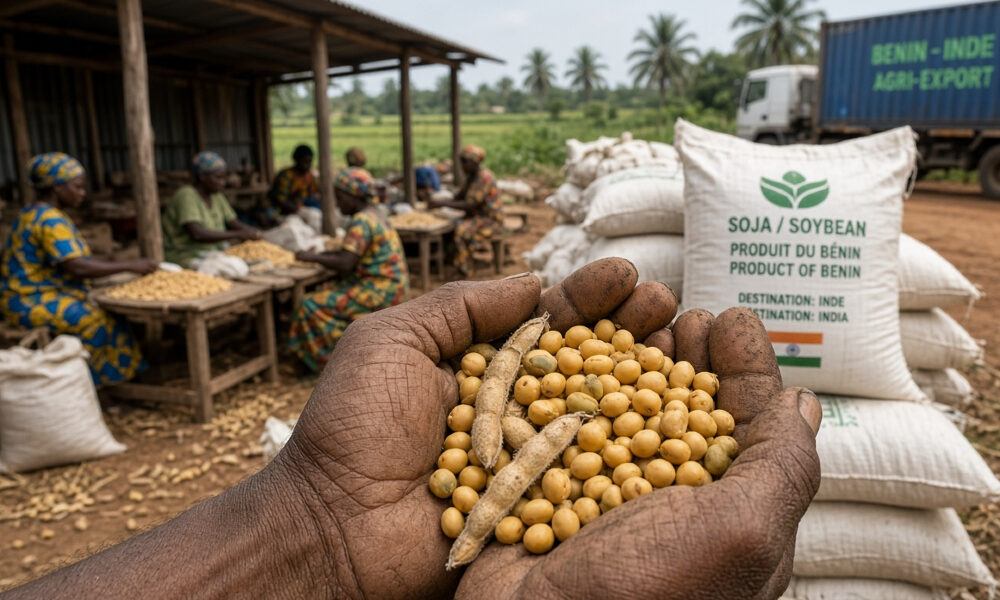
The Great Soybean Shuffle: Why India Is Turning to Benin and Togo
Scrutiny of Nigerian origin documents has Indian buyers looking at Benin and Togo. The real lesson is that trade is built on verification.


By Ashish Muley
For years, soybean buyers have treated sourcing as a contest of price and volume. The cheapest landed cost won the contract, and the paperwork was assumed to be in order. Recent scrutiny by Indian Customs of Nigerian soybean origin documentation has shown how fragile that assumption can be.
The question facing Indian importers is not simply where to find another supplier. It is how to build sourcing networks across Africa that are diversified, verifiable and dependable. Benin and Togo have begun to attract attention as possible destinations. Whether they deserve it depends on facts that buyers must establish country by country.
Origin Is No Longer an Afterthought for Indian Buyers
Indian processors and importers seeking non-GMO soybeans operate on thin margins and tight schedules. A quoted price tells them little about whether a cargo will clear the port on time. Uncertainty over documentation or origin can trigger additional verification requirements, delay shipments and tie up working capital. It can also expose a buyer to commercial and regulatory risk long after the contract is signed.
Concentration makes this worse. A buyer who leans heavily on a single origin is exposed to any disruption there, whether regulatory, logistical or reputational. A broader supplier base is the obvious remedy. But diversification only helps if every origin and every shipment satisfies Indian import rules. Adding suppliers without adding verification multiplies risk instead of reducing it.
Benin and Togo: Promise Meets the Test of Delivery
Both countries merit closer examination as soybean sourcing destinations. Neither should be treated as a ready-made substitute. Before approaching suppliers or negotiating contracts, Indian buyers should be able to answer five questions:
- What are the current export permissions and restrictions? Rules can change, and they must be confirmed independently for each country.
- What is the actual exportable surplus? Domestic production figures say little about what is available to ship abroad once local demand is met.
- Can origin be traced from producer to port? Verifiable traceability is the foundation of any credible claim of origin.
- Does the cargo meet Indian import and phytosanitary requirements? Compliance is a precondition of the trade.
- Are quality, logistics and landed costs competitive? Consistency from shipment to shipment matters as much as the headline price.
Neither production capacity nor a supplier’s quotation establishes that a shipment can lawfully leave one country and enter another. A confident sales pitch is not a permit.
From Trust Deficit to a Structured Ecosystem
The larger opportunity lies beyond any single country. It is to develop a structured sourcing ecosystem that connects Indian buyers with credible African exporters, producer organizations and cooperatives. Such a system would rest on shared expectations about documentation, traceability and export readiness, rather than on one-off deals between parties who barely know one another.
African suppliers have more to gain from this than they may realize. In a market where origin documentation is under scrutiny, transparency is a competitive advantage. Exporters who can demonstrate compliance, open their supply chains to inspection and deliver consistently will stand apart from those who cannot. Cooperatives and producer organizations that invest in record-keeping today are building an asset that buyers will pay to rely on.
Indian buyers, for their part, should resist the temptation to chase the next cheap origin. The priority should be relationships with suppliers whose capacity, origin and export readiness can be independently verified. That takes more effort up front. It also protects against the far costlier disruption of a rejected or delayed cargo.
Raising the Standard
The next chapter of Africa-India soybean trade may not come from changing the country of origin on a purchase order. It may come from raising the standard of how the trade is conducted: clearer rules, firmer evidence and partners who can prove what they claim. Benin and Togo may well earn a place in that story. They will do so by passing the same test that every origin must now pass.
Ashish Muley is an independent consultant with Stalwart Management Consulting, with 27+ years in agricultural commodity value chains, export markets, and international trade. He has led projects on business development and capacity building across African countries in partnership with international organizations. Formerly, he spent 15 years in financial services leadership, focusing on sales, marketing, and business development. Based in Pune, India, Ashish advises on agricultural trade, commodity markets, Warehouse Receipt System (WRS) and Asia–Africa economic opportunities, and regularly writes on international trade and logistics.