Opinion
The Great Blackout: Can the Continent Power Its Future by 2036?
A continent rich in sun, water, wind and gas still leaves roughly 600 million people in the dark. Closing the gap is the precondition for everything else Africa hopes to become.


By Ratnakar Wagh
Africa has no shortage of energy. It has sunlight in abundance, great rivers, strong winds, volcanic heat beneath the Rift Valley and large reserves of natural gas. What it lacks is the wires, the money and the policies to bring all of that to the people who need it. In 2024, according to the International Energy Agency (IEA), roughly 600 million Africans had no access to electricity, nearly 40 percent of the continent’s population. In a century that runs on power, that is an astonishing figure.
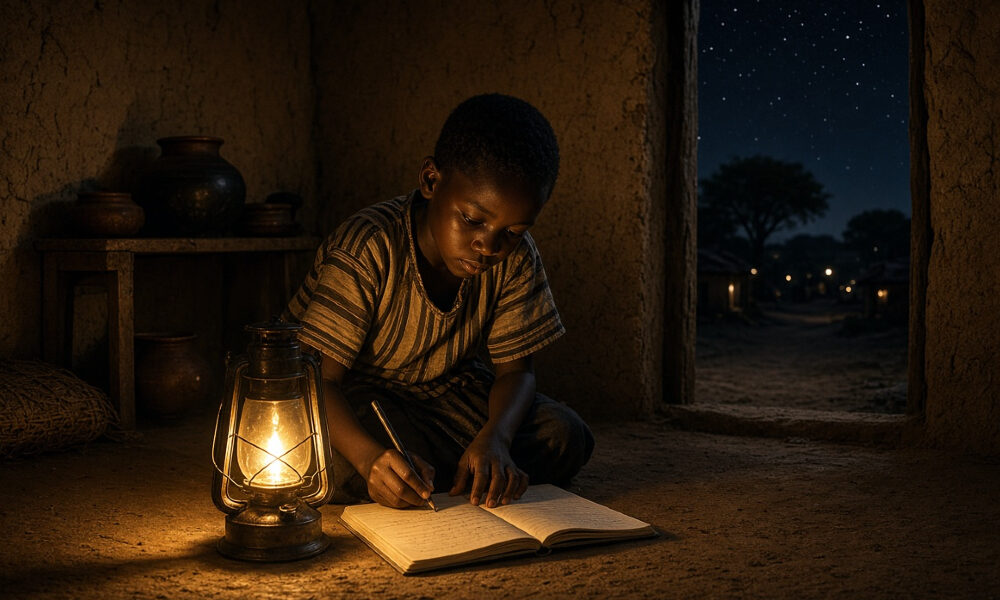
The statistic hides a thousand small failures. Children do their homework by the light of a phone, if they are lucky enough to have one. Clinics struggle to keep vaccines cold and operating rooms lit. Farmers watch crops spoil because there is no power to mill, dry or refrigerate them. Small businesses lose customers, and wages, every time the grid fails. This is not merely an energy crisis. It is a ceiling on industrialization, job creation and economic transformation.
A Paradox of Plenty
The continent’s generation mix reflects both its riches and its inequalities. North Africa leans heavily on natural gas, while South Africa remains reliant on coal. Hydropower anchors the grids of Ethiopia, Zambia, Mozambique and the Democratic Republic of Congo. Geothermal plants are a quiet success story in East Africa. Solar and wind, meanwhile, remain far below their potential.
Yet abundance at the source has not translated into access at the socket. The reasons are stubborn, and they reinforce one another:
- Cost of infrastructure. Transmission and distribution networks are expensive to build, especially across large, sparsely populated territories.
- Poverty. For many households, even a subsidized connection or a monthly bill is out of reach.
- Scarce, costly capital. Investment is insufficient, and financing for African projects is often priced as if the risk were higher than it is.
- Unreliable systems. Aging infrastructure, technical losses and unstable supply discourage both consumers and investors.
- Population growth. Demand is rising faster than connections can be added, so the treadmill keeps accelerating.
- Conflict and remoteness. Insecurity and scattered settlements make every project harder and dearer.

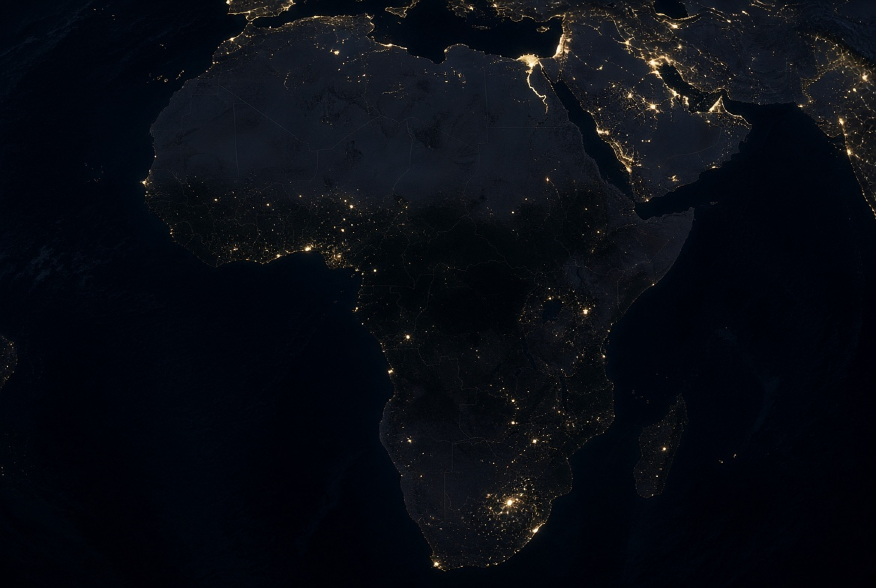
Map of Africa at night showing uneven electricity access
The Cost of Business as Usual
The IEA’s projections should concentrate minds. If recent trends persist, around 520 million people in sub-Saharan Africa could still lack electricity in 2035. That is not a precise forecast for 2036, and it should not be read as destiny. But as a warning, it is unambiguous: business as usual will not deliver universal access. Merely maintaining the present pace means a decade of progress that leaves hundreds of millions behind.
There is reason for ambition, nonetheless. Mission 300, a joint initiative of the World Bank and the African Development Bank, aims to connect 300 million Africans to electricity by 2030. It is the right goal and the right scale. But targets do not wire villages. Delivery will depend on investment that arrives on time, regulators who honor their commitments and utilities that can collect enough revenue to stay solvent.
Grid, Mini-Grid, or Both?
The debate over whether Africa should favor the national grid or decentralized solar is a false choice. Each does a different job.
National grids remain essential for cities, factories and industrial corridors, where large and steady loads justify large networks. They also make regional electricity trade possible, allowing a hydropower-rich country to sell surplus to a neighbor short of supply. Solar mini-grids and off-grid systems, by contrast, can reach remote communities years or decades before a transmission line ever would, and at lower cost per connection.
The sensible strategy is to expand the grid where density justifies it, deploy mini-grids where it does not, and design both so that one can eventually plug into the other.
Connections are Not the Goal
The most important lesson, though, is that a connection is not the finish line. A household that can afford one light bulb has been counted, but it has not been transformed. Africa’s prosperity will come when electricity powers productive work: factories, irrigation pumps, agro-processing plants, cold-storage chains and digital businesses. Those uses generate the income that makes bills payable, which in turn makes utilities bankable and investment sustainable. Energy policy and economic policy are, in the end, the same policy.
That requires governments to make connections affordable, strengthen regional markets, fix leaky and loss-making utilities and offer investors predictable rules. It requires development partners to supply patient, lower-cost capital. And it requires private investors to see in the electricity gap what it also is: one of the largest and most durable commercial opportunities in the world.
The Bottom Line
Africa’s energy challenge is, at bottom, a test of speed and seriousness. The resources exist. The technology is cheaper than ever. The financing models are improving. What remains uncertain is whether governments, investors and development partners will move quickly enough to turn a paradox of plenty into an engine of growth. By 2036, the continent will either have lit up its future or spent another decade explaining why it has not.
Ratnakar Wagh is an entrepreneur, management professional, and CEO of Tanzania-based Kinglion Investment Company, an investment firm driving industrial development across Africa through initiatives in manufacturing, renewable energy, and logistics infrastructure. He specializes in organizational transformation, sustainability, and leadership, with a strong focus on building high-performing teams and creating long-term value across emerging markets.