Opinion
The Fragile Promise: Why Eastern DR Congo’s Peace Deal Is Already Unraveling


By Godfred Zina
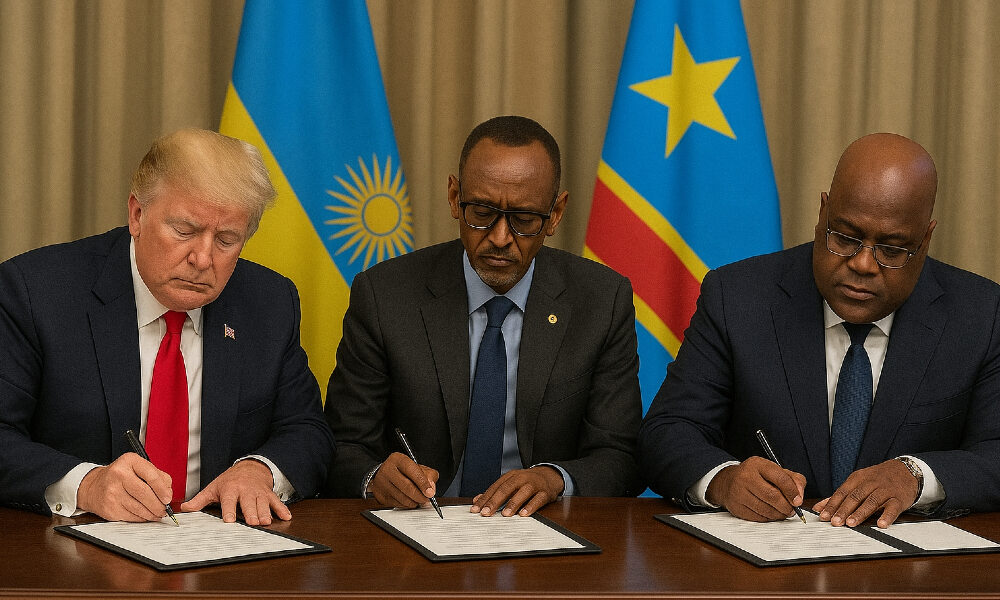
The ink has barely dried on the U.S.- and Qatar-brokered peace agreement for eastern Democratic Republic of Congo (DR Congo), yet the ground reality tells a starkly different story. Violence is surging, civilians are fleeing by the hundreds of thousands, and the gap between diplomatic promises and battlefield facts grows wider by the day.
The question is no longer whether this peace deal can hold – it’s whether the international community will let another fragile accord collapse into irrelevance.
When Diplomacy Meets Reality
Approximately 200,000 people have been displaced in recent weeks as the M23 rebel group renews its advance toward strategic towns in eastern DR Congo. This mass exodus underscores a troubling pattern: peace agreements signed in distant capitals mean little to communities living under the shadow of armed conflict.
The latest deadly clashes in Sange, where retreating Congolese troops collided with Wazalendo forces in explosions that killed up to 36 people, expose the chaotic reality on the ground and the profound vulnerability of civilian populations caught in the crossfire.
Congolese President Félix Tshisekedi has publicly accused Rwanda of undermining the freshly signed accord, arguing that Kigali’s actions contradict its diplomatic commitments and actively threaten efforts to stabilize a region that has known little peace for decades. Washington has echoed these concerns, warning that continued violence and Rwanda’s alleged support for M23 jeopardize the entire peace process.
The message from American officials is unequivocal: both parties will be judged by their actions, not their signatures on paper.
Rwanda continues to deny backing M23, but the United States and United Nations cite clear evidence to the contrary. With over 1.2 million people already displaced by this conflict, the human cost of diplomatic deflection becomes impossible to ignore.
The Stakes Could Not Be Higher
The dissonance between commitments reaffirmed in Washington and developments unfolding in eastern DR Congo threatens not only this particular agreement but the very credibility of international peace processes in the region. When peace deals exist only on paper while armed groups operate with impunity, the message sent is clear: violence pays, diplomacy does not.
If the current trajectory continues unchecked, civilian suffering will almost certainly fuel further unrest, drive recruitment into armed groups, and entrench long-term insecurity. Diplomatic stalemates risk discouraging future international interventions precisely when sustained engagement matters most. The stakes extend beyond the DR Congo’s borders – regional stability hangs in the balance, and with it, the integrity of multilateral conflict resolution efforts across Africa.
A Path Forward Requires Action, Not Words
The international community must move beyond rhetoric. The United States, United Nations, and African Union should immediately deploy independent observers to monitor compliance with peace agreements and document violations in real time.
Transparency and accountability cannot remain aspirational – they must become operational.
Global actors should engage Rwanda and Congo through sustained diplomacy that links aid and political incentives directly to tangible implementation of peace commitments. Carrots and sticks both have their place, but only when applied consistently and credibly.
Simultaneously, emergency humanitarian assistance must be scaled up dramatically, providing shelter, food, and protection for displaced populations who cannot wait for diplomatic breakthroughs.
The pattern is depressingly familiar: international attention surges during negotiations, then dissipates as implementation falters. Breaking this cycle demands sustained pressure, meaningful consequences for violations, and unwavering support for civilians bearing the conflict’s heaviest burden.
The alternative is watching another peace deal join the long list of broken promises that litter the region’s history – and condemning eastern DR Congo to yet another chapter of preventable suffering.
The world signed a peace deal. Now it must decide whether it has the resolve to enforce one.
Godfred Zina is a freelance journalist and an associate at DefSEC Analytics Africa, a consultancy specializing in data and risk assessments on security, politics, investment, and trade across Africa. He also serves as a contributing analyst for Riley Risk, which supports international commercial and humanitarian operations in high-risk environments. He is based in Accra, Ghana.