Opinion
The Fortune in Boring Businesses
Africa’s biggest opportunity may lie not in the next unicorn, but in the things millions of people need every single day.


By Sheena Raikundalia
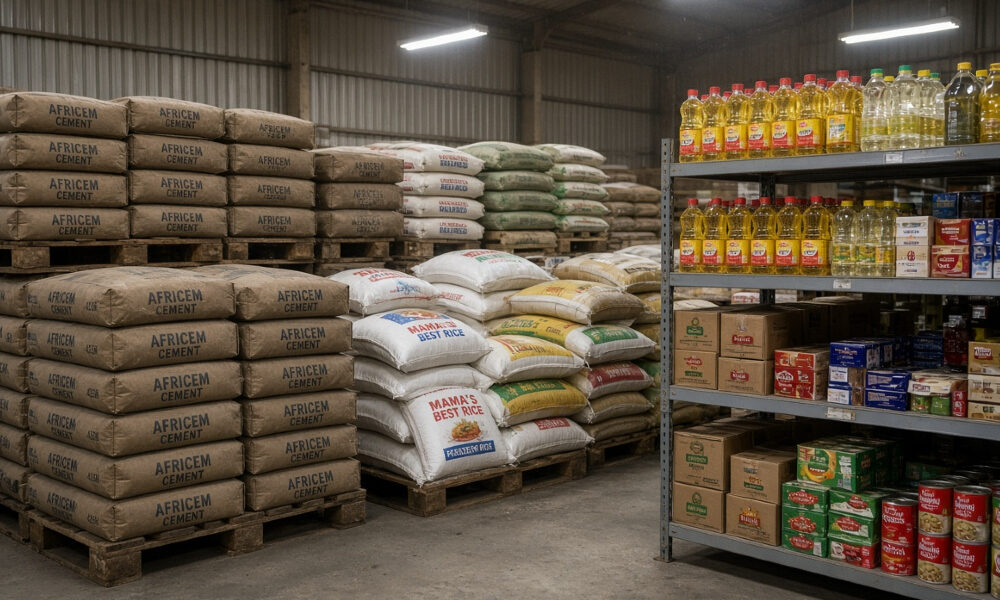
Ask a room of startup founders to name Africa’s most promising ventures and you will hear familiar answers: fintech, artificial intelligence, the next billion-dollar platform. Ask who has built the continent’s greatest fortunes and the answers sound very different. Cement. Sugar. Flour. Salt.
Aliko Dangote, Africa’s foremost industrialist, built his empire on exactly these staples. Abdulsamad Rabiu, another of the continent’s wealthiest businessmen, followed a similar path with BUA Group, spanning cement, sugar, rice, flour and pasta. Neither would have drawn much excitement at a demo day. Both built enterprises of extraordinary scale.
A Pattern, not an Exception
They are far from alone. The Tolaram Group turned Indomie into one of Nigeria’s most recognizable brands. Vimal Shah, co-founder and chairman of Kenya’s Bidco Group, built a regional business around cooking oil, soap, detergents and food, reportedly reaching more than 100,000 retail outlets every day. Bakhresa Group built Azam through food manufacturing, logistics and distribution across multiple African markets. In Ghana, Kate Quartey-Papafio grew Reroy Cables from a distributor into one of the country’s largest cable manufacturers.
The common thread is not glamour. It is usefulness. These companies took things millions of people need and made them available, affordable and reliable. That is a far harder problem than it sounds, and a far more valuable one.
The Demand is Only Growing
Africa is the world’s youngest continent, and it is getting younger. Cities are expanding at remarkable speed. Over the coming decades, hundreds of millions more people will need to be fed, housed and employed.
That translates into enormous demand for decidedly unglamorous goods: animal feed, packaging, cold storage, tiles, pipes, wiring, building materials, irrigation equipment, spare parts and warehousing. Each is a market waiting for builders who care more about execution than excitement.
Consider poultry. For many smallholder farmers, feed is among the largest costs of doing business. Yet it can be easier to raise capital for another advisory platform than for the feed mill or distribution network that could transform the economics of thousands of farms at once. A single well-run mill, reliably supplying quality feed at a fair price, could lift incomes across an entire region.
Rethinking where Capital Flows
This raises an uncomfortable but hopeful question: are investors funding what sounds interesting, or what is economically important?
Africa does not need the next billion-dollar unicorn. It needs 1,000 companies, each worth US$1 million and growing, each solving a stubborn everyday problem that becomes an enormous market when millions of people depend on it. A thousand such businesses would create jobs, strengthen supply chains and keep more value on the continent.
The good news is that the playbook is already proven. The opportunity may not lie in inventing something nobody has seen before. It may lie in taking something Africans already need and making it cheaper, better, more reliable and easier to distribute. Technology can help, but as an enabler of the real work rather than a substitute for it.
The Case for Building Boring
Boring businesses rarely make exciting pitch decks. But they can make extraordinary companies, durable ones with loyal customers, steady demand and the power to change daily life for millions.
So the question for the next twenty years is a simple one. What will Africa need in enormous quantities, and who is ready to build it at scale?
Sheena Raikundalia is an accomplished entrepreneur, former lawyer, government policy advisor, and angel investor with deep expertise across the legal, financial services, and impact investment sectors in Europe and Africa. She has played a pivotal role in advancing Africa’s technology and innovation ecosystems, leveraging a career that spans top-tier London law firms, leadership as Country Director of the UK-Kenya Tech Hub for the UK Foreign, Commonwealth & Development Office (FCDO), and her current position as Chief Growth Officer at agri-tech company Kuza One. Sheena is recognized for her strategic vision, commitment to fostering innovation, and strong advocacy for Africa’s growth potential in technology, entrepreneurship, and impact investment.