Opinion
The Evolving Role of African Elites in Africa: An Analysis of the Formation and Influence of the African Elite Class
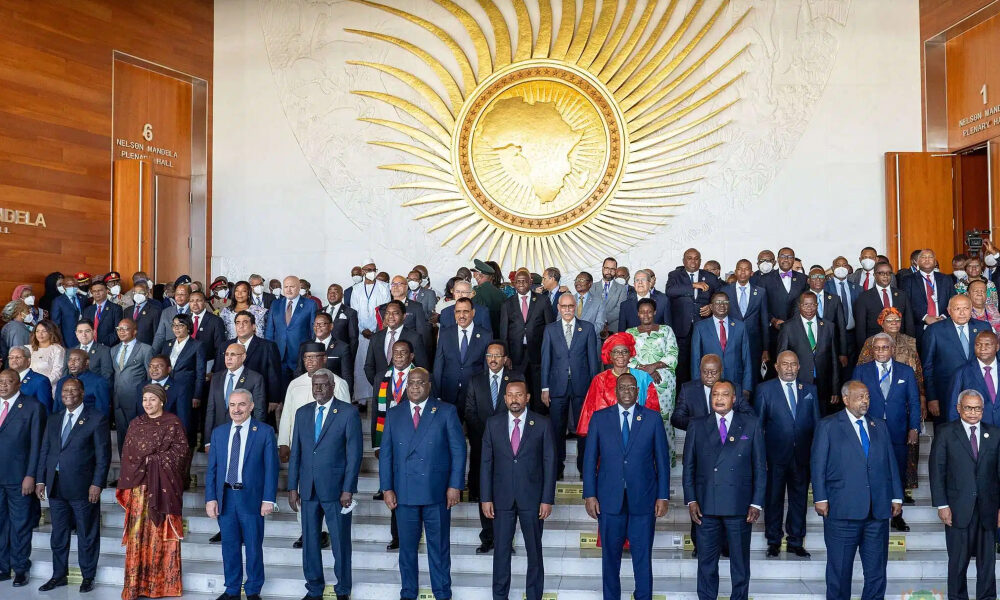
By Emmanuel Musaazi
Elitism in Africa has evolved through colonial influences, Pan-Africanism, Westernization, ethnicity, China’s presence, and development initiatives. Literature such as House of Hunger by Dambudzo Marechera, Chaka by Thomas Mofolo, King Leopold’s Ghost by Adam Hochschild, and Things Fall Apart by Chinua Achebe, provides critical insights into these transformations and the role of elites in African societies.
Colonial Influence on African Elitism
During colonial rule, European powers created a new elite class by selectively elevating locals who served colonial interests. This phenomenon, as highlighted in King Leopold’s Ghost, resulted in the emergence of a small group of powerful elites who maintained control by subjugating the masses.
These dynamics set the stage for continued socio-economic inequalities in post-colonial Africa, where colonial elites retained their privileges even after independence.
Leopold’s strategies included bribing European powers and using propaganda to portray himself as a humanitarian while privately benefiting from the plunder of Congo’s resources. The creation of a new elite class that served colonial interests set the stage for a deeply entrenched system of exploitation and power imbalance.
The Force Publique, an army composed of local Congolese soldiers led by white officers, enforced Leopold’s policies. This military elite, selected for their willingness to collaborate with the regime, used extreme violence to suppress any resistance and enforce quotas on rubber extraction.
The colonial-era elitism portrayed in King Leopold’s Ghost reflects how local elites were incentivized to betray their communities for personal gain, thereby perpetuating a system of oppression. These dynamics were not unique to the Congo but were replicated across Africa by other colonial powers, leading to a broader pattern of elites being formed based on loyalty to colonial authorities rather than the interests of the local populace.
As a result, many post-colonial African elites inherited and adapted these structures to maintain their own power and control over newly independent states.
Pan-Africanism and Nationalist Elites
Pan-Africanism introduced a new form of elitism, driven by the desire to break free from colonial rule and unify African societies. Figures like Kwame Nkrumah and Julius Nyerere emerged as nationalist elites, advocating for self-determination and unity, as depicted in works like Chaka.
Mofolo’s Chaka portrays the rise of the Zulu leader Chaka, who defied traditional norms to become a powerful ruler, symbolizing the nationalist elites who sought to reshape Africa’s identity and power structures during and after colonialism. However, much like Chaka in Mofolo’s narrative, these nationalist elites often found themselves emulating the authoritarian practices of the very systems they sought to replace, highlighting the complex nature of leadership and power dynamics in post-colonial Africa.
Westernization and the Modern Elite Class
Westernization played a crucial role in forming modern African elites, with Western-educated Africans gaining influence and power. Chinua Achebe’s Things Fall Apart vividly depicts how the arrival of Western ideologies and the Christian faith led to a shift in power dynamics within the Igbo community of Umuofia.
Traditional leaders like Okonkwo found themselves increasingly marginalized as the Western-educated elites and missionaries gained influence.
Achebe describes this transition when “Mr. Brown”, the white missionary, establishes schools and churches in Umuofia. He attracts the younger, more impressionable members of the society, including Okonkwo’s son, Nwoye.
Okonkwo laments, “The white man is very clever. He came quietly and peaceably with his religion. We were amused at his foolishness and allowed him to stay. Now he has won our brothers, and our clan can no longer act like one.”
This quote illustrates how the Western-educated elites began to displace traditional authority figures, leading to a fragmentation of the Igbo society and the emergence of a new elite class that was more aligned with Western values than indigenous norms. This change in power dynamics created a disconnect between the old and new elites, fostering tensions that ultimately weakened traditional institutions and paved the way for colonial domination.
Ethnicity and Elitism
Ethnic-based elitism is a pervasive issue in many African societies. Dambudzo Marechera’s House of Hunger vividly illustrates how elites manipulate ethnic affiliations to maintain power and control.
This form of elitism has often led to ethnic conflicts, as competing groups vie for political and economic dominance, exacerbating social tensions and hindering national unity.
One notable scene highlights the protagonist’s realization of the duality imposed by colonial elitism: he switches between speaking Shona and English, each carrying different social connotations. Speaking English, the colonial language, alienates him from his family and community, while reverting to Shona marks him as an outsider within the colonial framework.
This internal conflict demonstrates how ethnicity and language became tools of elitism, further dividing African societies based on their proximity to colonial power. Additionally, Marechera critiques the post-colonial nationalist elites who, despite advocating for freedom, continued to perpetuate ethnic and social divisions.
He refers to nationalist ideals as “stains on the white sheet of capitalist production,” highlighting how the new elites, though claiming to represent the people, were complicit in maintaining a hierarchical order that excluded ethnic minorities and marginalized voices.
By drawing on such potent symbolism, Marechera not only illustrates the destructive nature of ethnic-based elitism but also rejects the nationalist vision of post-colonial freedom, as it failed to address the structural inequalities introduced by colonialism. Instead, the nationalist elites merely replaced the colonial elite, retaining the same systems of privilege and exclusion.
China’s Influence on African Elitism
China’s engagement in Africa has created a new set of elites who benefit from Chinese-backed development projects. While these partnerships have led to infrastructure development, they have also raised concerns about debt dependency and the prioritization of elite interests over broader national welfare.
Development and the Shifting Role of Elites
In the contemporary context, African elites are increasingly involved in development efforts, both as investors and policymakers. This trend can promote economic growth, but it also risks entrenching existing inequalities if the benefits of development are not widely shared.
How Western, Chinese, and Cuban Elitism Influence African Elitism
Western Influence: Western-style elitism, grounded in meritocracy and democratic values, have the potential to positively impact African elitism by promoting transparency and good governance. However, it can also contribute to a disconnect between Westernized elites and the general population, fostering perceptions of elitism as foreign and out of touch with local realities.
Chinese Influence: Chinese engagement often involves close relationships with political elites, focusing on rapid development projects. This can empower African elites with economic resources and infrastructural support, yet it may also reinforce authoritarian tendencies and elite capture, where benefits are limited to a small group while the broader population remains marginalized. Particularly where development is politicized and situated in areas that mostly support the prevailing government.
Cuban Influence: Chinese engagement often involves close relationships with political elites, focusing on rapid development projects. This can empower African elites with economic resources and infrastructural support, yet it may also reinforce authoritarian tendencies and elite capture, where benefits are limited to a small group while the broader population remains marginalized. Particularly where development is politicized and situated in areas that mostly support the prevailing government.
The Best Way Forward for African Elitism
To build a sustainable and inclusive form of elitism in Africa, the following strategies should be considered:
- Promoting Inclusive Development: Elites should focus on policies that reduce inequality and promote social mobility by investing in education, healthcare, and infrastructure accessible to all citizens.
- Strengthening Democratic Institutions: Ensuring that political and economic elites are held accountable through transparent and democratic institutions will help bridge the gap between the elites and the general population.
- Balancing External Influences: Africa should balance its engagement with Western, Chinese, and other external partners to ensure that development benefits are aligned with national interests and do not disproportionately favor a small elite class.
- Encouraging Local Leadership and Participation: African elites should draw on local knowledge, traditions, and values to create a governance model that resonates with the broader population, ensuring that policies are culturally and contextually relevant.
The role of elites in Africa is dynamic and influenced by various historical and contemporary factors. Through the lenses of literature and history, one can see the evolution of the African elite class as a reflection of colonial legacies, nationalist aspirations, ethnic divisions, and external influences such as China’s engagement.
Understanding these factors is crucial for comprehending the complexities of power, influence, and social dynamics on the continent and how the pivotal role of the elite could be molded to facilitate national development.