Editorial
The Dominoes of Africa’s Regional Integration
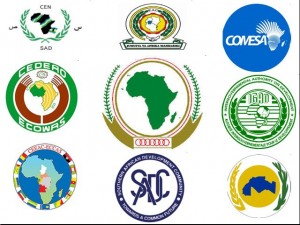
Ask anyone with insider knowledge of Africa’s regional economic communities – and they will tell you that most of the issues keeping Africa apart are not major.
Yes – infrastructure is a problem: The main road connecting South Africa to Botswana is different on the Botswana side of the border. However, it behooves to view this thing as actually minuscule compared to the level of intrigue and sheer lack of information going on within these different regional economic communities (RECs).
For instance, why is the Economic Community of West African States (ECOWAS) trying to create a whole new entity to provide political risk insurance when the Common Market for Eastern and Southern Africa (COMESA) has a fully fledged outfit roaring out of Nairobi?
Secondly, why the heck is Tanzania a member of the Southern African Development Community (SADC) and not part of COMESA? Rumor has it that Tanzania was a little suspicious of COMESA when it was still the Preferential Trade Area; just as the same rumor mill tells tales of intrigue around how Tanzania feels like it is being sidelined by Kenya, Uganda, Rwanda and Burundi in the East African Community.
But with all due respect, this could simply be a miserable ‘Game of Thrones.’ It really does not matter who the alpha REC is, or who has the most effective support from governments. As far as we can see, whether COMESA has 19 member states from the North to the South, and ECOWAS has a great many of West Africa’s major countries amongst their members, it does not help anyone if these Secretaries General are not friends and keen on the kind of mutually beneficial partnerships that will ensure that Africa’s over 1 billion people benefit from regional integration.
To make the case for regional integration, we might even suggest that things will all fall into place as soon as a tipping point becomes available. Our sanguine idea is premised on the fact that the things that separate Africans are almost non-existant.
There’s no difference between Ugandans and Mauritanians. These Africans all want the same thing: They want their children to go to better schools, they are all ‘unhappy’ that their forefathers were colonized by either the French or the British; and countries such as South Africa and Nigeria understand the essence of doing business with their neighbors.
The former has really done great business with Kenya and Uganda – and now, South African behemoths such as MTN (a cellular company) and Stanbic Bank are much bigger outside South Africa than inside that country.
Nigeria is practically responsible for much, MUCH business all over Ghana, Cameroon and Sudan – and somehow, all these businesses are thriving because of business men such as Dangote.
In essence, Africa is much better when it does business with itself.
A recent Brookings Institution study even suggested that although exports to the U.S. from Africa under AGOA will reduce from an African continental free trade agreement, the same report also suggests that African economies will grow much MUCH faster as a result of the regional integration. What the report does not say explicitly is that Africa will be able to demand for much greater things from the world if it spoke with one voice.
Of course, the question now is: Who should be the voice that shouts loudest on the continent? Again, we could say that African leaders much gather their collective egos and ensure that the African Union with its effective leadership must be strengthened and its current infrastructure must be leverage for a better result for Africa.
Yes. The African Union is the best place to start the process of a singular bargainer, speaker for Africa’s trade and investment regimes – and most of all, for a parliament that effectively emulates what is happening in the European Union.
There’s no excuse for Africa being serrated by things like the EU’s economic partnership agreements. African countries must start taking responsibility for not being where it should be as per the Abuja Treaty. And yes; just like it does not make any sense for Zimbabwe and Madagascar not to be benefitting under AGOA, it does not make any sense for Tanzania to be outside COMESA.
The Habari Network Editorial Board
Tuesday September 24, 2013