Opinion
The Dignity of Work in Africa: Beyond Hustle and Survival


By Daki Nkanyane
Work is never just work. It is how people locate themselves in the world.
It is how dignity is expressed, how contribution is recognised, and how worth is quietly negotiated, both internally and socially. When work is meaningful, it anchors identity.
When it is absent, unstable, or reduced to survival, something deeper than income is threatened.
Across Africa, this tension is visible everywhere. The continent is young, energetic, and relentlessly industrious.
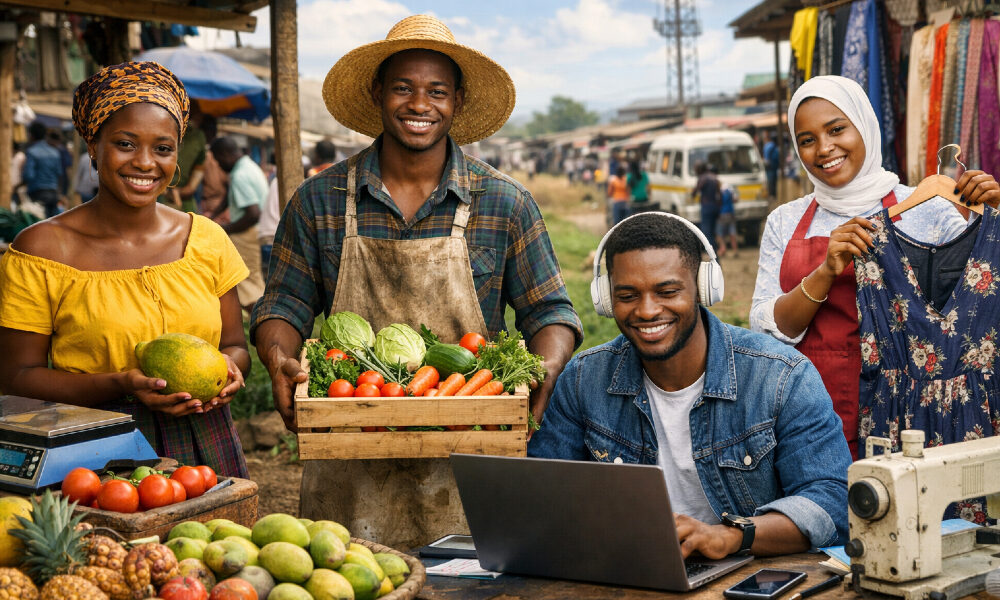
From informal traders at dawn to digital freelancers at midnight, from small-scale farmers to start-up founders, work is constant, creative, and often exhausting. Hustle has become both necessity and virtue.
And yet, beneath the celebrated resilience lies a harder question: What happens to dignity when work becomes endless survival rather than meaningful contribution?
Hustle as Necessity, Not Identity
Africa’s hustle culture is often praised, sometimes excessively. It reflects ingenuity in the face of limited opportunity, adaptability amid uncertainty, and refusal to surrender to constraint.
These are real strengths. But hustle, when elevated from season to identity, carries a hidden cost.
Hustle is a response to scarcity. Dignity requires recognition.
When survival becomes permanent, work shifts from a source of purpose to a means of endurance. People are busy, yet unfulfilled. Productive, yet precarious. Active, yet unseen.
A society can work relentlessly and still feel unemployed in spirit.
Unemployment and the Erosion of Self-Worth
Few things wound dignity more quietly than prolonged unemployment. In Africa, where work is deeply tied to identity, contribution, and belonging, the absence of work is rarely experienced as rest.
It is experienced as erasure. Skills go unused. Time becomes heavy. Confidence slowly thins.
Unemployment is often discussed in economic terms, percentages, labor absorption, job creation. But its human cost is psychological and moral. It asks questions no statistic can answer:
- Am I needed?
- Do I matter?
- Is there a place for me?
A society that does not address the dignity dimension of unemployment risks producing frustration without articulation, a dangerous emotional inheritance.
Informality and Invisible Contribution
Much of Africa works, but does not appear in formal records. Informal economies sustain families, communities, and cities.
They require discipline, creativity, and endurance. Yet they are rarely granted social recognition. Contribution exists, but legitimacy does not.
When work is invisible, dignity is conditional. People labour daily while feeling marginal.
They contribute without security. They build value without acknowledgement.
Over time, this gap between effort and recognition corrodes trust, not only in institutions, but in the idea of progress itself. Development that ignores informal dignity builds systems that function, but societies that fracture.
Education, Expectation, and Disappointment
Education has long been framed as the bridge between effort and dignity. But across Africa, this promise has frayed.
Millions of young people are educated into expectation, only to encounter labor markets that cannot absorb them meaningfully. Degrees become symbols of delay rather than mobility. Credentials lose their anchoring power.
This mismatch produces a particularly painful form of disillusionment: the feeling of having done everything “right”, and still being excluded. When education no longer guarantees dignity, societies must re-examine not only labor markets, but the narratives they teach their youth.
Work as More Than Income
At its core, work is about contribution. Income matters – deeply.
Poverty is not noble. But income alone does not satisfy the human need to be useful, recognised, and integrated into something larger than oneself.
Work dignifies when it:
- allows people to see the result of their effort,
- connects effort to community value,
- offers continuity rather than constant precarity,
- recognises worth beyond output alone.
When work is stripped of these elements, people survive – but they do not settle. Restlessness grows. Alienation deepens.
The Moral Language of Work
Every society carries an unspoken moral language around work. Some reward speed over care.
Others reward extraction over service. Others reward visibility over substance.
Africa’s challenge is not only to create more work, but to re-humanize the meaning of work.
What kinds of work do we honor? What labor do we dismiss?
Whose contribution do we recognise, and whose do we ignore? These questions shape dignity far more than policy documents.
Hustle and the Quiet Exhaustion
Endless hustle produces fatigue that is rarely acknowledged. Many Africans live without the luxury of pause. Work bleeds into identity. Rest feels irresponsible. Stillness feels dangerous. Life becomes a continuous negotiation with necessity.
This exhaustion is not laziness in disguise. It is the cost of sustained uncertainty.
A society that normalises exhaustion as virtue risks burning out its most resilient people, the very ones holding it together.
Dignity Beyond Formal Employment
Africa’s future cannot be built on formal employment alone. The continent’s demographic reality, technological shifts, and economic structures demand broader imagination.
Dignity must be decoupled from narrow definitions of “proper” work.
Care work, creative work, community labor, informal entrepreneurship, and hybrid livelihoods must be recognised as legitimate contributions, not transitional failures.
Dignity expands when contribution is recognized wherever it appears.
Leadership and the Ethics of Work
Leadership shapes the moral tone of work. When leaders treat labor as disposable, dignity erodes.
When policies prioritise efficiency over humanity, people feel used rather than valued. When economic success is celebrated without regard for its human cost, trust dissolves.
Ethical leadership understands that work is not just an economic input, it is a human experience. A society that protects dignity at work protects stability at large.
The Quiet Connection Between Work and Meaning
Meaning and work are inseparable. When people understand how their effort contributes to something coherent, family, community, future, work becomes sustainable even when difficult.
When effort feels disconnected from purpose, even well-paid work becomes hollow.
Africa’s challenge is not to eliminate struggle overnight. It is to ensure that struggle is not meaningless.
Meaning does not remove hardship. It makes hardship bearable.
Toward a Dignified Future of Work
Re-centering dignity in Africa’s work culture requires:
- recognising contribution beyond formality,
- designing systems that absorb people meaningfully,
- valuing care, creativity, and continuity,
- allowing work to restore self-worth, not erode it.
This is not sentimental. It is stabilizing.
Societies that ignore dignity at work inherit anger. Societies that protect it cultivate belonging.
A Final Reflection
Africa works, relentlessly, creatively, and often invisibly. The task ahead is not only to create more work, but to ensure that work restores dignity rather than consumes it.
Hustle may keep societies alive. But dignity is what allows them to live.
And Africa’s future will depend not only on how hard its people work, but on whether that work allows them to remain whole.
Daki Nkanyane is a South African – born Pan-African thought leader, entrepreneur, keynote speaker, and strategist with over 25 years of experience driving innovation, identity, and development across Africa. He is the Founder & CEO of Interflex Capital, AfrisoftLive, QonnectedAfrica, and iThinkAfrica, where he focuses on youth empowerment, entrepreneurial ecosystems, and Africa’s economic and ideological renewal. His work spans technology, digital transformation, major international events, and strategic advisory for future-ready African institutions. As a contributing writer for The Habari Network, Daki covers African innovation, leadership, human capital, economics, entrepreneurship, and Africa–Caribbean relations through cultural, philosophical, and developmental perspectives. His mission is to help shape a new African consciousness rooted in pride, possibility, and self-determination for Africans on the continent and in the diaspora. He can also be reached on Facebook and X.